Get Full Government Meeting Transcripts, Videos, & Alerts Forever!
Get email alerts on the Land Use Zoning topic
No spam. Unsubscribe anytime.
Planning commission opposes proposed large-lot district, recommends ordinance fail
Summary
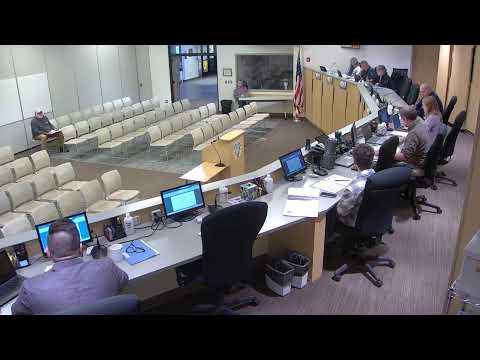
After public comment and extended debate, the Matanuska-Susitna Borough Planning Commission voted unanimously against a draft ordinance to create a new 5-acre large-lot district and then approved a resolution (25-22) recommending the assembly reject Assembly Ordinance 25-090.
The Matanuska-Susitna Borough Planning Commission voted on Oct. 6, 2025 to oppose Assembly Ordinance 25-090, a draft ordinance to create a new borough zoning classification, MSB 17.77, to allow property owners to petition for a borough-designated "large lot" district with a 5-acre minimum lot size.
Alex Strahan, planning and land use director, told commissioners the draft ordinance would create a new district type that does not include any properties by right; property owners would petition to form a district and, if two-thirds of property owners in a contiguous area petitioned and the assembly approved, properties in the district would not be subdividable below five acres. "If they successfully go through the petition process and have a meeting and get approved by the assembly to be in this district, then none of the properties within that district could be subdivided smaller than 5 acres," Strahan said. He also said the new district was intended to omit many of the other restrictions that the current "large lot" district carries (the existing district includes a 2-acre minimum and additional use limitations).
The proposal drew public comment both opposing and supporting. Rebecca Gamble, identified as a builder and president of the Mat-Su Home Builders Association, said the ordinance "has restrictive property rights" and warned it would reduce housing affordability and developer interest. "In a region where housing demand continues to grow, limiting development through rigid lot size regulation may contribute to housing shortages," Gamble said. Maxwell Sumner called the draft "nimbyism at its worst" and urged commissioners to read the existing code before deciding. Rod Hansen, speaking as an individual, said property owners should be able to choose to preserve large-lot character and that such districts can increase value for buyers seeking lower density. Mike Thompson of WM Construction opposed the ordinance as an infringement on property liberty.
Commission debate focused on property rights and long-term effects. Commissioner Collins said he had "a hard time implementing a majority's will over a minority" on property ownership. The chair and other commissioners raised concerns about future owners being constrained: one commissioner warned the ordinance could "meddle from the grave" by binding descendants to restrictions. Commissioners McCabe, Glenn, Collins, Allen and Zagarodny all recorded "no" votes in a roll-call vote on the motion to approve Resolution 25-17 (the planning commission's recommendation of approval), and the motion failed unanimously.
After the vote, staff drafted Resolution 25-22 recommending failure of Assembly Ordinance 25-090. Commissioner McCabe moved Resolution 25-22 and Commissioner Collins seconded; with no objections the commission approved Resolution 25-22. The resolution cites concerns that the ordinance "limits land use for future generations" and that a 67% threshold is too low.
Strahan and commissioners noted that the ordinance would apply borough-wide, that districts must be contiguous, and that there are existing processes to modify or remove a district (the same petition process or assembly action). The commission recorded its recommendation opposed to the ordinance and forwarded Resolution 25-22 for assembly consideration.