Get Full Government Meeting Transcripts, Videos, & Alerts Forever!
Get email alerts on the Climate Energy topic
No spam. Unsubscribe anytime.
Residents urge Milwaukee to use purchasing power to press WE Energies for renewable investment
Summary
Speakers told the council to use the city's leverage as a major customer of WE Energies and to continue funding the Environmental Collaboration Office to accelerate renewable energy investment and climate resilience.
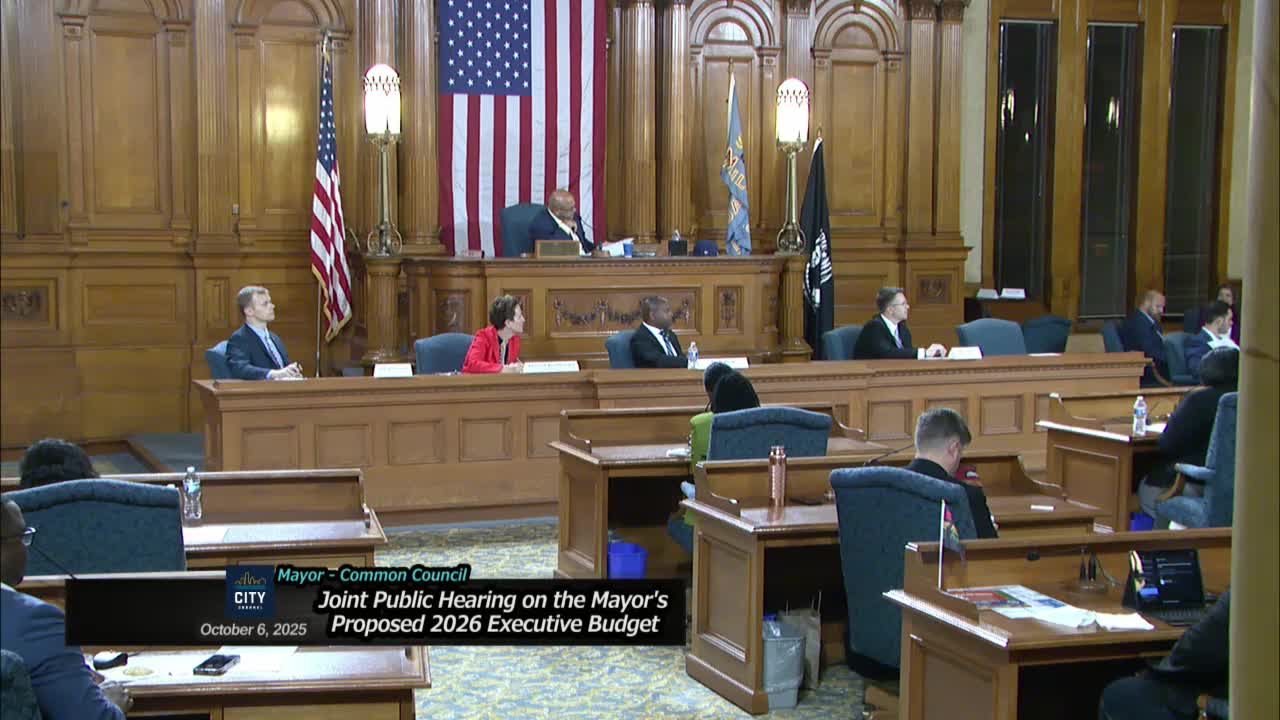
Residents and climate advocates urged the Common Council to fund climate planning and use the city’s leverage with the private utility WE Energies to accelerate renewable energy investment.
Annie Carroll, who said she lives in Alder Alex Bowers’s district, urged the council to ‘‘consider what influence it can exert on WE Energies’’ and to push the utility for ‘‘transparency and accountability’’ about energy sourcing. Carroll noted municipal ownership is one model but said it would mean inheriting fossil‑fuel infrastructure; she pointed to Ann Arbor’s municipal sustainable energy utility as an example of an alternative path.
Elizabeth Zieg, a Milwaukee resident and parent, said she appreciated that the Environmental Collaboration Office is funded in the proposed budget and asked the council to use municipal purchasing power and customer leverage to press WE Energies to invest more in renewables. Several other witnesses raised flooding and air quality concerns from extreme weather events this summer as reasons for stronger climate investments and more funding for environmental health services.
Speakers emphasized prevention and resilience measures such as green infrastructure, stormwater management and environmental health services as cost‑effective investments to reduce emergency response costs over time.
No specific policy change was made at the hearing; speakers asked the council and the mayor to consider approaches, including stronger municipal advocacy with the utility and funding for local climate and environmental programs.