Get Full Government Meeting Transcripts, Videos, & Alerts Forever!
Get email alerts on the Property Tax Rate topic
No spam. Unsubscribe anytime.
Cambridge council hears objections to 22% commercial tax-rate shift; delays vote for two weeks
Summary
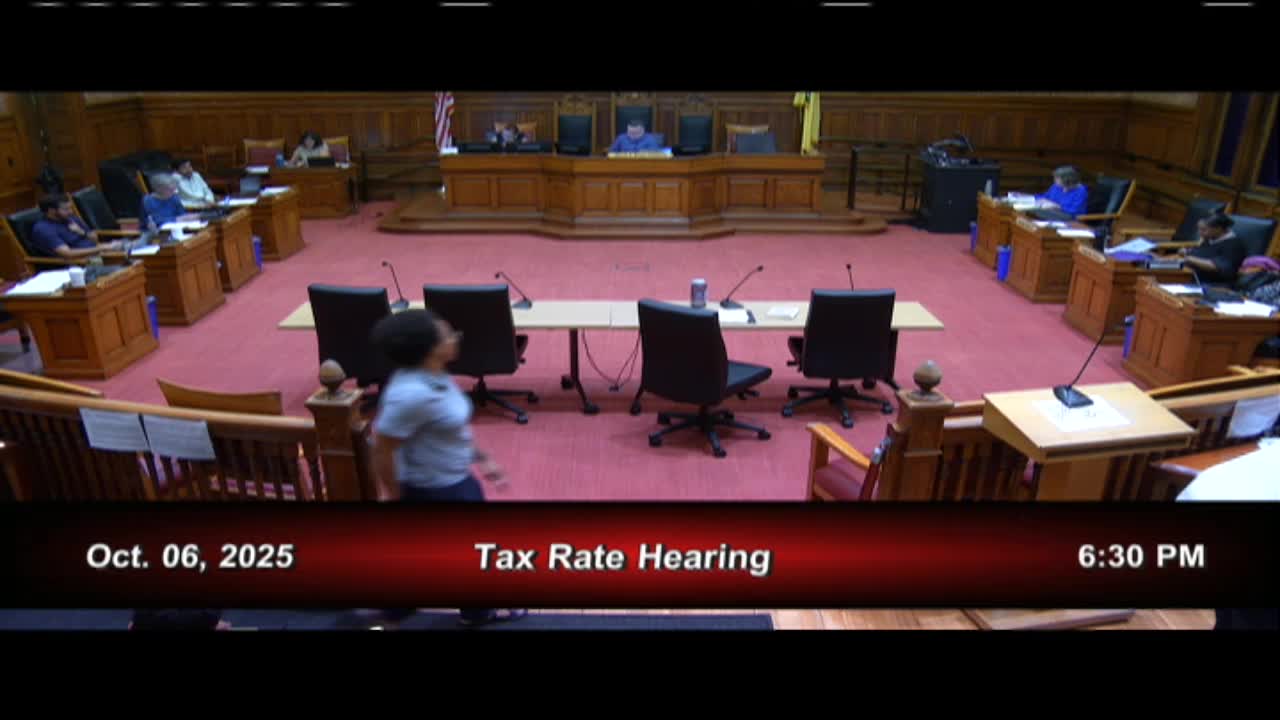
Cambridge City Council members heard more than an hour of public comment on Oct. 6 about a proposed change to how the city divides property tax burden between commercial and residential taxpayers, then delayed a final vote for two weeks.
Cambridge City Council members heard more than an hour of public comment on Oct. 6 about a proposed change to how the city divides property tax burden between commercial and residential taxpayers, then delayed a final vote for two weeks.
The council convened a special hearing on votes the city must send to the Massachusetts Department of Revenue to set tax rates for fiscal year 2026. City officials recommended keeping a “split rate” — one rate for commercial property, a lower rate for residential — while shifting the allocation so that commercial properties would be taxed at 152% of the residential rate (up from 140% this past year). City staff said that shift is intended to protect residential taxpayers, but it results in a much larger percentage increase to the commercial tax rate this year than Cambridge residents are used to.
The proposal prompted an extended public-comment period in which small-business and nonprofit leaders — including Denise Jillson of the Harvard Square Business Association, Ivy Moylan of the Brattle Theatre and Dan Marshall of the Cambridge Community Center for the Arts — said the change was announced with little notice and warned a 22% commercial tax-rate increase could be passed down to tenants and customers. They asked the council to delay the vote to allow more stakeholder analysis and outreach.
City manager’s context and staff analysis
City staff and the city manager told the council the recommended split reflects the budget the council adopted this summer and larger valuation changes that have occurred in the commercial class. The administration said the FY26 operating budget growth is 3.8% while the levy (the total property-tax dollars the city plans to collect) was set to grow 8% during the budget process. Staff explained the difference results from weaker non-tax revenues and declining commercial property values after several years of rapid growth.
Assessors and finance staff described how the proposed tax-rate shift interacts with changing valuations across commercial property types. They said commercial values across the class fell about 12.5% overall compared with the previous year, but the decline is uneven: office and lab properties have fallen the most, retail was down only slightly (about 3%), and hotel values in some cases rose (staff cited increases in the low double digits for hotels). Because rates are the inverse of assessed value, staff warned that a higher tax rate does not automatically mean a taxpayer’s bill will increase by the same percentage — a property whose assessed value drops can see a much smaller bill change even if the rate rises.
Public comments and small-business concerns
Speakers from Harvard Square and the arts community said the commercial-property class in Cambridge is not dominated by large corporations but includes many small landlords, nonprofit arts organizations and family-owned businesses that either own or pay triple-net rent for space. Denise Jillson, executive director of the Harvard Square Business Association, said the “abrupt and significant” notice and the size of the rate change risked harming small businesses and asked the council to postpone a decision until there was more analysis and outreach.
Ivy Moylan, executive director of the Brattle Theatre, said real-estate taxes already consume a substantial portion of some nonprofit budgets and that a sudden jump could force organizations to cut programs or curtail operations. Dan Marshall of the Cambridge Community Center for the Arts said higher taxes passed through by landlords could “make or break” an organization negotiating a new lease.
What the numbers mean (examples from staff)
- The city manager and finance staff told councilors the commercial tax-rate percentage increase cited in public notices — roughly 22% — describes the proposed change in the commercial rate, not the uniform change in every commercial taxpayer’s bill. - Staff said commercial-class values were down about 12.5% overall; how an individual commercial taxpayer sees a dollar change depends on that property’s class and assessed value. Office and lab owners were likely to feel less of the dollar increase because their assessments fell most sharply; hotels and some neighborhood retail could feel a larger dollar increase because their values were more stable or higher. - Staff presented a budget-and-revenue context: the adopted FY26 operating budget growth is 3.8%, the levy (property-tax dollars to be collected) was set to rise about 8% in the budget process, and the city’s estimated excess levy capacity (the city’s internal margin to raise taxes without seeking an override) is about $172 million with a noted decline from the previous year. - Staff also compared new-growth receipts: FY25 new growth added roughly $24 million in additional levy capacity, while FY26’s new-growth estimate was smaller, about $13.7 million, reinforcing the staff point that lower new growth means the city must rely more on the levy.
Council response and next steps
Councilors pressed staff for sector-by-sector examples showing how tax bills would change in different property types; staff said those examples had been circulated in a handout and would be provided publicly. Several councilors voiced sympathy with small businesses and nonprofit commenters and asked for more outreach and time to digest the numbers.
On a motion by Councilor Toner the council voted to close the public-comment portion of the hearing (roll-call vote recorded as affirmative by eight members, Mayor Simmons absent). Later in the discussion Councilor Toner invoked his charter right, asking for two weeks before the council takes final action on the tax-rate votes; the council recorded that exercise and the hearing was adjourned and the council returned to regular session. No final vote on the tax rates or the DOR filings took place at the Oct. 6 meeting.
Why it matters
Whether the council approves the staff-recommended split will determine how much of Cambridge’s FY26 levy increase is borne by commercial property owners versus residential owners. The allocation affects small businesses that typically face higher occupancy costs, tenants with triple-net leases, universities and homeowners on fixed incomes. It also shapes the city’s short-term fiscal flexibility in an economic downturn, officials said.
What to watch next
Council members asked staff to provide more granular, sector-level examples, to meet with business associations and community groups, and to make the valuation and tax-impact materials easier to find and understand online. The council’s next formal action on the FY26 tax-rate filings is expected after the two-week period Councilor Toner requested; staff said deadlines for state certification will require final action in mid-October.
Ending
Council members and staff emphasized that the public hearing is the formal point at which the valuations and proposed tax rates are made available and that the city’s analysis will be updated for distribution to businesses and residents during the two-week interval before the council votes.