Lifetime Citizen Portal Access — AI Briefings, Alerts & Unlimited Follows
Representatives call for 50% women’s participation in peace processes, reaffirm support for accountability mechanisms
Loading...
Summary
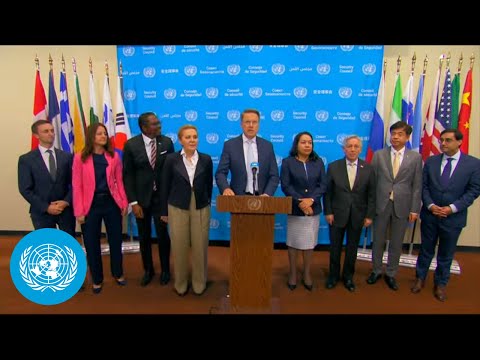
Representatives of Denmark, France, Greece, Guyana, Panama, the Republic of Korea, Sierra Leone, Slovenia and the United Kingdom issued a joint statement marking the 25th anniversary of United Nations Security Council resolution 1325 on women, peace and security and called for stronger implementation of the agenda.
Representatives of Denmark, France, Greece, Guyana, Panama, the Republic of Korea, Sierra Leone, Slovenia and the United Kingdom issued a joint statement marking the 25th anniversary of United Nations Security Council resolution 1325 on women, peace and security and called for stronger implementation of the agenda.
The signatories said they “reaffirm our unwavering commitment to advancing the women, peace, and security agenda” and urged the United Nations to make women’s participation “the norm at every stage of peace processes with a target of reaching 50%.”
The joint statement invited the UN Department of Political and Peacebuilding Affairs and UN Women to provide regular, real-time updates on progress in women’s participation in peace negotiations and transition processes. It also expressed concern about the “growing weaponization of gender” by state and non-state actors and urged donors and UN mechanisms to adopt a gender-responsive approach to peacebuilding and reconstruction funding and to track such funding separately.
The representatives called on relevant UN sanctions committees to hold dedicated meetings on gender-related issues, including briefings by gender experts, and to ensure designation criteria and mandates explicitly address systematic violations of women’s rights and gender-based violence.
On peace operations, the statement said the women, peace and security agenda should be fully integrated into all missions, and that efforts on the agenda must continue during mission transitions and withdrawals, including by retaining or deploying gender and women’s protection advisers.
The signatories committed to “enhance protection and support for women human rights defenders,” including dedicated, flexible funding for specialized protection mechanisms, and stressed that the risks defenders face must not be used as a pretext to limit their rights to participate or to express independent views.
The statement reaffirmed support for accountability for violations of the human rights of women and girls and underlined backing for core international justice institutions, naming the International Criminal Court and the International Court of Justice. It also affirmed that reproductive violence constitutes a violation of international law and called for immediate, nondiscriminatory access to medical support, reproductive health and rights services, and psychosocial care for survivors of sexual and gender‑based violence.
The joint statement closed with an appeal to Security Council members, current and future, to ensure the council’s decisions continue to highlight the impact of conflict on women and girls and that those decisions are implemented rather than ignored. “This is the time to deliver,” the signatories said.