Get Full Government Meeting Transcripts, Videos, & Alerts Forever!
Get email alerts on the Literacy Initiative topic
No spam. Unsubscribe anytime.
Sacramento County Office of Education outlines countywide literacy push; board members urge local collaboration
Summary
Becky Sullivan, director of K–12 English language arts at the Sacramento County Office of Education, told the Sacramento Public Library Authority Board on Sept. 25 that Sacramento County Reads will coordinate screening, coaching and community partnerships to address countywide literacy gaps.
Becky Sullivan, director of K–12 English language arts at the Sacramento County Office of Education (SCOE), presented the Sacramento County Reads initiative to the Sacramento Public Library Authority Board on Sept. 25, outlining recent test results, statewide screening requirements and multi‑year supports for districts.
Sullivan told the board the statewide standardized CAST test shows many students are not meeting grade‑level expectations and that the county’s results are “a little bit lower.” She described Sacramento County Reads as built on three pillars — teaching and learning, family engagement and community partnerships — and said the initiative is “grounded in the science of reading.”
The initiative seeks to raise early literacy by coordinating professional development, coaching and screening. Sullivan said, “It is new law in California that every district in the state had to adopt an early literacy screener and give it to every student in grades K–2. They had to adopt by last June, and this fall, everyone is launching into the screener.” She added that the screener should be used to flag students “at risk for reading failure,” and emphasized that it “cannot be used for high stakes testing.”
Sullivan described county work under a five‑year literacy coaches and reading specialist educator training grant that currently includes 19 Sacramento County schools and will add 11 more in January. The county also runs a community of practice (three sessions per year), provides coaching and professional development, and partners with universities to offer credentials for reading specialists and bilingual authorizations. She credited speakers and experts who have presented to the initiative, including Anita Archer and Daniel Silberstein, as part of the county’s training and outreach.
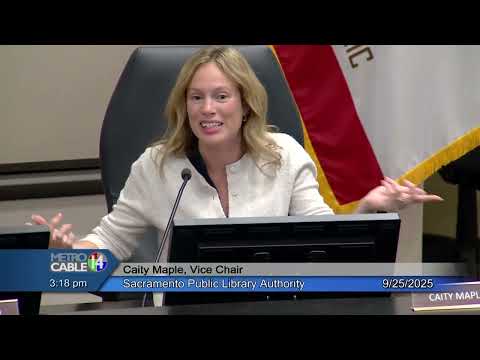
The board responded with repeated emphasis on urgency and local action. Director Bina Lefkowitz said the county’s figures should make residents “outraged and disturbed” and argued for a community‑wide response involving cities and neighborhoods. Director Noel Mora and Vice Chair Katie Maple noted local district planning and asked about partnering opportunities; Mora said his district has already been coordinating around the new screener. Director Mary Jane Lopez Taft and others highlighted neighborhood volunteer programs that bring adult readers into schools.
Sullivan also described family‑facing work and community programming: the county’s “Getting Reading Right” training, a movie screening about dyslexia, monthly office hours for districts implementing the screener, and partnership with the Dolly Parton Imagination Library, which she said has enrolled about 2,800 children ages 0–5 countywide to receive books by mail.
Board members discussed concrete library roles that could support the initiative, including book giveaways, expanded outreach and possible board resolutions endorsing literacy efforts. Chair Rod Brewer and library staff agreed to follow up with school district and county staff on collaboration opportunities.
Sullivan concluded by offering SCOE resources and said recordings and materials would be posted to the county’s channels; board members asked staff to share event links and follow up on opportunities to coordinate locally.
The presentation and discussion were informational; no board votes or formal actions were taken on the initiative during the meeting.