Get Full Government Meeting Transcripts, Videos, & Alerts Forever!
Get email alerts on the Public Controversy Proclamation topic
No spam. Unsubscribe anytime.
Clergy and residents protest Ocala proclamation honoring Charlie Kirk; city receives mixed public reaction
Summary
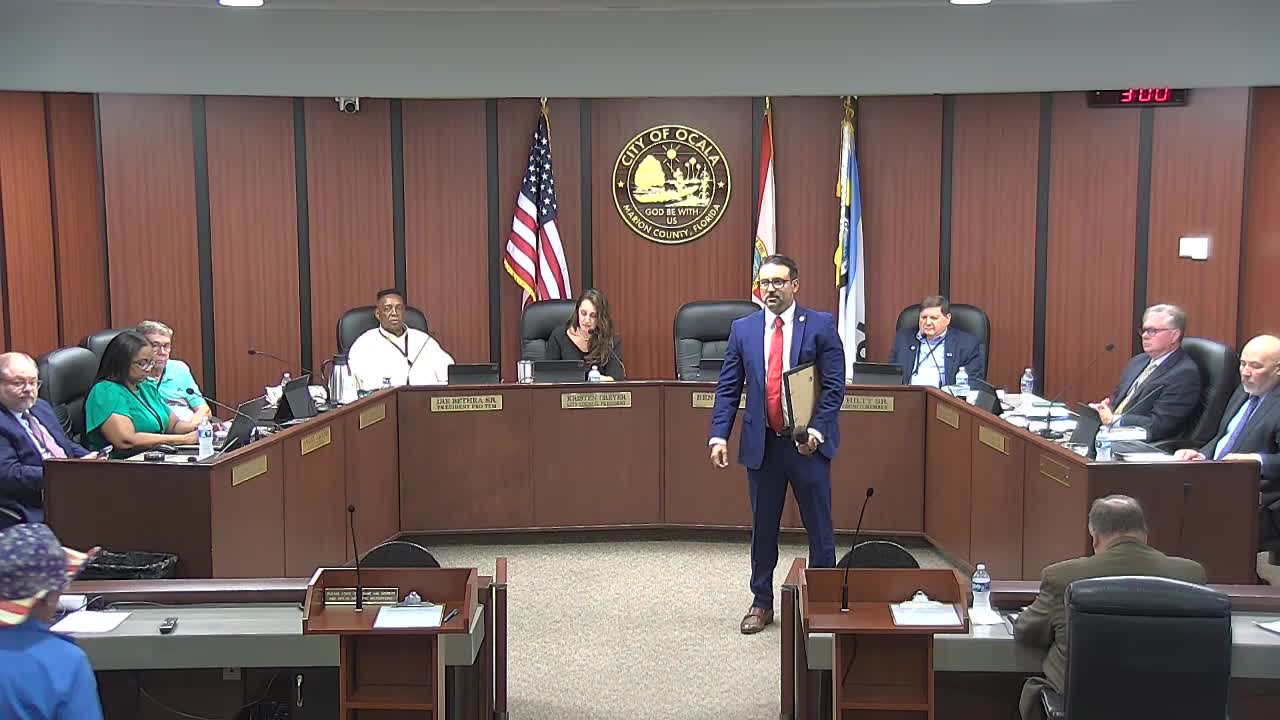
Mayor Ben Marciano presented a proclamation recognizing Oct. 14, 2025 as a day of remembrance for Charlie Kirk. Several local clergy and community leaders spoke during public comment to urge reconsideration, saying such recognition is hurtful to Black and brown residents; supporters of Kirk also addressed the council.
Mayor Ben Marciano on Oct. 7 presented a proclamation recognizing Oct. 14, 2025 as a day of remembrance for Charlie Kirk. The proclamation — read by the mayor and presented to Annie Marie Delgado of Conservative Watch USA — drew public comment that ranged from strong objections by local clergy to expressions of gratitude from Kirk supporters.
Why it matters: The mayoral proclamation, unlike an ordinance, is a ceremonial recognition but prompted substantive public testimony and pointed debate about community values, racial equity and the appropriateness of honoring a polarizing national political figure.
What speakers said: Several clergy and community leaders urged the council and mayor to reconsider the proclamation. Jerome Gamble, president of the Marion County NAACP branch, said he opposed plans for “the martyrdom celebration, sainthood of an individual whose views were counterproductive to the lives, accomplishments, progress, and character of Black and brown people in this city and in this county.” He asked the city to “pump the brakes” and to re‑examine the historical and civic implications.
Reverend Reginald Willis, pastor of St. Paul Missionary Baptist Church, described his objection as a “total dissent” and told the council he found the proclamation offensive because, in his view, Kirk’s public statements had promoted harassment and violence. Reverend Martin Smith of Reddick likewise urged caution and said honoring the individual would be “disheartening” to many residents.
Speakers who supported the mayor’s action or praised Kirk also addressed the council. Michael McAdams said Kirk had motivated young people to civic engagement and described that impact as positive for him personally. Others on the dais during the proclamation included Annie Marie Delgado, who accepted the recognition on behalf of Conservative Watch USA.
Council and mayor response: The mayor delivered the proclamation on the council dais; no council vote to adopt or rescind the proclamation is recorded in the transcript. Councilmembers and staff acknowledged the public comments and a councilmember asked about the council’s ability to issue or decline proclamations. The city attorney and staff did not identify any formal mechanism in the meeting transcript for council to rescind a mayoral proclamation at this session.
Context: The proclamation text read into the record described Kirk as a national organizer and advocate for civic engagement and urged residents to reflect on his legacy; it also noted U.S. congressional acknowledgement of his legacy in a resolution. Public testimony at the meeting pressed for sensitivity to the perspectives of Black and brown residents and asked the mayor and council to reconsider whether the recognition was appropriate for Ocala.
Next step: The transcript records public comment but no subsequent council action to revoke or amend the proclamation. Members of the public and clergy said they would continue to press the council on the issue.