Get Full Government Meeting Transcripts, Videos, & Alerts Forever!
Get email alerts on the Municipal Finance topic
No spam. Unsubscribe anytime.
Mayoral contenders spar over fiber, municipal power and water as revenue strategy
Summary
Incumbent Mayor Dallas and challenger Theron debated how the city should generate revenue to fund services and avoid raising taxes, with Dallas emphasizing negotiated developer value, fiber and municipal power and Theron urging caution about bond debt and timing.
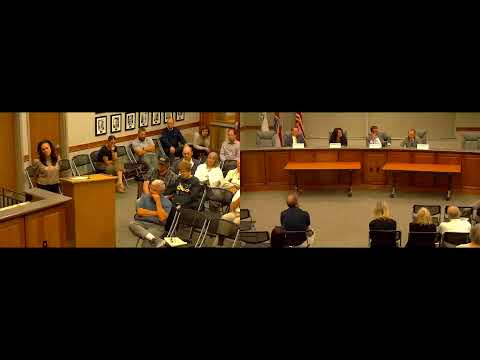
Incumbent Mayor Dallas and City Council member Theron, the two candidates in Mapleton’s mayoral race, spent a large portion of their debate arguing over how the city should generate revenue to pay for services and growth.
Dallas told the audience that securing new revenue is the city’s most urgent task, highlighting recent development negotiations, the city’s fiber project and a plan to pursue municipal power as revenue sources. “The most important things is securing revenue for our future, fiber. 1 of the most important things. It's been a wild success so far,” he said, and added that the administration had recently signed an agreement providing “an additional thousand acre feet of water just through that single agreement.”
Theron agreed that the city needs revenue but said Mapleton should not rush into large bonding or enterprise projects without ensuring the city can afford them. “I think we are $25,000,000 bonded in debt right now for the fiber program,” he said, arguing the city should “let things settle for a bit, see where we’re at financially” and avoid actions that would force tax increases.
Why it matters: Both candidates framed revenue as the key lever to preserve services without raising property taxes as the city grows. Dallas described using negotiations with developers to secure parks, trail improvements and other in-kind infrastructure, plus leveraging utility enterprises, to expand the city’s revenue base. Theron warned that aggressive borrowing or rapid expansion of municipal enterprises could create financial risk and advocated prioritizing spending controls and measuring capacity before committing to expensive projects.
Details and context
- Developer negotiations and in-kind value: Dallas said renegotiations with developers produced “17 and a half million dollars of value” and cited specific park acreage and amenities obtained through agreements he negotiated. He argued that an active mayor who leverages relationships is better positioned to get those deals for the city.
- Fiber and power: Dallas presented the fiber rollout as already generating tangible benefits and said municipal power (bringing utility service under city control) could provide ongoing revenue and help avoid tax increases. Theron said he supports exploring creative revenue but cautioned that prior bonding for fiber means the city is already carrying significant debt and urged caution.
- Water security: Dallas described a recently signed agreement with Mapleton Irrigation Company that he said adds roughly 1,000 acre-feet of water to the city’s portfolio. He emphasized the mayor’s role in those negotiations.
What the candidates did not agree on
- Timing and risk appetite: Dallas urged immediate action to secure enterprises and revenue streams now to avoid higher taxes later; Theron urged a pause to review liabilities and budget capacity before taking on more large-scale projects.
- Who should lead negotiations: Dallas argued his experience and relationships make him effective at extracting value from private developments. Theron said the city should be careful about who negotiates and that council members should be more present in negotiations to ensure broader oversight.
Election timing: Both candidates reminded the audience the general election is coming and urged turnout; no formal city vote or council action occurred during the event.
Provenance: The debate excerpts above are drawn from candidates’ answers during the mayoral debate beginning with Dallas’s answer to the question about the city’s next most urgent project (transcript time ~1268.405) through subsequent back-and-forth on fiber, water and municipal power (discussion continuing through ~1517.16).