Get Full Government Meeting Transcripts, Videos, & Alerts Forever!
Get email alerts on the Housing Trust Fund topic
No spam. Unsubscribe anytime.
City staff recommend nearly $20 million for eight affordable housing projects; council scheduled vote for Oct. 27
Summary
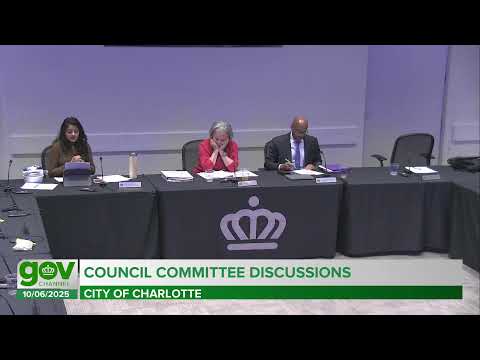
City staff presented Charlotte City Council with recommendations to award housing trust fund dollars to eight proposals and asked council to consider the package at a business meeting scheduled for Oct. 27.
City staff presented Charlotte City Council with recommendations to award housing trust fund dollars to eight proposals that responded to the city27s most recent Housing Trust Fund request for proposals, and staff asked the council to consider those recommendations at a business meeting scheduled for Oct. 27.
Rebecca Heffner, director of Housing and Neighborhood Services, said the round produced eight proposals seeking almost $20 million in total: three rental housing production proposals requesting about $9.86 million; three homeownership proposals requesting about $3.8 million; and two supportive-housing or shelter proposals requesting about $6.25 million. Heffner said staff are recommending that council approve all eight proposals and summarized each project, the proposed affordability levels and key partnerships.
Selected project highlights from staff27s presentation: - Kendall Crossing (Paces Foundation): senior 4% tax-credit development near Moores Chapel Road and I-485 seeking a reduced City ask of just under $5 million with units capped at 70% of area median income (AMI); Roof Above would provide resident services and a portion of units for seniors on fixed incomes. - River District Apartments (Laurel Street Residential): previously funded project returning for an additional $900,000 gap request so the developer can close financing in November; council staff noted the developer agreed to extend affordability to 99 years. - Weddington Road Apartments (DreamKey): originally approved in 2016 and delayed by litigation, DreamKey returned with a reduced ask of about $4 million; staff said the site is in District 7 and that the project includes family-sized (three-bedroom) units and a 30-year affordability period. - Abilene at Newell Townhomes (DreamKey): previously funded homeownership project asking for an additional $702,000 to address new stormwater and sidewalk requirements discovered during full planning review so the original 54-unit design can be preserved. - Ellington Townhomes (DreamKey/Crossroads CDC): 35 for-sale townhomes planned for Greer Heights, capped at 70% AMI, on county-owned land; staff noted strong site attributes and concerns about displacement pressure in the neighborhood. - Unity Oaks (Habitat for Humanity with Maranques Foundation and True Homes): mixed-income, 71-unit townhome development in Newell; Habitat asked for City funding for 31 affordable units and proposed 99-year affordability and a shared-appreciation resale mechanism. - Dream Center campus (Charlotte Mecklenburg Dream Center/True Homes): transitional housing campus for priority populations that would include Phase 1 with eight homes (48 rooms) and extensive on-site services and workforce partners; proposal seeks funding for Phase 1. - Mecklenburg County hotel conversion: county-identified hotel site with 62 rooms requested $4.25 million from the City (half of an $8.5 million capital estimate) to convert to non-congregate shelter; county would own property and private fundraising was described as planned to underwrite the first several years of operations.
Heffner provided budget context: after earlier rounds, roughly $68.6 million of the $100 million housing bond remained available; if the eight recommendations are approved, the Housing Trust Fund balance would be about $48.6 million. She said staff had included leverage, affordability periods and amenity/service commitments in their analysis and that some projects had previously been awarded and now seek additional gap support.
Council discussion at the meeting focused heavily on cost per unit, long-term affordability for residents on fixed incomes (especially seniors), and the tradeoffs between deeper affordability on fewer units versus spreading funds across more projects. Several councilmembers said the per-unit costs on some proposals were high for the amount of new affordable housing delivered and urged staff and developers to find more leverage or lower costs where feasible.
On the shelter proposals, council members pressed county and nonprofit partners for detail on operations funding, private-sector commitments and whether shelters would accommodate families together. On the Mecklenburg County hotel conversion, staff and county representatives said the county has negotiated a purchase-and-sale agreement, that the capital cost estimate is about $8.5 million (about $5.5 million acquisition and $3 million renovation) and that the city contribution request was $4.25 million (half of capital cost). Staff said private fundraising for three years of operations was being pursued but that formal commitments had not yet been finalized.
The Housing and Neighborhood Services director and committee members requested the council take further time to review the materials and the committee expressed a mix of support and caution. In committee, at least one motion was taken to excuse a council member from participating in the discussion and vote due to a potential conflict of interest; the council called for that recusal and approved it on a voice vote.
Staff noted the council vote on the recommended awards is scheduled for Oct. 27; staff also said that the next funding round (the winter round, which typically includes state tax-credit cycle projects) will be released in late 2025 and awards would be heard in April 2026. Heffner said projects typically require additional time after council approval for design, financing closings and permitting before construction begins.
Why it matters: The recommended awards would move forward new rental units, homeownership opportunities and additional shelter capacity. Council members flagged the need to balance per-unit costs with the city27s goal of producing and preserving housing across neighborhoods while protecting long-term affordability for the most vulnerable residents.
Sources: Housing & Neighborhood Services presentation to council; Rebecca Heffner, Director, Housing & Neighborhood Services; Warren Wootton, Assistant Director for Affordable Housing; project summaries in the Housing Trust Fund request-for-proposals booklet.