Get Full Government Meeting Transcripts, Videos, & Alerts Forever!
Get email alerts on the Vaping Prevention topic
No spam. Unsubscribe anytime.
Health and Wellness subcommittee plans student poster contest, assemblies and signage to curb vaping
Summary
The North Kingstown Health and Wellness Subcommittee discussed a multi-pronged campaign — poster contests, assemblies, signage and student-led messaging — to reduce vaping among students, and considered logistics for a year‑long program across elementary, middle and high schools.
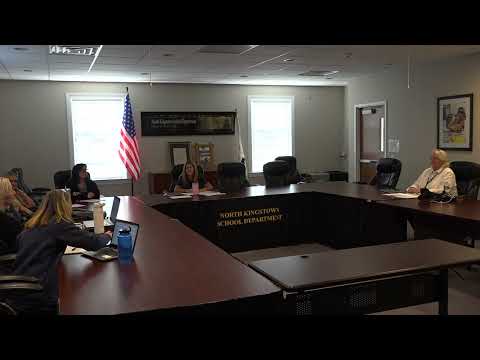
Sherry Kennedy, chair of the Health and Wellness Subcommittee and a member of the North Kingstown School Committee, said the group plans a student poster contest, assemblies and new signage to address vaping among students.
The subcommittee discussed hosting an age‑tiered poster contest that would produce signs or digital graphics for use at school entrances and events, with winners displayed in school common areas. “I still like that idea we had about creating the sign and stuff,” Kennedy said, describing a contest with different rubrics by grade level so entries can be judged fairly.
The contest would target elementary fifth graders as a core group and expand to middle and high school levels with different requirements — paper posters for younger grades and digital design for older students. Committee members debated materials, size, colors and how a winning design would be converted into a durable sign or rotated in a display case.
Tricia, Child Nutrition Services, described a visible signage example she saw at the Boston Museum of Science that used portable A‑frames reading “no smoking and vaping on the property” and suggested similar, movable signs for school events. “It just jumped out at you like no vaping on the property,” Tricia said of the A‑frame approach. The committee discussed placing signs at athletic events and dances to catch the attention of adults as well as students.
Members emphasized involving students directly: recruiting middle and high school students and groups (for example, arts, communications or digital design classes) to create content and run peer‑to‑peer campaigns. Kennedy said assemblies in middle schools this week included speakers who discussed consequences and recovery, and that students responded positively: “My daughter personally were excited… it just seemed like it went over really well.”
The subcommittee also discussed incentives and logistics: whether to run one contest per school, grade tiers (for example, 3–5, 6–8, 9–12), and details such as limiting colors or word counts so entries can be standardized for printing and display. They reviewed past contests (Tar Wars and American Heart Association poster contests) as models and proposed a rubric with both objective criteria (visual clarity, spelling) and subjective categories (creativity) to select winners.
Members weighed print versus digital outputs for different ages. For high school, they proposed digital design entries that could be displayed on school screens or social media feeds; for elementary schools, they discussed laminated foam‑board signs to place in fifth‑grade areas. The subcommittee recommended piloting the program this school year and rotating winners annually so the message is continually reinforced.
Committee members suggested coordinating the contest with existing student programs (Boy Scouts/Girl Scouts community projects, Democracy Days) and school clubs to maximize outreach. They also discussed using professional marketing techniques — short “hook” videos and split‑screen formats popular on social platforms — to increase student engagement and attention.
The subcommittee did not adopt a formal motion during the meeting. Members tasked themselves with drafting a rubric, checking printing/material costs and identifying school contact points for rollout. Kennedy said she will follow up with principals and staff to refine logistics and confirm where signs could be displayed in each building.
The discussion concluded with an agreement to develop concrete contest parameters (grade bands, rubric, submission format) and to invite students and teachers from art, communications and digital design to participate in planning and outreach.