Get Full Government Meeting Transcripts, Videos, & Alerts Forever!
Get email alerts on the State Legislation topic
No spam. Unsubscribe anytime.
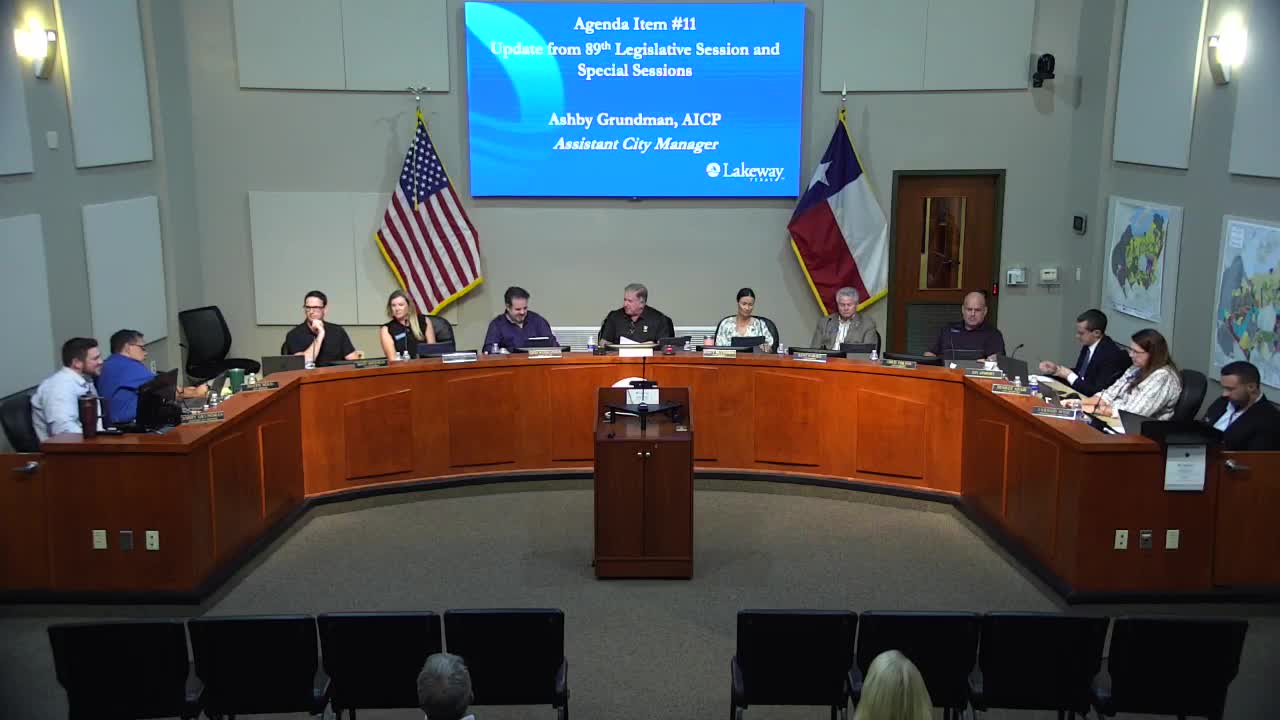
Staff summarizes 2025 legislative session: preemption, public‑safety bills and AI rules among items affecting Lakeway
Summary
Assistant City Manager Ashby Gredman summarized key 2025 state legislative actions affecting home-rule cities, including a 3-business-day agenda notice requirement, procurement threshold increases, new public-safety reporting and active‑shooter planning mandates, and several bills tied to land‑use and emerging technology oversight.
Assistant City Manager Ashby Gredman briefed the council on bills passed in the 2025 regular and special sessions that affect municipal operations, procurement and land use.
Gredman identified five main themes: continued state preemption pressure affecting zoning and local control; public-safety reforms including active-shooter planning requirements; expanded transparency and agenda/posting mandates; changes to procurement thresholds; and emerging-technology (AI) regulations. He noted that House Bill 1522 requires a three-business-day agenda notice and posting of taxpayer-impact statements (the city already met the new standard), and that a change in procurement thresholds (Senate Bill 1173) raised the level at which competitive procurement is triggered from $50,000 to $100,000.
Gredman reviewed several other items of local interest: bills affecting written-protest thresholds for rezoning (House Bill 24), preemption steps related to food establishments' sound regulation (Senate Bill 1008), and wildfire-risk study requirements (Senate Bill 34). He also mentioned bills tied to municipal-court privacy protections and active-shooter preparedness (House Bill 33). Several bills relating to HOT carveouts were discussed; staff noted a municipal carve-out for sports events did not pass and will be pursued again.
The council requested continued monitoring of the bills' implementation, an assessment of new compliance burdens and follow-up on any operational changes needed to implement the new statutory requirements.