Get Full Government Meeting Transcripts, Videos, & Alerts Forever!
Get email alerts on the School Social Work topic
No spam. Unsubscribe anytime.
Pennridge social workers outline workload, McKinney‑Vento and foster‑care duties and community partnerships
Summary
Three Pennridge school social workers and student‑services staff summarized daily work that includes attendance plans, crisis intervention, McKinney‑Vento homeless liaison duties, foster‑care liaison responsibilities and community partnerships. Staff described broad needs, high demand and gaps in outside mental‑health availability.
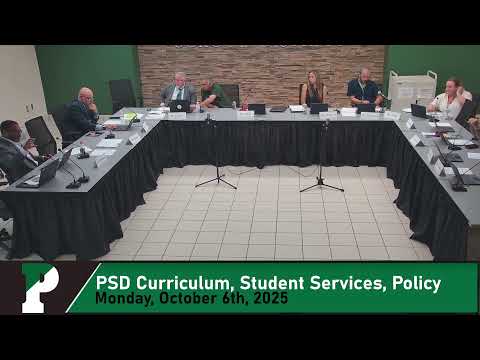
Mr. Johnson, student‑services staff lead, introduced school social workers Alicia Landgraf, Dawn Hoops and Joe Warner and asked them to present an overview of their work.
The social workers described four primary focus areas: academics (attendance and supports), school climate, social‑emotional learning and mental‑health supports. They described common tasks such as student attendance improvement plans, short‑term crisis intervention, group and individual counseling, staff in‑service training, and referral and coordination with community providers.
Alicia Landgraf described her role as McKinney‑Vento homeless liaison and explained the McKinney‑Vento definition staff use (students without a fixed, regular and adequate nighttime residence). She said the liaison work includes immediate enrollment, arranging transportation and connecting families with shelter, food, clothing and other basic needs; staff also noted the district helps arrange college‑related supports when needed.
Joe Warner described foster‑care liaison duties such as best‑interest determinations, coordination with children‑and‑youth agencies, and arranging expedited enrollment and transportation. The social workers said those processes can be time‑consuming because records, immunizations and placement logistics are often incomplete when families move or placements change.
Staff listed community partnerships used to serve students, including local nonprofits and county behavioral‑health and children‑and‑youth networks; they described regular attendance at county coordination meetings. They said some contracted mental‑health services (for example, a short‑term counseling contract referenced as Lakeside) and the Student Assistance Program (SAP) provide additional capacity for short‑term counseling and small groups.
Board members and staff asked about capacity. Presenters said there are three full‑time social workers in the district and described a steady stream of referrals; one board member said that ratio is small compared with larger caseloads in the district. Social workers said their work is often triage‑oriented and that they also provide family supports and ongoing relationship‑based interventions. They cited frequent emergent calls (for example, a recent bereavement requiring immediate case coordination) and noted long community wait times for some outside mental‑health services, which increases demand on school‑based staff.
The social‑work team concluded by describing student leadership programming (an Upstanders peer‑education program led by high‑school students that visits middle and elementary grades) and asked board members for ideas to expand prevention and family‑education programming to reduce crisis demand. No board action was taken; staff said they will continue coordination and bring related scheduling and training items back to committee as needed.