Get Full Government Meeting Transcripts, Videos, & Alerts Forever!
Get email alerts on the Budget And Finance topic
No spam. Unsubscribe anytime.
Robbinsdale board lays out timeline, advisory role and public survey for statutory operating debt plan and Reimagine 2030 work
Summary
District leaders told the Robbinsdale Area Schools board they will ask the Finance Advisory Council to produce revenue and expenditure assumptions while the board develops programming and facility options; a consultant survey of residents is planned to measure public sentiment ahead of any referendum discussions.
Robbinsdale Area Schools administrators told the school board on Oct. 6 they will pursue a two-track process over the next three months: ask the Finance Advisory Council to develop the near-term fiscal assumptions for a statutory operating debt (SOD) plan while the board and administration develop program and facility options tied to the Reimagine Rdale Vision 2030 recommendations.
The SOD planning work, Chief Financial Officer Kristen Ho Bridal said, requires clear financial projections, specific strategies and a multi‑year monitoring framework. Ho Bridal told the board the district must submit the SOD plan to the Minnesota Department of Education by Jan. 31, 2026, and that the work will include an Excel-based multi-year financial model plus narrative explaining assumptions and choices.
Board members and staff said the timeline matters because assumptions about enrollment, revenues and expenditures will shape potential options for staffing, contingency budgeting and school facility changes. Assistant Superintendent Dr. McDowell outlined a staff plan to keep the board informed and to coordinate community engagement while the Finance Advisory Council (FAC) focuses on financial assumptions.
Administrators described the FAC schedule as intensive: recurring meetings roughly every two weeks in October and November to produce recommended assumptions on student enrollment projections, unrestricted revenue and typical expenditure drivers (utilities, transportation, staffing). Ho Bridal said the FAC will present its recommended assumptions to the board; if the board prefers to do that work directly rather than rely on the FAC, she asked the board to say so immediately so staff can reassign work.
The board pressed on where programming and facility discussions will intersect with FAC work. Administrators said the FAC will focus on annual fiscal assumptions while the board — supported by administration — will address programming and school‑closure options, contingency budgeting and staffing. That intersection, administrators said, will be scaffolded through the short-term timeline so numbers and program options can be reconciled before November decision points.
As part of the outreach plan, the district has contracted Morris Leatherman Research to field an initial residential “atmospheric” survey of community perceptions. Dr. McDowell said the survey (about 57 questions) will gather baseline sentiment about Robbinsdale schools, tax‑tolerance measures and community reactions to the Reimagine 2030 recommendations; results are scheduled to be presented to the board at its Nov. 3 meeting. Board members asked that any additional survey questions requested by the board be submitted promptly because survey administration takes roughly two weeks.
Ho Bridal also gave a preliminary budget status: she said preliminary audited numbers indicate the district’s unassigned fund balance may be close to negative $11,000,000, and she warned that cash‑flow borrowing could be necessary if conditions do not change. She said some district funds are invested but that the overall investable balances are declining as cash is consumed; a full audit is expected for the board’s first November meeting.
Board Chair Evans Becker and several directors emphasized the need for options and clearer pacing so individual board members serving on the FAC can align their committee work with the board’s programmatic discussions. Director questions included requests for projections on open‑enrollment impacts by school, more detail on the FAC agenda and methodology for the Leatherman survey.
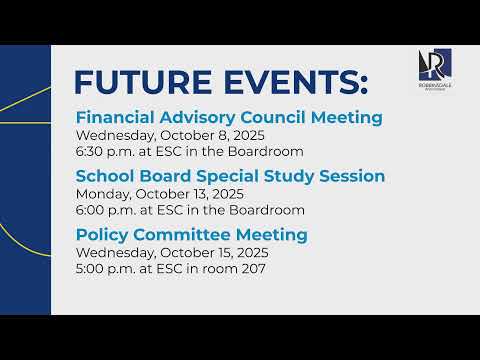
Administrators said they will bring draft options, more precise timelines and supporting data to the board at upcoming study sessions. The board scheduled multiple study sessions between Oct. and mid‑December to complete the short‑term work that must feed the SOD submission.
Why it matters: the SOD plan and Reimagine 2030 work together determine near‑term budget adjustments, potential school consolidations or closures, and whether the district considers a future bonding or referendum measure. The district’s projected operating deficit and the board’s decisions about programming and facilities will directly affect staffing, services and budgeting for students and families.
What’s next: the FAC begins focused meetings in mid‑October; the Morris Leatherman survey will be administered in the coming weeks and McDowell is scheduled to present results on Nov. 3. Administrators will present more detailed options and fiscal modeling at study sessions before the board must finalize submissions in January.