Committee advances Medicaid reimbursement increase for ambulance services amid rural access concerns
Loading...
Summary
The committee advanced 26LSO135 to increase Medicaid reimbursement for ground emergency medical services to 100% of the current Medicaid rate, with an appropriation of $1.3 million general fund plus matching federal funds; supporters said higher rates would help shaky volunteer and small paid EMS operations.
The Labor, Health & Social Services Committee on March 17 approved draft bill 26LSO135, a proposal to increase Medicaid reimbursement for ground emergency medical services (EMS) to 100% of the current Medicaid rate for the 2026–28 period, and appropriated $1.3 million in general fund with a matching federal share.
The bill draft, presented by Legislative Service Office staff, would raise EMS payment levels beginning July 1, 2026 and require a Department of Health report to the appropriations and labor committees on additional costs incurred by the rate change. LSO’s appropriation language notes an intent that the increase be included in the department’s standard budget for the next biennium.
Department of Health deputy director Franz Fuchs told the committee response times and operational capacity vary widely across the state; many rural ambulance services are volunteer or small operations facing rising equipment and training costs. He said standard, statewide cost reporting is limited for EMS and that financial information varies by business model. Fuchs and others told lawmakers volunteerism is declining and some services have consolidated under hospitals to remain viable.
Public testimony: Eric Boley of the Wyoming Hospital Association said hospitals often subsidize local EMS operations, and increasing Medicaid reimbursement would help stabilize services in rural areas. Lawmakers and witnesses discussed a related federal rural health transformation grant opportunity and whether that larger pool of funds should be used for structural reforms; state staff said EMS is a strong candidate for transformation funds but that process will take additional planning.
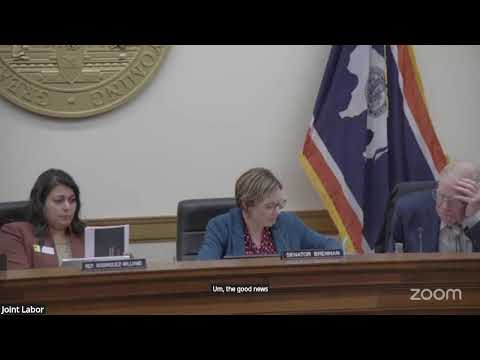
Committee action: Representative Clauston moved the bill and Senator Scott seconded. The roll-call recorded 10 ayes and 2 noes; the committee will sponsor the bill and the draft appropriation was included in the motion.
Ending note: members said the measure is one part of a larger effort to sustain rural EMS capacity and that additional federal or state tools may be needed to address fixed-cost and low-volume challenges.