
Committee approves Medicaid coverage for birth centers but rejects private‑insurer parity bill
Get AI-powered insights, summaries, and transcripts
Sign Up Free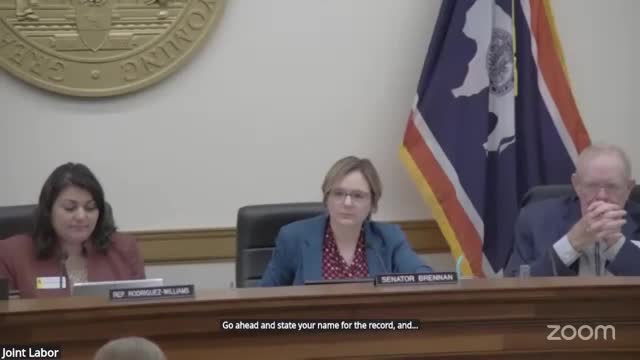
Summary
After testimony from birth-center operators, health and insurance officials, and hospitals, the committee approved 26LSO162 to allow Medicaid to enroll freestanding birth centers as facilities and rejected 26LSO237, a private-insurer payment parity measure.
The Labor, Health & Social Services Committee voted March 17 to advance 26LSO162, a bill that would authorize Wyoming Medicaid to enroll freestanding birth centers as facilities and reimburse a facility fee, and to withhold 26LSO237, a separate bill seeking private-insurer payment parity for birth-center services.
Testimony: Lisonbee Hayek, co-owner of Wyoming’s first freestanding birth center in Cheyenne, described accreditation and licensure work and told the committee that birth centers specialize in normal vaginal birth, have lower cesarean rates and lower facility costs than hospital delivery rooms. She said Medicaid currently pays midwives professional fees but lacks a facility taxonomy code to pay a facility fee to birth centers.
Jesse Springer, interim Medicaid director, told the committee that federal rules require Medicaid programs to cover freestanding birth centers if licensed providers exist in the state; Wyoming’s state Medicaid plan filed in 2013 noted no such licensed facilities then. Springer said once a facility is licensed, the state will need to change its federal state plan and that, under current Wyoming statute (title 42 list of services), the department does not have explicit authority to pay a facility fee. He told lawmakers the facility fee would likely not increase overall Medicaid costs and could reduce costs because of lower interventions and midwife professional fees compared with physician-led hospital births.
Tana Howard, deputy insurance commissioner, said several states include parity language for specified provider types; the department does not regulate provider contract terms and would not set payment levels for private plans, so private‑payer parity raises different regulatory issues than Medicaid enrollment.
Franz Hughes, deputy director of the Department of Health, confirmed licensing rules require transfer protocols and coordination with higher-level acute care; the licensing rules include a 30‑mile policy for certain one-room arrangements but licensed birth centers do not have a strict mileage limit in statute. Several legislators urged focusing licensure and Medicaid enrollment on expanding access in areas lacking local OB services.
Committee action: the committee approved 26LSO162 on a roll-call vote, recorded as 14 ayes, 0 noes. The committee voted 5 ayes, 9 noes on 26LSO237 (private‑insurer parity), and that bill failed to advance.
Why it matters: Department of Health and Medicaid staff told the committee that the appearance of a licensed freestanding birth center will trigger federal obligations and a need to modify the state plan; committee sponsors said adding a taxonomy and Medicaid facility payment is intended to expand access, lower interventions and reduce costs. Supporters also argued parity with private insurers could help scale birth-center capacity; opponents and the Department of Insurance cautioned that private‑payer parity touches insurer-provider contract law and may be more contentious.
Ending note: the Medicaid‑coverage bill (26LSO162) will be sponsored by the committee; the insurance‑parity bill (26LSO237) did not pass committee.