
Committee does not advance bill requiring coroners to report psychiatric drugs after violent deaths amid privacy and resource concerns
Get AI-powered insights, summaries, and transcripts
Subscribe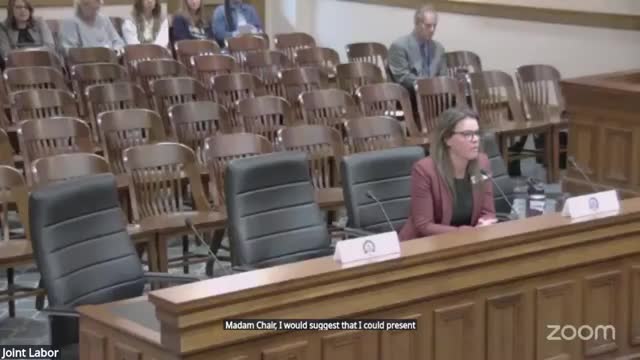
Summary
A proposed bill that would require coroners to test for and publicly report therapeutic levels of psychiatric medications in all suicides and homicides drew broad opposition from coroners, public health officials and family witnesses and was not moved by the committee. Opponents cited privacy, administrative burden on understaffed county coroner
A bill draft that would have required coroners to order toxicology screenings measuring therapeutic levels of psychiatric drugs for all violent deaths and to include psychiatric drug presence in coroner dockets and state reporting generated sharp pushback and was not advanced by the Joint Labor committee.
The draft (26 LSO 0205, "Death Data Collection and Toxicology Transparency Act") would have created new reporting requirements, required coroners to record measured blood concentrations and characterizations (therapeutic/subtherapeutic/toxic) for psychiatric drugs, and required submission of aggregated violent‑death data to the Wyoming Department of Health and the National Violent Death Reporting System (NVDRS). The draft also included a provision creating a misdemeanor penalty for a coroner, medical examiner or public official who failed to comply with the act.
Rebecca Reed, Laramie County coroner, testified in opposition and asked the committee to consider unintended consequences. Reed said violent deaths are complex and that psychiatric drugs are among the most commonly prescribed medications; their presence in a toxicology report does not establish causation. Reed warned mandatory reporting could lead to data misinterpretation, stigmatize mental health treatment, deter help‑seeking, and impose a heavy administrative burden on small, underfunded coroner offices. Reed also noted Wyoming already participates in the NVDRS and that strengthening existing systems would be preferable to imposing a new statutory mandate.
Other witnesses echoed resource and privacy concerns. Cheyenne Regional Medical Center community prevention director Britney Wardle told the committee that two county suicide fatality review teams are already functional in Wyoming (Laramie and Natrona) and several other counties are starting teams. Multiple family members testified they feared public dissemination of medication records would reopen wounds and discourage treatment; one mother and another family member opposed the measure on those grounds.
An online witness from ABLE Childs (a national advocacy group) urged transparency and cited a Tennessee law that requires coroners to test mass shooters for psychiatric prescriptions; the online witness urged a Wyoming database and annual reports to the legislature. Representative Heft, who introduced the concept, said his interest stems from a recent local tragedy and an intent to track psychotropic drug use in murder‑suicide cases and similar violent events.
Department of Health staff explained how violent‑death information is currently collected: coroners provide reports to the state’s violent death reporting system and the CDC’s NVDRS; vital records and redacted coroner dockets are available in aggregated form. Officials cautioned that Wyoming’s small population complicates anonymized aggregation for highly unusual events (an "n of 1" or very small n can quickly become identifiable). The department also noted that federal NVDRS funding comes with definitional and protocol conditions; outright refusal to follow CDC protocols could jeopardize grants.
Committee action: After public comment the committee closed the public record and took no motion to advance the bill draft. Committee staff noted that refusal to adopt the draft does not prevent an individual legislator from introducing similar legislation as a standalone bill in the future.
Why it mattered: The bill sought to create a structured mechanism for tracking psychiatric drug presence after violent deaths. Supporters argued more data would inform policy; opponents said the proposal risked privacy harms, stigmatization, excessive burdens on small county coroners, and possible conflicts with federal reporting protocols.