Get Full Government Meeting Transcripts, Videos, & Alerts Forever!
Get email alerts on the Medicaid topic
No spam. Unsubscribe anytime.
Committee withholds Medicaid birth-cost recovery repeal after mixed testimony and cost concerns
Summary
Lawmakers closed public comment on 26LSO138, heard Department of Family Services and Medicaid data showing low net recovery and high administrative cost, and the bill was withheld for lack of motion during a budget session.
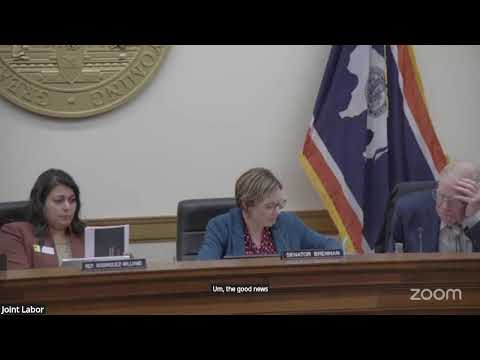
The Labor, Health & Social Services Committee took public comment on 26LSO138, a bill to repeal Medicaid birth-cost recovery, then decided not to advance the proposal during the budget session.
Christy Gordy, senior administrator with the Department of Family Services (DFS), told the committee the program has not produced the expected fiscal returns since its 2018 enactment. DFS and the Department of Health have reduced about $1,000,000 to judgment and collected $742,208.74 over seven years; about half of collections must be returned to the federal Centers for Medicare & Medicaid Services, leaving roughly $371,104.37 for the state. DFS said administrative costs paid by the child support program totaled roughly $523,487.60 over the same period, yielding a net negative return on the program.
Senators and representatives questioned whether the program deters births on Medicaid. Senator Scott said the law may have helped lower the share of births on Medicaid from over 40–50% historically to the high 30s, but Department witnesses said the link is not established. Jesse Springer, interim Medicaid director, told the committee that the Department of Health sends birth-cost data to DFS under the statute and that the state may be required under federal law to reimburse CMS half of recoveries.
Public comment included Pat Sweeney of Casper, who urged repeal, saying the program “is not working” and the attorney general’s office had been unable to hire attorneys for the work. Committee members pressed DFS for detail on cumulative costs and collections; officials provided seven-year cumulative figures and said the attorney general’s funded positions were never filled.
Action and next steps: after discussion, Representative Wasserburger and others said they were unwilling to move the bill during budget session without a clear alternative approach. For lack of a motion, the committee withheld the bill and treated it as dead for this session. Committee members suggested possible alternatives for future work, including targeted use of private counsel or state recovery mechanisms for high-value cases, changes to data-sharing to reduce nonrecoverable referrals, and looking into whether federal child-support program rules limit effective collection.
Ending note: witnesses told the committee the program yields modest collections and significant administrative expense when run through the child support program; lawmakers indicated interest in considering alternative mechanisms outside the child support office before advancing repeal.