Get Full Government Meeting Transcripts, Videos, & Alerts Forever!
Get email alerts on the Underage Alcohol Enforcement topic
No spam. Unsubscribe anytime.
Appleton committee hears seven appearances on underage alcohol sales; legal memo offers code-change options
Summary
Representatives from seven licensed establishments appeared before the Safety and Licensing Committee on Oct. 22 to explain recent dispensing-to-minor violations. City attorney outlined options to address nonappearances and how municipal demerit rules interact with state statute.
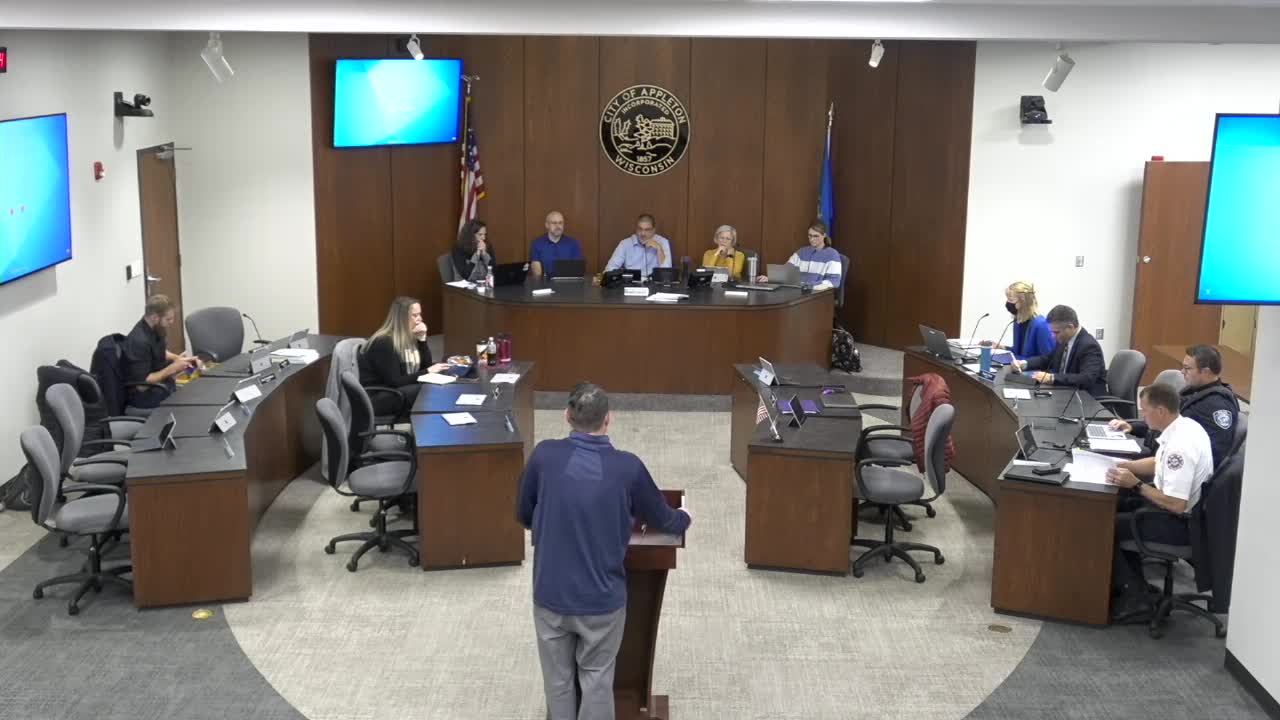
Representatives from seven Appleton alcohol-license holders appeared Oct. 22 before the City of Appleton Safety and Licensing Committee to explain recent dispensing-to-minor violations and the steps they have taken to avoid repeat incidents.
The committee heard from owners and managers of the Bar on the Avenue, Badger Mobile, CVS Pharmacy (no representative present), Festival Foods (Northland store), Good Company (response letter submitted), Hideaway Bar and Rascals Bar & Grill. The incidents discussed were classified in committee materials as “dispensing to a minor,” a violation that carries an 80-point penalty in Appleton’s demerit-point system. Several establishments said their accumulated point totals put them near thresholds that could trigger further licensing review.
The committee also received a high-level memo from the city attorney about options for addressing two recurring concerns: how the municipal demerit-point system interacts with the state statute’s look-back period for underage-sale violations, and whether the city can impose penalties for licensees that fail to appear at required committee hearings.
Owners’ accounts and corrective steps Kyle Willenkamp, identified as a co-owner of the Bar on the Avenue at 427 W. College Ave., told the committee that a bartender “actually did card the person, which was on camera,” but made an error with the month on the ID and served the person anyway. Willenkamp said the bartender was “very shook up and remorseful,” the judge reduced the fine, and the establishment added a prominent daily reminder about the 21-and-over rule in its morning production sheet.
Satvir Singh, who appeared for Badger Mobile, said his employee mistakenly read the month on an ID while distracted and that Singh had installed an ID scanner previously and later terminated the employee. The committee record shows Badger Mobile carries 200 demerit points overall, which the chair noted is over the system’s threshold for heightened review.
Ryan Pilat, identified as director at the Festival Foods Northland store, described several staffing and training changes after a June incident, including more frequent role-specific online “hub” training questions, expanding who holds the store’s liquor license, daily huddles emphasizing ID checks, and outreach to police for in-store training. Pilat said the store had 160 demerit points total for the establishment.
Shelly Pies of Hideaway Bar said a bartender of 16 years checked an ID on camera but later served the patron; Pies described monthly bartender meetings and “stop sign” stickers on coolers as reminders. Karen Blodgett of Rascals Bar & Grill said her staff found the police department’s training especially helpful: “that’s the best training that we’ve ever had,” she told the committee, and described adding the practice of asking patrons their age as an additional verification step.
Legal context and committee discussion City Attorney Berwin told the committee the state statute dictates the look-back period that governs when an underage-sale citation can be treated as a predicate offense for license suspension or revocation — a statutory constraint municipalities cannot change. However, Berwin said the city can change local consequences and how those violations are handled inside Appleton’s demerit-point system. Options described in the memo included amending municipal code to create an explicit violation for failure to appear at a required hearing, altering point values assigned to specific violations, or redesigning how demerit points are applied once a violation becomes countable under the state look-back period.
Alder Sherry S. Hartzheim and others expressed particular interest in creating a demerit or other penalty tied to nonappearance when an appearance has been required by the committee. Alder Denise Fenton asked whether the city could increase demerit points for a second dispensing-to-minor occurrence; Berwin said the demerit system is a city creation and could be revised so long as changes do not conflict with state law.
No license actions taken These were appearances only. The committee did not vote to suspend, revoke or otherwise act on any licenses at the Oct. 22 meeting; the Chair said the purpose of the appearances is to hear what occurred and what corrective actions establishments are taking. Committee members repeatedly emphasized that additional violations within the statute’s look-back window could lead to future enforcement actions, and staff said legal review considers when accumulated points merit formal action.
What happens next Attorney Berwin recommended the committee consider a clear, narrowly tailored municipal code amendment if it wants to penalize nonappearances; he said more comprehensive overhauls of the demerit system would be time-consuming and may be unnecessary for the narrow issue of required appearances. Alders indicated there is interest in drafting a resolution or ordinance to pursue the change and discussions with Legal Services would follow.
The committee heard a total of seven appearance items under the “demerit point violation” agenda heading on Oct. 22 and discussed enforcement options in a separate information item presented by attorney Berwin.
Ending Committee members urged establishments to take advantage of police training offers and to use available scanning or verification practices to reduce recurrence. The committee left possible code changes to a subsequent legislative drafting process rather than taking immediate regulatory action.