Stakeholders urge enforcement and modest rule changes as Loudoun committee reviews lodging and event standards
Loading...
Summary
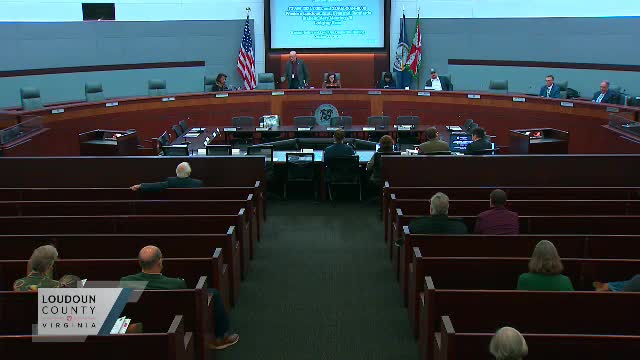
The Loudoun County Transportation and Land Use Committee on Oct. 22, 2025, convened a stakeholder meeting to review proposed zoning standards for lodging uses in Western Loudoun, including bed-and-breakfasts, homestays, country inns, rural resorts, day and boarding camps, and campgrounds.
The Loudoun County Transportation and Land Use Committee on Oct. 22, 2025, convened a stakeholder meeting to review proposed changes to zoning standards for lodging uses in Western Loudoun, including bed-and-breakfasts, homestays, country inns, rural resorts, day and boarding camps, and campgrounds. Staff presented current definitions and use‑specific standards and invited operators, neighbors and supervisors to offer feedback.
The discussion centered on a narrow set of recurring issues: how to distinguish lodging uses from event venues, whether setback and buffer rules should change, what hours amplified outdoor music should be allowed, how the county should verify that a property operates as lodging before it hosts large private events, and whether to encourage or enable campgrounds. Stakeholders and county officials largely agreed on one point: enforcement of existing rules needs strengthening.
Staff framed the ordinance review by walking through Chapter 4 use‑specific standards and Chapter 12 definitions, noting differences among the lodging categories. Planner Dave Schnickenberg summarized the existing standards: “the bed and breakfast inn, has that, specific 40 foot parking setback and, Country Inn has a 100 foot setback, for both the principal structure and for parking.” He also identified where the zoning code already addresses private-party setbacks, buffers and maximums for particular use types.
Innkeepers and tourism representatives stressed that licensed bed-and-breakfasts are small, owner‑operated enterprises that keep farmland and the rural economy viable. “Bed and breakfasts like ours aren't just businesses. We live here,” said Laura Emmelman, owner of Scarlet Springs Farm, who said flexibility to host private parties makes preservation financially possible for some farms. Manisha Shaw, owner of Stone Manor Boutique Inn and an executive board member of Visit Loudoun, told the committee the lodging sector is “heavily regulated” and urged the county to enforce existing regulations rather than create additional requirements.
Several long‑time B&B operators said modest regulatory changes could make them nonconforming and harm established small businesses. “A lot of changes, if they're made, will actually make me noncompliant,” said Sherry Shields, president of the Loudoun County Bed and Breakfast Guild and owner of Hidden View Bed and Breakfast. Multiple stakeholders asked staff to preserve the ability of licensed inns to offer the discrete, hospitality‑focused experiences that distinguish them from short‑term whole‑house rentals.
Residents and equine and agricultural stakeholders countered that some properties marketed as lodging are effectively operating as event centers and causing noise, traffic and other neighborhood impacts. “When a lodging use is really just a pretext for what has become an event center,” said resident Gene Galland, “the impacts are already starting to be felt.” Neighbors described late‑night amplified music, long event traffic queues on narrow rural roads, and uplighting as key quality‑of‑life concerns.
Noise and hours. A large portion of the meeting focused on outdoor amplified music and hours of operation. Suggestions ranged from keeping the current variety of hours by use to adopting a uniform schedule (for example, 10 p.m. Sunday–Thursday and 11 p.m. Friday–Saturday). Several participants suggested a consistent countywide rule for amplified outdoor music, while others said context (property size, buffering and intensity of use) matters. “Outdoor music doesn't care if you're playing for 1 person or a thousand people,” planning commissioner Mark Miller observed, calling for consistent hours across lodging categories.
Enforcement was the dominant theme throughout discussion of noise. Multiple supervisors and stakeholders said the county's complaint‑based enforcement system leaves neighbors with limited, uncomfortable options and allows repeat violators to continue. Vice Chair Turner summarized enforcement as the key missing element: a clear, verifiable violation system and a meaningful penalty structure would deter repeat offenders. Staff and supervisors noted that different ordinances are used by different enforcement agencies — zoning enforcement uses a decibel standard at the receiving property line; the Sheriff's Office enforces a separate audible/disturbance standard — which complicates responses.
Private parties and permits. Stakeholders and staff clarified two separate processes that often are conflated: the annual private‑party zoning permit filed by many lodging operators and the temporary special‑event permit used for larger, one‑time events. Planning staff member Theresa explained: “Yes. So to clarify, yes, that is the annual private party zoning permit. That's that's different that's different from the temporary special event permit.” Several operators said the annual private‑party form is outdated, is often submitted only at licensing, and has limited teeth; staff said the zoning administrator has discretion to deny permits when proposed events would create significant neighborhood impacts.
Participants also raised concerns about the numeric rules in the code. Staff summarized that some lodging categories include a maximum number of daily attendees and a number of times per year that the operator may exceed that maximum; participants pointed out there is no explicit numerical cap for the size of those exceedances on the current form. Multiple stakeholders recommended a simpler, more enforceable approach such as a sliding scale tied to parcel size, a clearer maximum per event tied to an on‑site parking/traffic plan, and improved cross‑checks against transient occupancy tax (TOT) records and health/sanitation requirements.
Proof of lodging operations and minimum rooms. Staff presented ideas discussed previously to reduce the use‑as‑event‑venue loophole: require proof that a lodging business is actually operating before hosting private events; require annual proof of occupancy or TOT filings; or set minimum guest‑room counts for certain lodging categories. Operators objected to arbitrary minimums that would make historic small inns noncompliant. Several people suggested simpler administrative fixes: proactive inspections tied to licensing, clearer annual reporting, and improved cross‑reference of TOT and licensing data.
Campgrounds, day camps and boarding camps. The committee briefly discussed campgrounds and day/boarding camps. Staff noted the code treats campgrounds by campsites and day/boarding camps by number of campers, and that “seasonal facilities” in several zoning provisions lacks a clear definition. County staff and stakeholders identified septic, water and infrastructure costs and natural‑resource constraints as the main barriers to creating new commercial campgrounds in Loudoun; some stakeholders said that limited, well‑planned “glamping” or tent‑camp sites could broaden the county's rural tourism options if sanitary and safety issues are addressed.
Next steps. Staff reiterated that this meeting was one of a stakeholder series and that staff will return with draft language for TLUC consideration. The committee noted the next stakeholder meeting on lodging‑related items is scheduled for Nov. 5, and staff said they will bring revised language and additional clarifications on enforcement, the distinction between annual private‑party permits and temporary special‑event permits, and proposed buffering/setback language.
The TLUC did not take formal votes at the meeting. Instead, the meeting produced a clear list of staff follow‑ups: clarifying the private‑party vs. special‑event permit process, exploring enforcement options tied to licensing and permit violations, considering a sliding scale tied to parcel size for allowable event size, and drafting clearer definitions of “seasonal” uses and buffering requirements. Those items will be folded into future draft ordinance language for committee review.