TLUC endorses Runway 30 design group recommendations including steeper climb and overnight noise track
Loading...
Summary
The Transportation and Land Use Committee endorsed design group recommendations to reduce aircraft noise around the end of Dulles Airport’s Runway 30 and will forward the package — which includes steeper early climbs and an overnight noise track that holds turns until 3,000 feet — to the Board and regional project group.
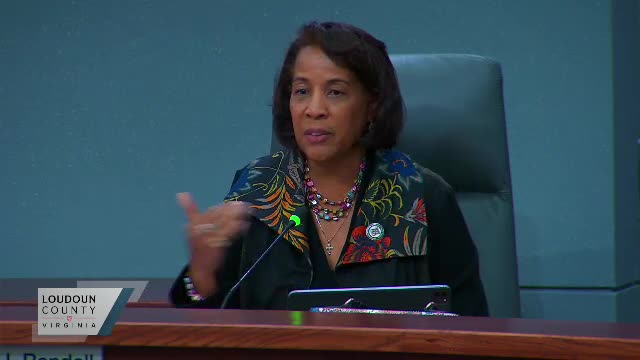
The county’s Transportation and Land Use Committee on Oct. 22 endorsed a set of design group recommendations aimed at reducing aircraft noise over residential neighborhoods near the end of Dulles Airport’s Runway 30 and asked staff to forward the package to the regional project group and the Federal Aviation Administration for further review.
The committee voted 4‑0 (one member off the dais) to recommend the design group’s package, which the consultant team described as having three implementation categories: short‑term procedural changes that could be implemented by local control and publication, a nighttime track to reduce low‑altitude overflights, and longer‑term RNAV (area navigation) procedure design that would need to go through the FAA’s formal procedure safety and implementation process.
"First on the list was safety," consultant Jim Allardyce of Vionaire said when summarizing the design group’s priorities, which also included maintaining efficiency, reducing track variability near the airport and avoiding overflight of noise‑sensitive areas such as schools and places of worship.
Short‑term recommendations that staff and consultants said could be implemented relatively quickly include: - Adopting Noise Abatement Departure Procedure 1 (NADP‑1), which directs aircraft to climb to higher altitudes sooner after takeoff, reducing noise close to the airport; the procedure is published information pilots can follow and can be listed in the airport flight information. - Implementing a nighttime noise track (recommended for 11 p.m.–7 a.m.) that would instruct departures to fly runway heading until reaching 3,000 feet before turning on course; the 3,000‑foot threshold was chosen because many standard departures in the Washington metro area use that altitude as a defined waypoint and it reduces low‑altitude turns over residential areas.
Longer‑term recommendations would redraw departure tracks using RNAV SIDs to place departures on two more predictable corridors — one that trends northwest/north and one that trends southwest — and keep flights over commercial and industrial areas as long as practicable. The consultant team said the RNAV redesign would preserve airport throughput by including divergence (two paths) so controllers could maintain capacity while tightening the lateral spread of flights.
Several Loudoun residents and community representatives who participated in the design group testified during public comment. Brambleton Community Association representative Robbie Balaram told the committee the design group reached consensus and emphasized safety and efficiency while aiming to reduce flights over schools and residential neighborhoods: "This was a free and transparent and fair process, and we reached consensus," he said.
Some residents pressed for data. Charles Lam of Brambleton said he had reviewed the 33‑page project report and asked, "Where's the data?" and asked for quantifiable estimates of the noise reduction associated with each recommendation. Consultant Jim Allardyce said staff had modeled current noise and that a detailed noise analysis had been prepared using the FAA’s AEDT model; he explained that the dispersed nature of current departure tracks requires the modeling team to create a representative "backbone" of tracks for comparison and that the team would provide numerical results to the FAA and decision makers.
Retired airline pilot Thomas Derlotte, who said he lives in Brambleton, urged controllers to keep aircraft westbound off the runway longer so aircraft could gain altitude over less‑populated, industrial areas before turning toward cross‑country routes: "There's a simple solution...instead of turning north, fly west for a while," he said.
Consultants and staff noted one scheduling risk: progress with the FAA depends on federal availability; a government shutdown has delayed FAA review and could delay formal acceptance and implementation timelines. The consultants said the two short‑term recommendations could be implemented within months after discussions with Potomac TRACON and Dulles tower and that the long‑term RNAV procedure changes would follow the FAA’s standard, longer safety and validation process.
Committee members praised the community‑led approach and asked staff to forward the package to the regional project group. The committee motion to endorse the design group recommendations passed 4‑0 with one member off the dais; staff will transmit the recommendations to the regional project group and the FAA, subject to federal scheduling.
The consultant team also said it prepared noise modeling results for submission to the FAA and that those numerical estimates are part of the record to support the design group’s recommendations.