Get Full Government Meeting Transcripts, Videos, & Alerts Forever!
Get email alerts on the Housing topic
No spam. Unsubscribe anytime.
TLUC recommends 12‑month pilot to fast‑track 100% attainable housing applications
Summary
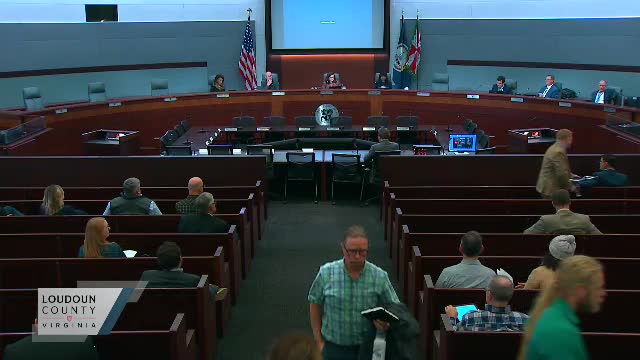
On Oct. 22, 2025, the Loudoun County Transportation and Land Use Committee voted 4‑0 (one member off the dais) to recommend a 12‑month pilot that would expedite legislative review for applications proposing 100% attainable housing, with an eight‑month target from acceptance to Board decision and a cap of three projects in year one.
The Transportation and Land Use Committee on Oct. 22 recommended that the Board of Supervisors approve a 12‑month pilot to expedite legislative review of applications that are 100% attainable (affordable) housing.
The pilot sets an intended eight‑month target from application acceptance to a Board decision, allows a maximum of three applications in the pilot year and requires applicants to submit a proffer statement at first filing committing that all units will be attainable. Committee members voted 4‑0 to forward the recommendation to the full Board; one member was off the dais.
The pilot is structured as a policy, not a binding deadline for commissions or the Board. Planning staff said the Atlantic Boulevard project demonstrated what a condensed timeline can produce, but noted that Atlantic Boulevard required extraordinary staff overtime and that the pilot aims to be repeatable without unsustainable after‑hours work.
"The proposal would be for the committee to recommend this to the board and use this outline to create this process for a 1 year period," Planning and Zoning Director Dan Galindo said during the presentation.
Key features of the proposal in Attachment 1 include: - Eligibility limited to applications that commit to 100% attainable units (the pilot allows limited exceptions where attainable units comprise a discrete portion of a larger, previously approved project). - An individualized, calendared review schedule created by the project manager with the applicant to coordinate referral windows, review periods and meeting dates. - A target eight‑month review window (staff said shorter schedules may be possible but 8 months is more realistic than the six‑month Atlantic Boulevard example). - A requirement that at least one referral response (for example, from the Virginia Department of Transportation or another reviewer) be received before a planning commission public hearing; additional late referrals would still be considered by decision makers. - Pre‑application meetings and a formal supervisor/commissioner briefing to surface major policy issues early, with staff present at those briefings so elected officials hear referral issues in context rather than mediating disputes. - Applicants must provide complete materials rather than piecemeal submissions, and the project manager may approve short, limited schedule adjustments when necessary.
Dan Galindo told the committee staff had worked with multiple departments and a fast‑track review group to craft the approach and that staff will evaluate the pilot at year end and return with proposed tweaks or expansion.
Private developers and local housing advocates who spoke during the public input period urged the committee to adopt the pilot and to consider making it permanent. "Time kills deals," Mark Glickman of Enterprise Community Partners said. "Every month of delay means higher costs, lost financing, and fewer homes built." Glickman urged codifying the expedited review and ensuring staff capacity to sustain it.
Builder Kim Hart, who said his firm used the county pilot for a recent project, said the pilot produced "rezoning application to having our building permits within 18 months" and that, if on schedule, occupancy could follow in about three years — an example staff and speakers used to illustrate the benefits of predictable timelines.
Staff cautioned that double advertising (publishing both planning commission and Board notices in advance) is administratively possible but is not being promised as an automatic feature of the pilot because it requires extra upfront staff work and expense; if double advertising is used and the project later follows the normal timeline, the applicant would cover the additional advertising cost.
Staff also said current land‑use review staffing levels can handle the limited pilot this year but recommended a post‑pilot assessment to determine whether additional staff capacity would be needed for expansion.
The committee motion recommended Board approval of the 12‑month pilot as provided in Attachment 1 to the Oct. 22, 2025 action item. The motion passed 4‑0 with one member off the dais. Staff said they will coordinate public notification with the Department of Housing and Community Development and other partners if the Board adopts the pilot.
If the Board approves, staff will accept pilot applications starting in January, and will return at the pilot’s conclusion with an evaluation and recommended next steps.