Get Full Government Meeting Transcripts, Videos, & Alerts Forever!
Get email alerts on the Student Services topic
No spam. Unsubscribe anytime.
District social work program faces funding cliff, staff shortages, leaders warn
Summary
Lead social worker Katie Frutiger told the board RISE social work staffing is down and a federal grant supporting the program expires Sept. 30, 2026, putting continued in-school counseling and outreach at risk.
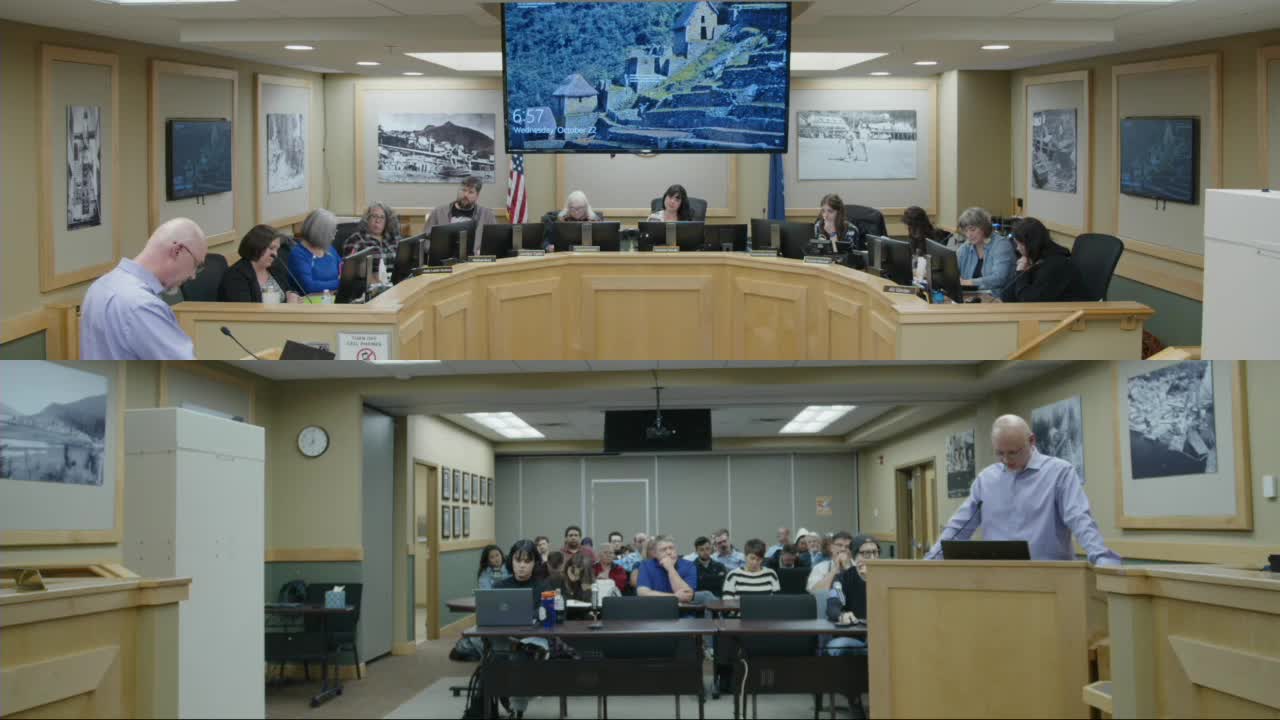
Lead social worker Katie Frutiger told the Ketchikan Gateway Borough School District board on Oct. 22 that the district's RISE social work program is at risk because federal grant funding runs through Sept. 30, 2026, and recruiting licensed school social workers has become difficult.
Frutiger said the program currently has two social workers on staff, with three open positions. She said recruitment is challenged by the elimination of a state tuition support program that previously helped candidates complete school‑social‑work certification and by the national trend toward telehealth positions that offer higher pay and remote work.
"We are at a substantial risk of losing this critical service," Frutiger said, summarizing the team's view.
Why it matters: The district’s social‑work team provides case management, suicide prevention and postvention support, McKinney‑Vento (homelessness) assistance and outreach. Frutiger gave the board a snapshot of caseloads and contacts: by Oct. 15 this school year the team had recorded 176 contacts in secure social‑work logs, compared with 367 contacts recorded by the same date in 2024. She said that decline reflects a 60% cut in social‑work staffing but only a 52% decline in contacts, indicating the remaining staff are absorbing far more work.
Frutiger highlighted the program's work on suicide prevention protocols, partnerships with community providers and MOUs that enable in‑school services. She said top concerns in recent log notes were suicidal ideation, housing insecurity and self‑harm. She noted the program's federal SAMHSA grant provides funding through Sept. 30, 2026, but that a sustainable funding plan beyond that date has not been finalized.
Student comment: High‑school student Aden Cornwall addressed the board during public comment and linked his own survival to access to school social work. "The reason that I am able to speak in front of you here today, the reason that I am not in a box in the ground, is that I knew that when I was coming to school, if I needed support, I could get it through the social worker," Cornwall said.
Board response and next steps: Board members and staff acknowledged the program's role and asked staff to pursue funding options. Frutiger said she and district staff are seeking grants and community partnerships; the board asked for follow‑up information on funding scenarios and recruitment support.
Ending: Frutiger encouraged the board to consider sustainability options and said staff will return with grant and partnership updates. The board asked staff to include social work funding as a priority in upcoming budget discussions.