City hears SafeMove Tulsa plan; consultants lay out three-year, $10Mto30M scale-up to reduce street homelessness
Loading...
Summary
City officials and a consultant group presented the SafeMove Tulsa framework and system-model findings on Wednesday, outlining steps the city and partners would need to take to reduce street homelessness and accelerate exits to housing.
City officials and a consultant group presented the SafeMove Tulsa framework and system-model findings on Wednesday, outlining steps the city and partners would need to take to reduce street homelessness and accelerate exits to housing.
Mandy Chapman of Klutch Consulting, retained by local private-sector partners and working with Housing Solutions and the mayor—s office, told the committee the firm constructed a system model showing an annual inflow of about 3,100 adults into homelessness in Tulsa, that 74% are experiencing homelessness for the first time, and that many of those could be resolved with relatively low-cost, rapid interventions. Chapman said the modeling also identified a smaller group of people (about 500) who are likely to remain in homelessness more than a year without deeper interventions.
Key figures presented to councilors and staff included: a 64-day average shelter stay for many people who use shelter, roughly 2,800 people on the community—s by-name list (the working list of people known to be experiencing homelessness and seeking housing), 496 unsheltered people counted in the point-in-time count, and 675 people housed so far in 2025 with a reported 93% retention rate in 2024 for people who received permanent housing.
Chapman described a three-phase funding and implementation plan: a rapid ramp-up phase to end or significantly reduce visible street sleeping by rehousing and supporting targeted cohorts (the first-year ask was approximately $10 million, which the team described as inclusive of $4 million already allocated to SafeMove funds and additional gap dollars), then a scale phase to improve shelter flow and clear long-standing cases, and finally a sustainment phase that would layer federal and other funds into a locally controlled, long-term budget (the model indicated a sustainable system-level funding level on the order of $30 million per year).
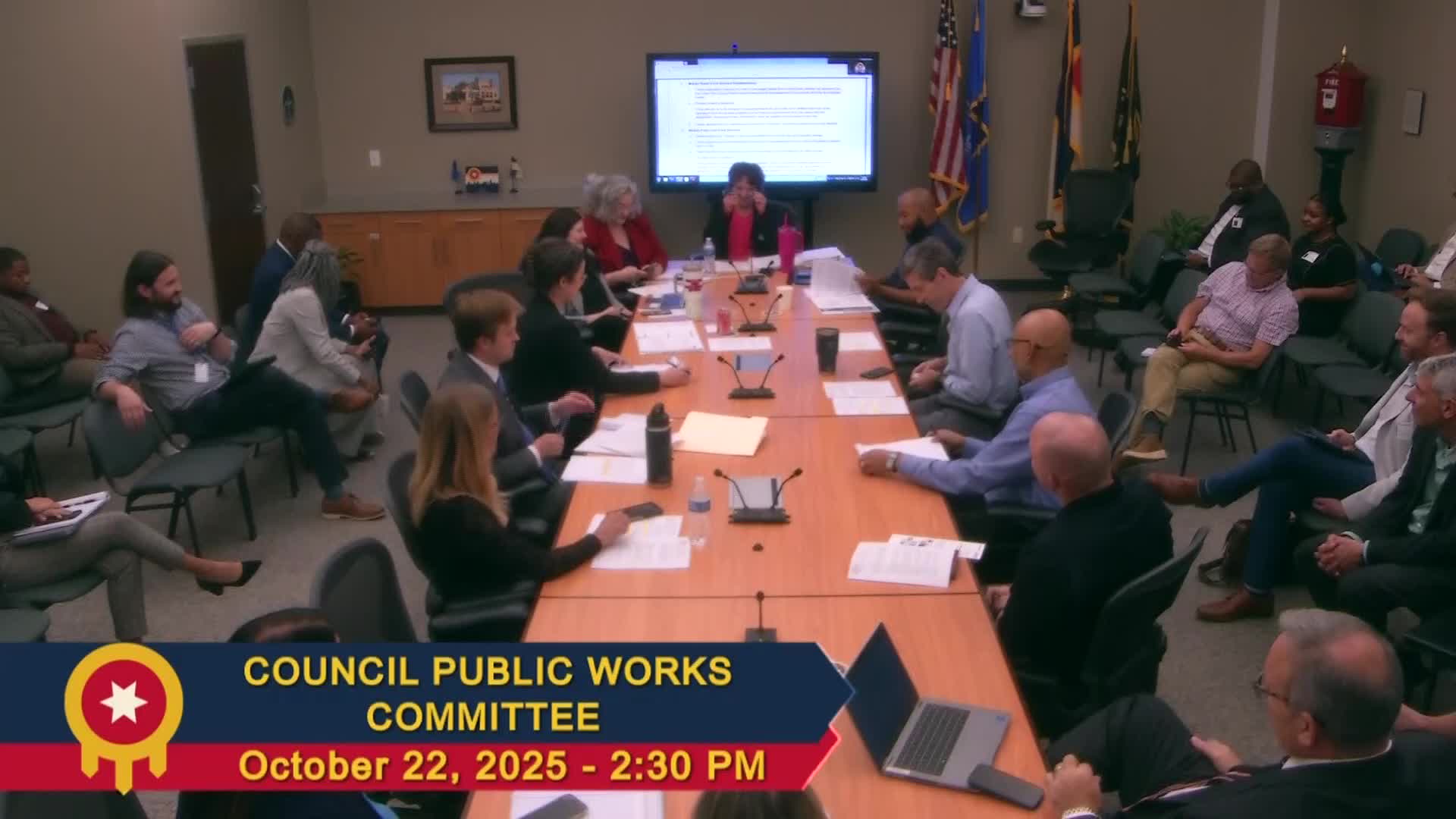
City staff and Housing Solutions representatives told the committee SafeMove Tulsa contracts were finalized and the program would launch in November; staff agreed to provide regular reports. Councilors asked for quarterly briefings and more granular operational data: unduplicated counts for the SafeMove day-service shuttle, breakdowns of who is being housed, and a clearer explanation of how the model—s funding assumptions relate to existing city housing allocations. One finance-related clarification in the meeting: staff said that an initial allocation of $4 million toward SafeMove had already been approved, and discussion of the proposed $10 million year-1 figure assumed that previous allocation plus additional funds to total the modeled $10 million.
Council members raised practical concerns including shelter capacity for women and families, whether the city has adequate case-management staffing, and who would provide long-term supports such as behavioral health or treatment when needed. Councilor Laurie Doctor Wright asked whether the model—s figures are additive to prior housing allocations; consultants and staff said the year-1 figure incorporates already-committed SafeMove funding and fills identified gaps. Multiple councilors urged the city to supply follow-up materials on bus rider unduplicated counts, housing retention goals and timelines, and a more explicit multiyear funding plan.
Staff said they will provide quarterly updates to the council and that SafeMove Tulsa is expected to begin operations in November. No formal vote was required at the committee meeting; staff will return with operational metrics and funding updates.