
Public commenters press board on EPA document access, Bay‑Delta voluntary agreements and worker safety
Get AI-powered insights, summaries, and transcripts
Subscribe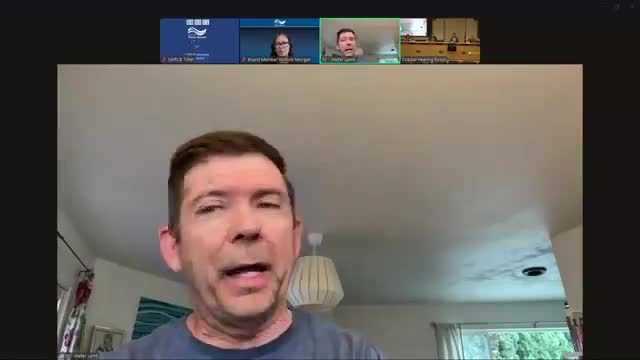
Summary
During public forum, conservation and community groups raised concerns about EPA instructions to withhold a document from a regional commission, urged the board to reject voluntary agreements for the Bay‑Delta plan, and asked the board to consider presentations on waste‑worker fatalities and workplace safety nexus with water quality.
Sacramento — During public forum on Oct. 7 several members of the public urged the State Water Resources Control Board to pursue greater transparency, stronger protection of Bay‑Delta beneficial uses and closer attention to worker safety at waste facilities.
Walter Lam, representing the Biodes Wetlands Land Trust, said a legal timeline from board counsel indicated the U.S. Environmental Protection Agency provided a copy of written guidance to staff and instructed that it not be shared with governing boards or the public. Lam said the instruction, if accurate, “is an illegal instruction” because it would prevent governing bodies from receiving material the staff relied on. Chief Counsel Michael Laufer responded that the board’s letter described staff‑level interactions and did not endorse the Santa Monica Bay Restoration Commission’s approach; Laufer offered to follow up with Lam by phone.
Christy Ralston, an attorney with San Francisco Baykeeper, urged the board to abandon reliance on voluntary agreements (VAs) in the Bay‑Delta Water Quality Control Plan update and adopt a regulatory pathway instead. Ralston told the board VAs “promise very little” and do not guarantee flows sufficient to protect fish and wildlife beneficial uses; she cited sharp recent declines in native fish populations and said the VAs’ baseline and delivery assurances remain unclear.
Jeff Ellsworth of LULAC asked for a 10‑ to 15‑minute agenda item to discuss the intersection of waste‑worker fatalities, occupational safety systemic failures at Cal/OSHA and local water‑quality impacts from hazardous waste and fire incidents. Board members said regional boards and the State Water Board’s staff have been investigating specific sites and that they would assess the best venue for a presentation.
Why it matters: The comments raised procedural transparency concerns about how federal guidance is shared with regional commissions, questioned whether voluntary, nonbinding agreements can deliver reliable flow protections for stressed fish populations, and urged the board to consider links between workplace safety and contaminant releases that affect water resources.
Ending: Chair Joaquin Esquivel thanked the public commenters and asked staff to follow up directly with speakers where appropriate.