Get Full Government Meeting Transcripts, Videos, & Alerts Forever!
Get email alerts on the Valley Creek Restoration topic
No spam. Unsubscribe anytime.
Port Washington hears 30% design for Valley Creek restoration; public meeting planned for December
Summary
Lakeshore Natural Resources Partnership and Stantec presented a 30% design for Valley Creek restoration, describing proposed channel regrading, culvert replacements, stormwater treatment, and public engagement steps. Final design is targeted for May 2026; construction depends on additional funding and permitting.
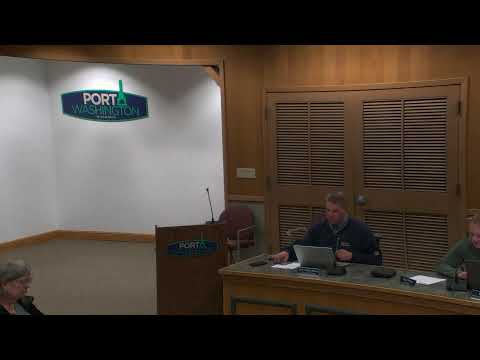
Port Washington Board of Public Works members heard a 30% design progress update Oct. 14 on a multi-agency Valley Creek restoration project funded in part by the National Fish and Wildlife Foundation and the Wisconsin Coastal Management Program through NOAA.
Lakeshore Natural Resources Partnership (LNRP) and Stantec engineers presented proposed work intended to reduce bank erosion, restore streambed stability and improve stormwater treatment through a mix of channel regrading, bioengineered bank protection and step-pool rock structures. The team described two replacement options for undersized culverts at Norport Drive and Hales Trail and two alternatives at Lake Street: replacing and daylighting the culvert into an open channel, or a split-flow approach that routes flows above the 10-year event into an overflow wetland complex and conveys higher flows through a subsurface culvert under the Lake Street parking area.
The design team explained the project uses a channel-evolution approach intended to re-create a low-flow channel and an inset floodplain so storm energy can dissipate before it concentrates and erodes outer banks. Where the valley is constrained, engineers proposed rock step-pool structures with scour pools. Bioengineered “wood-toe” bank protections — log-and-root structures that establish initial stability and then give way to planted rooting mass over roughly 5–15 years — were described as a method to provide near-term bank protection while native vegetation establishes.
Project partners said they are collecting baseline data through undergraduate research with the UW–Milwaukee School of Freshwater Sciences and Wisconsin Sea Grant, including water-quality sampling and DNA assays to locate sources of previously detected elevated E. coli in some creek reaches. LNRP also described public outreach products — a story map, drone footage, and a landowner-specific meeting planned for the December board meeting to share more technical details with adjacent property owners.
Funding and schedule: the design team reported current funding to reach final design comes from the National Coastal Resiliency Fund (NFWF/NOAA), the Wisconsin Coastal Management Program and Bipartisan Infrastructure Law match and that the team aims to reach final design in May 2026 to be competitive for additional NOAA construction funding. If construction funding is secured, the earliest realistic start for construction would be mid‑ to late‑2027, subject to permitting windows for fish passage and other agency constraints.
Board members and residents asked about trail access at the Walter Street ravine, ash‑tree removal, long‑term maintenance of wood‑toe structures, parking tradeoffs at Lake Street, and the relative costs and hydraulic pros/cons of bridges versus culverts at crossings. Stantec staff said the design intends to be largely self‑maintaining, that initial log structures will be expected to decay as live plantings take over, and that permitting (including DNR windows to protect fish) will affect the final construction schedule. The team said they will continue coordination with Wisconsin DNR, U.S. Army Corps of Engineers and local stakeholders.
Why it matters: Valley Creek improvements seek to reduce recurring flood and erosion damage in residential areas, protect nearby utilities and trails, and improve habitat and water quality entering Lake Michigan. The project blends ecological restoration with stormwater management in a watershed that already includes prior daylighting and pond work.