Get AI Briefings, Transcripts & Alerts on Local & National Government Meetings — Forever.
Advocates press St. Paul committee to add 'justice-impacted' as protected class; Minneapolis cited as precedent
Loading...
Summary
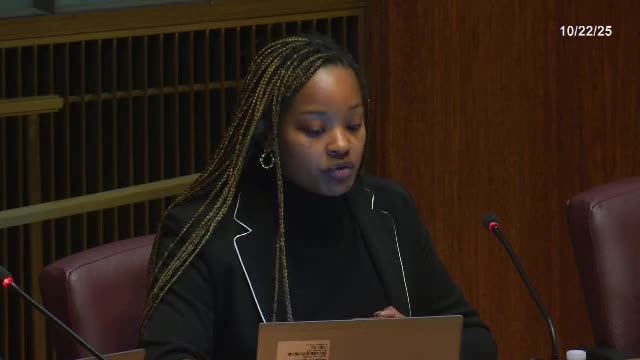
At a St. Paul City Public Safety and Community Wellness Committee meeting, Paul Sullivan (organizer, ACLU of Minnesota) and Mauricio Ward (founder, JIVE) representing the Justice Equity Coalition urged the committee to consider recognizing “justice-impacted” status as a protected class in the city human-rights ordinance.
At a St. Paul City Public Safety and Community Wellness Committee meeting, Paul Sullivan (organizer, ACLU of Minnesota) and Mauricio Ward (founder, JIVE) representing the Justice Equity Coalition urged the committee to consider recognizing “justice-impacted” status as a protected class in the city human-rights ordinance. The coalition argued such a change would shift the burden of justification to employers and landlords when they take adverse actions based on a person’s criminal record.
The nut graf: advocates said adding justice-impacted status would make it harder for employers and landlords to automatically disqualify applicants solely on the basis of arrest, charge, conviction or incarceration history; they cited Minneapolis’ recently adopted ordinance as a working model and described a fast-moving national effort to adopt similar protections.
Key points from presenters and staff
- Coalition case and scope: Paul Sullivan of the ACLU of Minnesota said the coalition’s core message is that “identity is power,” and that formal legal protections would help people reentering the community obtain housing and employment. Mauricio Ward described forming the Justice Equity Coalition after facing post-release barriers himself and noted local organizers partnered with Minneapolis council champions to craft ordinance language.
- Minneapolis precedent: Presenters said Minneapolis added justice-impacted status to portions of its human-rights ordinance, covering areas including education, employment, professional licensing, real property and public accommodations. The presenters said Minneapolis’ protections took effect Aug. 1 (transcript reference) and the city is conducting outreach and “know your rights” sessions.
- Local ordinance and staff briefing: Beth Commerce (deputy director, Department of Human Rights and Equal Economic Opportunity, HREEO) reviewed St. Paul’s existing Chapter 183 human-rights ordinance and the department’s investigative scope. Commerce summarized that the ordinance covers discrimination claims in employment, housing (real property), public accommodations and other areas and noted “there is a 1 year statute of limitations…to file a charge of discrimination from the alleged incident.”
- Fair Chance Housing Act and other proposals: Nell Rivers (campaign representative, New Justice Project) described a proposed Fair Chance Housing Act that would place the burden on landlords to justify exclusions and protect applicants from categorical denials based solely on a criminal record.
- Personal testimony: Alessandra Ellery, identified as a justice-impacted individual from the Twin Cities, described being turned down for housing even after being told an application would be accepted. She said prior homelessness and being steered toward “high crime” areas had hindered recovery and employment prospects.
Questions and policy limits
Committee members asked whether definitions vary across jurisdictions. Presenters said draft language typically tracks the Minneapolis model but may be revised to fit local legal and political constraints. A coalition member cautioned that state law can preempt local authority in some regulated sectors, citing state-level background checks and licensing rules that can create lifetime bars for some professions. One coalition speaker recommended state-level reforms alongside city ordinances to fully address those barriers.
No formal action taken
The committee received the presentations and discussed next steps. Chair Terry Buie encouraged continued community engagement and for organizers to meet with council members; no ordinance was introduced or voted on at the meeting.
What advocates want next
Advocates asked the city to consider ordinance language that would protect justice-impacted people in housing and employment generally, while acknowledging statutory carve-outs where federal or state law requires exclusions (for example, certain roles working with children or certain licensed professions). Presenters asked the council to coordinate outreach and implementation planning with HREEO if the council chooses to pursue an ordinance change.