Vivas heirs say developer broke promise on park contribution; CRA debates terminating 2401 Bay Street TIF amid foreclosure
Loading...
Summary
A descendant of the Vivas family told the CRA the developer at 2401 Bay Street failed to make a $50,000 contractual contribution for a park. Commissioners discussed legal options after the property entered foreclosure; legal staff advised a 30-day default notice could permit termination, but the board deferred a final termination pending review of
A descendant of the Vivas family told the Fort Myers Community Redevelopment Agency that developer disclosures about contributions to a park tied to the sale and development of 2401 Bay Street were inaccurate, and asked the CRA to revoke the property’s tax-increment financing (TIF) agreement.
James Beavis Bridgerton (speaking as a Vivas heir representative) told commissioners the contract negotiated in February 2022 obligated the developer to contribute $50,000 toward park improvements on land the Vivas family vacated to facilitate the Irving project. Bridgerton said the developer had not fulfilled that $50,000 obligation and that prior CRA materials and presentations had mischaracterized the developer’s contribution amounts. He requested that the CRA determine whether to revoke the TIF for 2401 Bay Street.
CRA legal counsel Clifford Shepherd reviewed the redevelopment agreement and related documents and advised the board that the developer appears to be in default. Shepherd cited a development-agreement covenant (item 4.24) requiring the developer not to be in default under financing documents; foreclosure on the property, Shepherd said, constitutes a breach. Shepherd told the board that — from a legal standpoint — the CRA may give a 30-day notice of default, and if it is not cured the CRA could terminate the increment rebate agreement. Shepherd added that there were additional statutory and agreement-language issues worth reviewing, including whether assignment of the agreement is permitted and whether certain improvements met statutory eligibility.
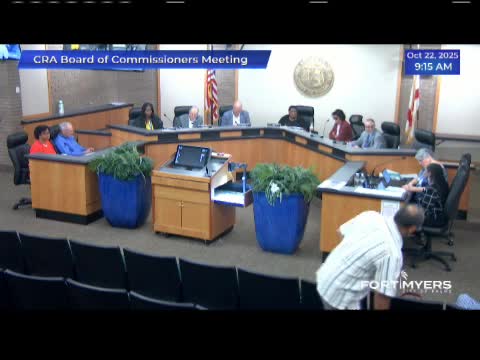
Commissioners discussed the legal advice and the optics of enforcing agreements. Commissioner Geraldo made a motion to provide notice of termination of the increment revenue payment agreement; Commissioner Anderson seconded. The board took a voice vote that initially appeared to favor termination; a roll-call followed with recorded votes (Yes: Geraldo, Anderson, Watkins Brown; No: Watson, Berson). CRA staff and counsel said they needed to consult the CRA’s bylaws to confirm voting thresholds for taking this action because the board often requires a majority of the full seven-member board (not just a majority of members present) for such decisions. The board did not finalize termination at the meeting and directed staff to check the bylaws and return the item to a future agenda.
Separately, CRA counsel noted concerns about agreements where the developer entity changes or an agreement might be commoditized and transferred to a new owner who did not appear before the CRA. Commissioners and counsel said that possibility should inform the CRA’s approach to assignment and termination clauses in redevelopment agreements.
Commissioner Geraldo said the record on the sale listing showing the development incentive raised additional concerns; counsel and staff agreed to gather documents including the development agreement, the sale/listing, foreclosure case status and any recorded deeds. James Bridgerton said he hopes the CRA will use the information to determine revocation of the TIF.
No final termination was recorded at the meeting; the board will return the matter after staff and counsel review the bylaws and the foreclosure/assignment documents.