Get Full Government Meeting Transcripts, Videos, & Alerts Forever!
Get email alerts on the Property Tax Exemptions topic
No spam. Unsubscribe anytime.
Richland County holds public hearing on state-authorized property tax exemptions; no immediate action
Summary
County commissioners heard hours of public comment and reviewed financial estimates for two state-authorized "piggyback" exemptions — the homestead exemption and a 2.5% owner-occupied credit — and agreed not to take action at Thursday's meeting.
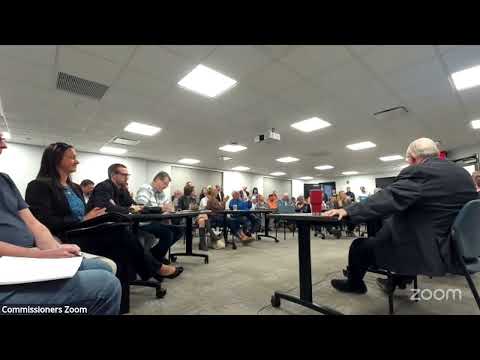
Richland County commissioners on Thursday opened a public discussion on whether to adopt two state-authorized "piggyback" property tax exemptions — the homestead exemption (up to $28,000 of market value) and a 2.5% owner-occupied credit — heard extensive comments from municipal leaders, school officials and service providers, and declined to take action at the meeting.
The discussion grew out of changes in the state budget (House Bill 96) that allow counties to mirror exemptions the state has been providing. County staff and the auditor presented spreadsheet estimates based on the credits paid in 2024 and warned that, unlike the state, the legislature did not require counties' revenue losses to be backfilled. Commissioners and staff emphasized timing constraints: action taken by a county between Oct. 1 and Oct. 31 would be effective Jan. 1, 2026, but because property taxes are collected in arrears the revenue impact would not be visible in taxing-jurisdiction receipts until 2027.
Patrick "Pat" Dropsy, the county auditor, told the room the county had transposed this year's credits to show what each taxing jurisdiction would have lost if the county had piggybacked the credits this year. Dropsy emphasized variables that make exact forecasting uncertain, including next year’s delinquencies and the number of qualifying homesteads. He also noted that the county and local fiscal officers can reauthorize any county-level piggyback annually.
Public comment was dominated by school officials and local leaders who warned of the immediate budgetary stress the exemptions would create for school districts. Multiple treasurers and superintendents said districts had already finalized budgets and negotiated contracts for the upcoming school year and said an abrupt revenue reduction in January would force midyear cuts, threaten the ability to meet negotiated obligations and could trigger state oversight. One summary figure presented by county staff estimated that schools would bear about 62% of any cumulative revenue loss if the county adopted one or both credits.
Paul Currier, mayor of the village of Shiloh, urged commissioners to consider the long-term service impacts on police, fire and infrastructure if local revenues shrink. "I oppose this idea," Currier said, arguing that local governments must be able to fund core services.
School officials described concrete short-term problems. Brad Herbert, identified as superintendent (Lucas), said districts had already submitted forecasts and negotiated staffing agreements and that a sudden revenue reduction would leave districts unable to implement cuts without harming instruction. Tammy, identified as treasurer of Bainsville City Schools, said her district had already cut millions and had limited remaining staffing reductions available; she warned the district faced deficit spending next year if revenue fell as estimated.
Representatives of mental-health and special-education providers warned reduced local revenues would force cuts to prevention and nonmandated services that support schools and vulnerable residents. Kevin Kimmel of the Mid Ohio Educational Service Center and others said cuts would jeopardize services such as speech therapy, occupational therapy and school psychologists that districts are required to provide by law.
Commissioners emphasized they were listening to both residents seeking relief and jurisdictions that would lose revenue. "We know you are in a tough spot, particularly our schools," a commissioner said, noting the difficulty of balancing constituent concerns about tax bills with the fiscal health of local governments. The board said it did not plan to vote on the exemptions at the meeting and will schedule a follow-up session to consider the numbers and additional public input before the Oct. 31 window closes.
The county provided residents with spreadsheets showing this year's credits for each taxing entity and a county-level grand total projected by carrying forward current-year exemptions; county staff cautioned that these are best estimates based on 2024 collections and could vary with next year’s delinquencies and homestead counts.
Next steps: commissioners said they will host at least one more public meeting, give communities time to submit questions and review the auditor’s figures, then decide whether to act before the Oct. 31 deadline. No formal motion or vote on adopting either exemption was taken on Oct. 9.