Get Full Government Meeting Transcripts, Videos, & Alerts Forever!
Get email alerts on the Business Improvement District topic
No spam. Unsubscribe anytime.
Council committee approves 5 Points business-improvement district after amendments
Summary
The Jacksonville Finance Committee approved an ordinance creating a dependent special district for the 5 Points commercial area, with amendments on board appointments, assessment rules and an annual opt-out process. Council member R. Paluso will supply initial funding and the district assessment starts Nov. 2026.
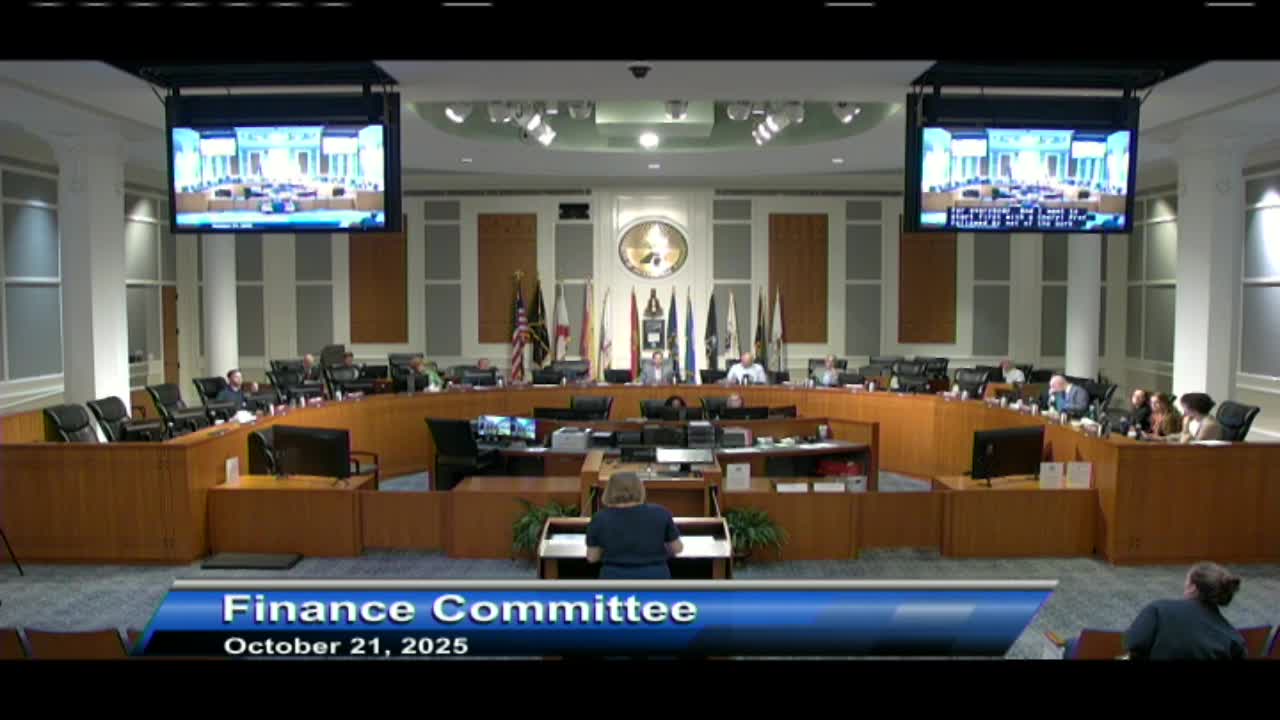
The Jacksonville City Council Finance Committee on Oct. 21 approved an ordinance establishing a dependent special district (a business improvement district) for the 5 Points neighborhood, following amendments that set board appointments, assessment rules and an annual opt-out process.
The committee approved the neighborhood amendment as amended on a voice vote and then passed the bill as amended 6–1. The ordinance allows property-based assessments to fund enhanced cleaning, security and streetscape services for the 5 Points commercial district; the assessment will be based on heated square footage and will begin on property tax bills in November 2026.
Why it matters: supporters say the district will provide sustained, local funding for security, cleanliness and marketing that property owners and merchants say the city has not been able to sustain. Opponents raised concerns about mandating assessments on unwilling property owners and whether enough property owners had consented.
What the committee approved: the ordinance, as amended, includes these key points: - District makeup and appointments: a five-member board with three appointments by the council president and two by the mayor, with alternates (two appointed by the council president, one by the mayor). Board members serve two-year terms. - Assessment basis and timing: assessments will be calculated on heated square footage; assessment collections are scheduled to start on the 2026 tax roll (first bills reflecting assessments in Nov. 2026). - Exemptions and parcels: churches are exempted from assessments; the revised parcel list attached to the ordinance identifies 94 properties within the district boundary. - Transition funding and early support: Councilmember R. Paluso said he will program $150,000 of his community benefit allocation to the district in its first year so the district can begin work before assessments start. - Opt-out mechanism: the committee adopted an opt-out framework that removes 11 property owners who formally objected from the initial district map; after the first year property owners may opt in or out on an annual basis under a process to be established and coordinated with the tax collector.
Supporters at the committee and in public comment stressed a long series of local meetings and written support. Dory Thompson, president of the 5 Points Association, said the merchant and property-owner group began pursuing a district after a violent incident in November 2023 and has held public discussions throughout 2025. "If Berman Street can host crowds every night and stay safe, why not 5 Points?" Thompson said during public comment.
Local property owners and managers told the committee they had documented repeated break-ins, property damage and public-safety incidents that they say depress patronage and keep vacancies high. Matthew Clark, a commercial broker who represents many local owners, said investors told him they see "a 5 minute rant about the lack of cleanliness and security" when they visit the area—message that discourages investment.
Opponents and cautious members of the committee asked for and won additional procedural protections. Councilman D. Diamond and others pressed for an opt-out provision; the committee accepted an amendment that excludes the 11 objecting properties from the initial map and allows annual opt-in/opt-out adjustments, with the tax collector working with city staff on timing and implementation. City general counsel staff cautioned that allowing opt-outs could raise fairness questions because other property owners would then cover assessments for benefits enjoyed by opt-outs; the amendment was drafted to minimize those effects.
The board-appointment change was a late addition. The ordinance originally provided council-president appointments for supervisors; after discussion the committee adopted a compromise of three council-president appointments and two mayoral appointments to ensure mayoral input while preserving district-level control.
The committee vote: the amended ordinance passed on a 6–1 vote. Committee members said the district is a first-of-its-kind business-improvement model in Jacksonville, modeled in part on other Florida business improvement districts and downtown efforts. The full council will consider the ordinance Tuesday.
What happens next: if approved by the full council, the district will be able to hire or contract for cleaning, private security and promotional services, and it will appear on property tax bills beginning in November 2026. Councilmember Paluso said his office will provide initial funding and work with staff to stand up the board and contracts rapidly so property owners see results before assessments start.
Provenance: Public comment and committee debate on the 5 Points BID appear throughout the transcript; public comment begins with Cheryl Croft (Oct. 21 public comments) and runs through the committee amendment, approval and roll-call vote later in the hearing.