Get Full Government Meeting Transcripts, Videos, & Alerts Forever!
Get email alerts on the Museums Cultural Heritage topic
No spam. Unsubscribe anytime.
Historical Museum at Fort Missoula opens new exhibit, highlights lectures and holiday programs
Summary
The Historical Museum at Fort Missoula, now a member of the International Sites of Conscience network, opened an interactive exhibit about World War II-era internments and announced a fall slate of public programs including a lecture by Yukio Shimomura, a used-book fundraiser, a Buffalo Soldiers documentary screening and lantern tours.
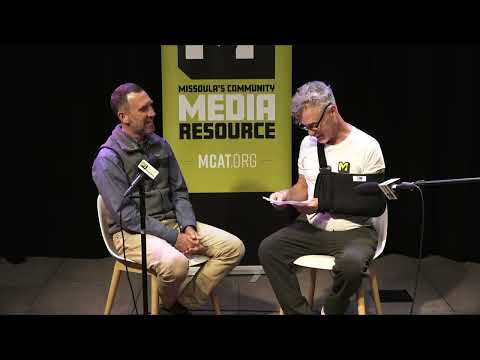
The Historical Museum at Fort Missoula announced a new interactive exhibit focused on people interned at the post during World War II and detailed several upcoming public programs, museum Executive Director Matt Lautzenheiser said during a Missoula Community Access Television interview recorded Oct. 6.
Lautzenheiser said the museum’s mission is ‘‘preserving Missoula County’s history for the education and enjoyment of the public,’’ and that the institution recently completed a multi-step application to join the nonprofit International Sites of Conscience network, which works with places that interpret difficult or tragic histories. ‘‘They felt that we were worthy of being welcoming in as 1 of their sites of conscience,’’ he said.
The new exhibit complements the museum’s existing barracks gallery with an interactive space that Lautzenheiser described as focusing on individual stories. ‘‘Instead of focusing on the general history, we actually focus on 5 Italian nationals and 5 Japanese… and so you kind of get to delve a little deeper into the story of those 10 individuals,’’ he said.
Museum staff worked with Historical Research Associates on the project and the exhibit is designed to present personal items, letters and music that Lautzenheiser said ‘‘humanize what seems to be a statistic.’’ He also clarified that the individuals held at Fort Missoula during World War II included foreign nationals: ‘‘None of the folks that were at Fort Missoula were actually U.S. citizens,’’ he said.
The museum previewed a calendar of public programs tied to the exhibit and to other Fort Missoula activities. On Wednesday, Oct. 23, the museum is presenting a free lecture by Yukio Shimomura at 7 p.m. in Room 356 of the University of Montana Social Science Building. Lautzenheiser said Shimomura was interned as a child in the Topaz internment camp in Utah and now travels to speak about the loss of civil liberties experienced by people of Japanese descent during World War II.
The museum’s annual used-book sale will run Thursday, Oct. 30, through Sunday, Nov. 2, with an early-bird admission fee of $5 on the first day. Lautzenheiser said the sale is a significant fundraiser run largely by volunteers and that in past years it has raised ‘‘anywhere from $25 to $29,000’’ over its multi-day run. Donations are accepted earlier in the year on scheduled days, and volunteers sort and box books before ‘‘move day,’’ when inventory is transferred to Heritage Hall for the sale.
On Wednesday, Nov. 19, the museum will screen a documentary about the Buffalo Soldiers Gathering at the Roxy Theater; the film documents a 2022 gathering and related Juneteenth programming. Lautzenheiser said the Buffalo Soldiers programs, which include reenactors and the Ninth and Tenth Cavalry Association, have become an annual component of the museum’s outreach with the Montana Black Collective.
The museum’s Lantern Tours living-history program is scheduled for Friday, Dec. 12, through Sunday, Dec. 14; Lautzenheiser said there will be 10 distinct tours and that tickets typically go on sale the Sunday before Thanksgiving and sell out in advance.
Joel Baird, general manager of Missoula Community Access Television and host of the program, noted the museum’s active volunteer base and community partnerships. Lautzenheiser credited volunteers and staff for staging large events and for the work that supports the museum’s preservation and education efforts.
For more information and schedules, Lautzenheiser directed listeners to the museum’s announcements and to Missoula Community Access Television. Contact information mentioned in the broadcast included MCAT’s phone number, (406) 542-6228.