Get Full Government Meeting Transcripts, Videos, & Alerts Forever!
Get email alerts on the School Closure Reconfiguration topic
No spam. Unsubscribe anytime.
Salt Lake board studies possible reconfiguration of Nibley Park, potential Innovations closure; no votes taken
Summary
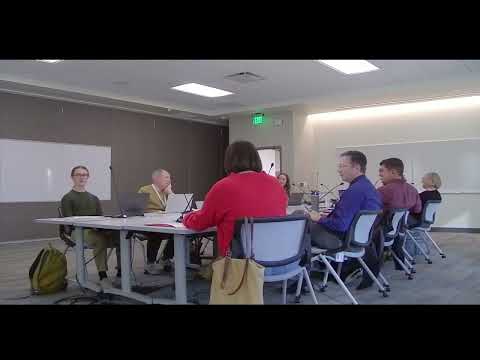
SALT LAKE CITY — The Salt Lake County School Board on Oct. 21 held a study session to review three linked proposals in its long‑term school closure and district reconfiguration process: a reconfiguration at Nibley Park K–8, possible discontinuation of the Innovations early‑college/CTE program, and classroom needs tied to expansion of the district’s dual‑language immersion (DLI) program. No formal votes were taken.
SALT LAKE CITY — The Salt Lake County School Board on Oct. 21 held a study session to review three linked proposals in its long‑term school closure and district reconfiguration process: a reconfiguration at Nibley Park K–8, possible discontinuation of the Innovations early‑college/CTE program, and classroom needs tied to expansion of the district’s dual‑language immersion (DLI) program. No formal votes were taken.
Board members and district staff spent the session reviewing enrollment patterns, program placement and the narrowly defined scope of the Board’s G5 reconfiguration process, and asked staff for additional facility information and public‑comment summaries before the next formal public hearing and eventual vote.
Board members said the matters matter because they affect students’ educational options, staff employment and the future use of district‑owned or leased facilities. "We need to be thoughtful in how we're messaging," a board leader said during the session, urging care so families do not assume decisions already have been made.
Board discussion and staff responses
Staff explained the DLI classroom needs at Nibley Park. District staff said the site is serving kindergarten, first and second grades in DLI this school year and that earlier combined DLI/ELP classes at the school are being grandfathered out — a phased approach meant to serve students already enrolled while not accepting new entrants to those older sections. "When we first placed DLI there, we did with kindergarten and first grade... that one's being grandfathered out over the years," a staff member said. The district also pointed the board to an enrollment spreadsheet (enrollment by grade) that breaks down magnet, EOP, regular and DLI counts for Nibley Park.
Board members pressed whether the district’s reconfiguration study should include "facility design" — not just headcounts — noting that some buildings (Nibley Park and Innovations) were constructed for specific program models and feature spaces (a second gym, walkable neighborhood design, or CTE workspaces) that may not be well used under a different grade configuration. "I would just like them to be added per our policy," a board member said, asking that facility design factors be included when evaluating Innovations at minimum.
District counsel and staff explained how the G5 administrative process applies. Staff and legal counsel said the section of G5 that governs in‑school reconfigurations does not enumerate the same specific facility factors required for long‑term school closure procedures, but staff offered to provide basic facility information (number of classrooms, room sizes, technology, parking and other uses) for Innovations to help the board assess reutilization options.
Timeline, public comment and procedure
Staff told the board that a technical error in the board’s public notice required moving the initial public hearing: because Utah public‑hearing notices must list date, time and place with specific advance notice (30 and 10 days), the district will hold the public hearing on Nov. 18 instead of Nov. 3. Board leadership requested time between the hearing and the vote; staff said the earliest vote that meets notice and the board’s preference will be Dec. 2. Staff also said updated public‑comment summaries will be compiled and distributed after Oct. 24.
Faculty and staffing implications
Board members asked for clarity about personnel impacts if any program is discontinued or reconfigured. Staff gave preliminary counts: three full‑time equivalent (FTE) positions assigned to seventh and eighth grade at Nibley Park and about six FTE at Innovations — roughly 9–10 FTE in total potentially affected, a staff member said. District staff also described existing site roles tied to Innovations: a 0.5 principal allocation, a full‑time secretary (split funding with the CTC), a full‑time counselor and a CTC coordinator; the assistant‑principal role at Innovations is half‑time and its funding was described as tied to CTE resources. Staff cautioned that no formal personnel actions have been taken and that the district typically experiences turnover that can allow placement of affected staff; the board asked staff to formalize placement options if closures are adopted.
Facility specifics raised: missing stoves and classroom use
Board members asked about classrooms and equipment. Dr. Hall (district staff) told the board that Nibley Park’s cooking stoves had not been used for instruction in several years because the school's curriculum shifted away from a foods/consumer‑science elective to a career and college readiness class that does not require stoves. "They haven't been needed for instruction in several years, and that is probably why they were removed," Dr. Hall said, adding that the district’s records do not show when the equipment was moved and that the current and prior principals did not recall the exact action.
Messaging and community trust
Several board members emphasized the importance of distinguishing two separate questions: whether a program fulfills its purpose and whether the district should retain or repurpose the facility. Members repeatedly cautioned against "telegraphing" future plans for buildings before closure votes, which they said could undermine public confidence and make families assume a decision has already been made.
Board direction and next steps
Board members asked staff to provide the updated public comment record after Oct. 24 and to assemble basic facility information for Innovations (classroom counts, specialized spaces, parking and how rooms are currently used). Staff said they would prepare materials for the board in advance of the Nov. 18 public hearing and the Dec. 2 meeting when the board expects to take a vote, and the board indicated consensus to request that facility information be provided before the decision meeting.
No formal motions or votes occurred at the study session.
Ending
District staff and board members closed the roughly 90‑minute study session with a request to tighten messaging, provide additional facility and public‑comment information, and return to the board during the November/December meeting sequence for the public hearing and final vote timetable.