Get Full Government Meeting Transcripts, Videos, & Alerts Forever!
Get email alerts on the Downtown Cleanliness And Safety topic
No spam. Unsubscribe anytime.
Porterville Downtown Committee weighs locked dumpsters, alleyway safety and event coordination
Summary
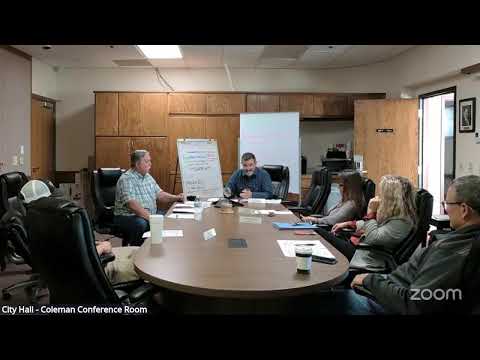
At a recent meeting of the Porterville Downtown Committee, members and downtown business owners spent the bulk of the hour-long session brainstorming measures to reduce illegal dumping, keep alleyways safe and improve coordination between businesses and city event organizers.
At a recent meeting of the Porterville Downtown Committee, members and downtown business owners spent the bulk of the hour-long session brainstorming measures to reduce illegal dumping, keep alleyways safe and improve coordination between businesses and city event organizers.
Committee facilitator Fernando (staff member) opened the discussion by listing short-term goals and saying the group would “brainstorm on the trash pickups,” then summarized the core concern: “I wrote down that we have people that are sleeping in our trash enclosures,” Fernando said, adding that the committee wanted solutions that keep downtown “safe and clean.”
Why it matters: business owners said full or misused dumpsters and overnight encampments are creating safety and sanitation problems in alleyways used for deliveries and employee access. Several owners described incidents they said had driven them to add cameras, motion lighting and in one case to pay a private crew to clean an alley.
Committee members and owners proposed a mix of short- and medium-term options. Suggestions included: installing locks or a single master-key system for shared dumpsters; retrofitting lids so the whole top does not open (for example a small deposit slot); adding magnetic latch systems that flip open for haulers; installing drains to avoid rainwater in modified lids; and stricter enforcement and scheduled pickups to prevent bins from overflowing.
Business owners also reported operational frustrations. One owner, Stan (business owner), said he reviews images from a camera behind his building to monitor nighttime activity and described repeated problems at an alley dumpster that “has been there about three weeks” in use as a sleeping place. Multiple speakers said recycling bins are sometimes not emptied on schedule and that unbroken-down cardboard fills shared blue bins quickly.
Committee members discussed enforcement and staffing limits. Fernando and others said code enforcement has shifted schedules recently to focus on specific problems such as illegal sidewalk vending, but that enforcement staff remain short-handed. The committee asked staff to return with a clearer list of which codes are being prioritized and to provide options on enforcement and parking that could be considered at future meetings.
Parking and related proposals drew interest as a complementary strategy. Some participants suggested extending two-hour parking rules along Main Street during business hours so spots are available for shoppers and so code officers patrolling parking could also monitor alleys and dumpsters. The committee asked staff to prepare parking and enforcement options for review rather than immediately adopting a change.
The group also linked alleyway and vending concerns to event coordination. Members said downtown businesses were not always informed or included in city event plans such as Pioneer Days, and they discussed using events (Veterans Day parade, holiday parades) as opportunities to direct paradegoers and visitors to downtown shops and to avoid outside vendors encroaching on brick-and-mortar businesses. Fernando said the city is working on a centralized events calendar and communications to improve outreach.
Outcomes and next steps: Committee members asked staff to compile options and recommendations for dumpster management (design ideas, locking/magnetic-latch options, master-key models), alleyway cleanup/sweeping feasibility, code-enforcement priorities, and parking alternatives for future discussion. The group also agreed to gather lessons learned from recent events and to draft a simple set of expectations or rules for shared dumpsters and recycling bins that could be distributed to downtown property owners and tenants.
Votes at the meeting: The committee approved routine minutes from the previous meeting. Fernando (staff member) made the motion to approve the draft minutes; Stan (business owner) seconded; the motion carried by voice vote and no roll-call tally was recorded.
A note on sheltering and outreach: Committee members and staff said the city is taking a more active approach to outreach for people seen spending long periods on Main Street. A staff member reported that one individual with mental-health needs had received assistance over a recent weekend and that police and outreach teams continue to engage and try to connect people to services.
The committee scheduled further work on these topics and asked members and staff to exchange suggestions by email or in a “straw man” draft before the next meeting so the group could convert ideas into specific recommendations.