Get Full Government Meeting Transcripts, Videos, & Alerts Forever!
Get email alerts on the K 12 Academics topic
No spam. Unsubscribe anytime.
Anderson Elementary showcases academic gains, inclusion programs after California Distinguished School honor
Summary
Anderson Elementary school leaders presented student achievement data and described expanded academic and social-emotional supports after the school was recognized on the district’s honor roll and as a California Distinguished School.
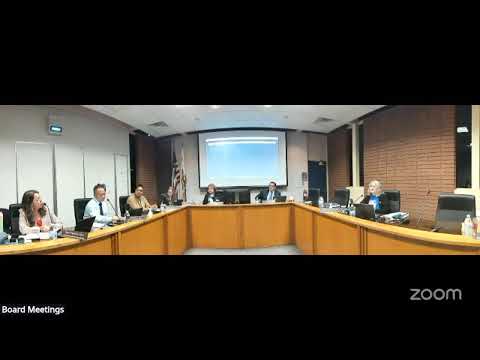
The Lawndale Elementary School District board heard a presentation from William Anderson Elementary on Oct. 16 highlighting recent academic gains, expanded special education supports and family-engagement initiatives after the school earned district and statewide recognition.
The presentation, delivered by Anderson staff and Principal Kevin Cornett, summarized gains in mathematics and reading, growth for multilingual learners and newly expanded inclusive programs. "I've been a proud student at Anderson ever since I was in TK. Every single teacher I've had was amazing," said Madison Navar, a fifth grader at Anderson who addressed the board during the presentation.
Why it matters: Anderson’s reported progress illustrates local strategies the district is using to boost achievement and support students with disabilities and multilingual backgrounds. Board members praised the school’s results and asked clarifying questions about supports and materials.
Anderson staff reported several data points and program updates. Lindsay Wynott, math TOSA, said partner teaching produced large gains in a recent fourth-grade classroom: the share of students who could subtract three-digit numbers using place-value strategies rose from 28% at the start of the year to 84%, while students using the standard algorithm rose from 3% to 72%.
Language and intervention work also showed measurable improvement. Lisa Reininger, Anderson’s language-arts specialist, summarized reading-intervention outcomes: early-grade students showed gains in phonological awareness and fluency (second graders gained an average of 40 words per minute; third graders 43 words per minute). Reininger said Anderson has 103 fifth graders; 53 of them had received interventions at some point, 7 had been identified with a learning disability, 46 had exited interventions and 13 were still receiving supports. "We're really proud of the partnership that we have with our teachers and the growth that we're helping our students to make," she said.
Marilyn Gill, Anderson’s ELLert (English learner resource teacher), described work to deepen English language development (ELD) and reclassification outcomes. She noted reclassification supports such as LPAC Club and Newcomer Academy and highlighted one student, Shandy Vanhel, who arrived as a newcomer in second grade and reclassified by fourth grade.
Special education and inclusion were emphasized by school psychologist Ron Marin, who said the school expanded the Journeys SDC (special day class) program to a third classroom and partnered with the Friendship Foundation to create social groups to increase inclusion and peer connection. Marin described sensory-based activities, visual schedules and structured routines used in the program.
Community and climate initiatives included a new community-school coordinator, Keislyn Michael, who said Anderson launched a districtwide Million Fathers March and built a parent volunteer bank and a PTA drive that attracted nearly 450 members. The school also received the California Gold PBIS Implementation Award for its positive behavior supports; staff said the PBIS team plans to start a check-in/check-out program to address student social-emotional and behavioral needs.
Board members asked about practical classroom supports. Trustee Clark Morales asked how teachers should explain differential supports (for example, calming kits or sensory putty) to other students; Anderson staff said these decisions are handled at the classroom level through tiered supports and age-appropriate explanations. Trustee Phillips and Morales both praised the combination of academic and emotional supports as key to student learning.
The presentation concluded with board congratulations to Anderson staff and students for the school’s recognition and progress. No formal action was taken on the presentation; it was provided for board information.