Get Full Government Meeting Transcripts, Videos, & Alerts Forever!
Get email alerts on the School Facilities Bond topic
No spam. Unsubscribe anytime.
Taos Municipal Schools bond discussion centers on middle school repairs and whether charter schools can share funds
Summary
Community members urged the Taos Municipal School Board to include charter schools in a proposed general obligation bond focused on middle school renovations; district counsel said state-chartered schools likely cannot receive district bond funds under state law.
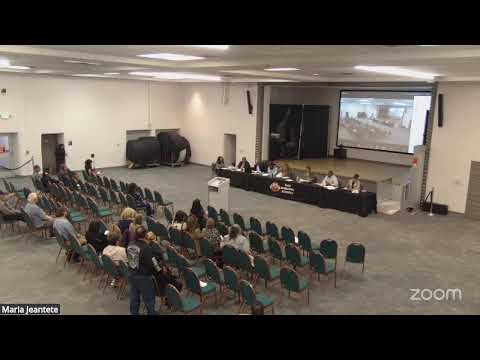
The Taos Municipal School Board heard extended public comment and staff briefing on a proposed general obligation bond and on whether charter schools within the district could be recipients of bond-funded capital projects.
A consultant for the district outlined financing estimates and a tentative schedule, saying the district’s total general obligation capacity is about $90 million, with roughly $12 million currently outstanding and about $78 million available for new issuance. The consultant said an estimated renovation and reconstruction of the district middle school would cost about $63 million using a planning figure of roughly $600 per square foot; under the consultant’s modeling the district share of a project could be about 63 percent of construction costs. The consultant also said a bond election would likely be held in November 2025 or possibly the following November, depending on scheduling and committee decisions.
Why it matters: board members and parents said aging facilities and student health concerns make a capital vote urgent, while several speakers and a district attorney’s opinion highlighted legal limits on which entities can receive bond proceeds. That legal distinction will affect whether charter-operated school buildings in Taos could receive bond-funded renovations if the board approves a ballot question.
Public commenters pressed the board to include charter schools in any bond measure. “Every student, every child matters,” said Michelle Hunt, who identified herself as a community member, parent and a leader at a local charter school, urging the board to add charter schools to the proposed resolution so all students share in facility improvements. A representative of Taos Academy and other commenters described long-running building needs at specific campuses and asked that the board prioritize the district middle school and other sites with urgent maintenance and mold issues.
District legal counsel gave a contrasting assessment of the district’s authority. In a statement during the meeting, counsel said, “we don't believe that state charter schools are eligible recipients of district GO bond funds for capital projects,” citing the public school code and the anti-donation clause of the New Mexico Constitution and explaining that school buildings eligible for district capital financing must be acquired or constructed by the school district. Counsel said district-chartered schools could be included but that state-chartered schools hold property in a different status that limits district authority to finance their facilities.
Board members and staff said a bond planning committee has begun soliciting public input and compiling project priorities. The board’s presentations described a process in which a committee will recommend projects and the board would later consider specific ballot language and allocations. Speakers asked for clearer project lists and for the board to spell out how tax-rate impacts would appear on homeowners’ bills; the consultant outlined that a successful general obligation bond would increase the residential mill levy but the transcript did not include a final mill-rate figure.
Several commenters raised concerns about district financial controls. One community member referenced an ongoing investigation into alleged financial misconduct that began in 2022 and said that history makes voters wary of approving large new capital measures without stronger transparency and oversight. Board members acknowledged questions from the public and encouraged continued participation in the planning committee and future board meetings.
The meeting did not record any formal board vote on a bond question. The discussion remained at the planning and public-input stage: staff and consultants presented financing scenarios, counsel offered a legal opinion on charter eligibility, and the board and public discussed priorities and next steps. The board signaled it would continue refining project lists and legal review before placing any measure on a ballot.
Ending: The board invited further written input and said project prioritization would continue through the bond planning committee; timing for a ballot measure, and a final determination on which schools could legally be included, will depend on continued legal review and the committee’s recommendations.