Get Full Government Meeting Transcripts, Videos, & Alerts Forever!
Get email alerts on the Epic Producer Led topic
No spam. Unsubscribe anytime.
EPIC producer‑led group reports farm tours, demos and conservation uptake in 2025
Summary
EPIC (Oplay in Partnership for Integrated Conservation) held multiple farm tours, field days and demonstration plots in 2025; producer-led projects emphasized cover crops, low‑disturbance manure practices, composting and perennial-grass conversions with producer cost‑share support and strong farmer-led adoption.
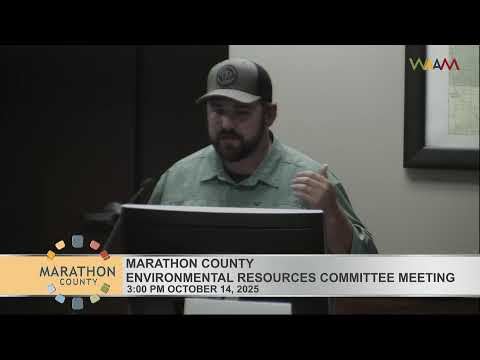
County staff and producers with the EPIC (Oplay in Partnership for Integrated Conservation) producer‑led watershed group briefed the Environmental Resources Committee Oct. 14 on 2025 field work, farm tours and producer-applied conservation practices.
EPIC organized six farm tours in 2025 that showcased a range of operations: small organic vegetable farms, dairy and freestall operations, orchards and grazing systems. Staff said research plots and demonstration trials included integrated cover‑crop trials, skip‑row planting, low‑disturbance manure injection onto growing cover crops and composting of bedpack on larger operations.
Staff said producer‑led grant programs administered by the Wisconsin Department of Agriculture, Trade and Consumer Protection (DATCP) support producer‑led groups; EPIC applied for producer‑led funding to scale perennial-grass conversions and prairie strips that protect marginal acres. Staff reported broad farmer uptake: in 2025 EPIC cost‑shared approximately 400 acres while more than 5,000 acres of producer-initiated practices were reported across the group (many not cost‑shared by EPIC). Staff said producer interest is often driven by on‑farm results — lower fuel and labor costs, improved soil health and comparable yields — and that hands‑on farmer trials and peer learning are crucial to adoption.
EPIC also supported youth education, Envirothon participation and school‑district field days that engaged hundreds of students. Staff highlighted an Envirothon testing role and classroom visits across grade levels.
Staff said producer‑led approaches remain competitive for limited DATCP funds and that EPIC must distinguish its proposals to win grants that typically award small amounts to many groups; staff said the group is seeking funding in 2026 for a program called “Saving Our Soil with Perennial Grasses.”
Committee members praised outreach and results; no committee action was requested Oct. 14.