Get Full Government Meeting Transcripts, Videos, & Alerts Forever!
Get email alerts on the Animal Waste Ordinance topic
No spam. Unsubscribe anytime.
Marathon County staff present draft changes to animal-waste ordinance; committee asks questions on frozen-ground rules and phased implementation
Summary
Staff previewed proposed updates to Marathon County Chapter 11.2 (animal waste) including buffers, winter‑spreading restrictions, a proposed winter‑spreading permit, exemptions for small farms, and a delayed implementation window; NR 243 and DNR guidance were cited.
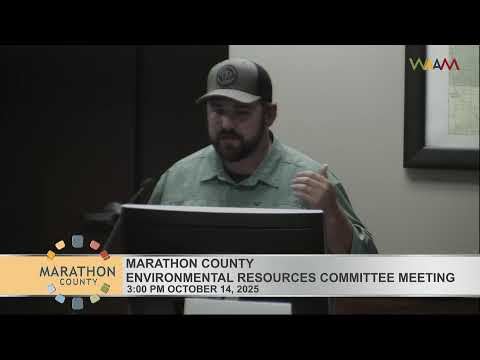
Marathon County conservation staff presented draft changes to the county’s Animal Waste Ordinance (Chapter 11.2) on Oct. 14 and sought feedback from the Environmental Resources Committee on technical and implementation issues.
Key elements staff described included a required 35‑foot buffer adjacent to streams, restrictions on winter spreading for medium‑ and large‑sized farms (a suggested 60‑day restriction in February–March), a proposed winter‑spreading permit for farms without a nutrient management plan, and exemptions for small farms under 300 animal units. Staff said the permit might be a one‑time $200 fee valid for four years; farmers with an approved nutrient management plan would not need the permit.
Committee members asked staff how “frozen ground” would be verified; staff said the farm operator normally judges whether soil is frozen, and county staff would only investigate if a complaint or runoff incident is reported. Staff noted there is an established field practice to probe soil in the field when verification is needed.
Staff acknowledged the ordinance would include a delayed implementation period if the County Board adopted it — for example, setting effective dates one to three years from adoption — to give operators time to plan and, where necessary, access grant funding or engineering assistance.
Staff said many farms in Marathon County already follow the practices the draft would require; they described a farmer work group that reviewed proposed language and said the group supported phased and targeted changes rather than an immediate, across‑the‑board mandate.
Staff also referenced Wisconsin administrative guidance related to winter manure application (NR 243) and said the draft ordinance was written to be implementable and enforceable while allowing staff to prioritize education and outreach before enforcement actions. The committee did not vote on the ordinance Oct. 14; staff asked for further input and plans continued stakeholder outreach and a future presentation for the full County Board if ERC recommends advancement.