Get Full Government Meeting Transcripts, Videos, & Alerts Forever!
Get email alerts on the Land Use Zoning topic
No spam. Unsubscribe anytime.
Plan Commission sends new Unified Development Ordinance to council with 'do pass' recommendation
Summary
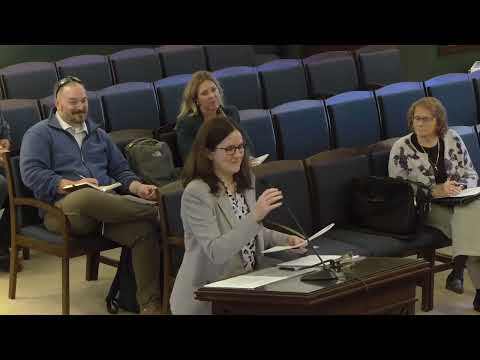
Planning staff presented a proposed Unified Development Ordinance and the Elkhart City Plan Commission voted to forward the text amendment (case 25TXT-01) to the Common Council with a 'do pass' recommendation.
Planning staff presented a proposed Unified Development Ordinance (UDO) and the Elkhart City Plan Commission voted to send the text amendment (case 25TXT-01) to the Common Council with a “do pass” recommendation.
Staff described the UDO as a comprehensive rewrite of the city’s zoning text to simplify regulations, reduce duplication, reorganize chapters, and add graphics, tables and clearer procedures. Key changes highlighted included a reduction to 10 base zoning districts plus overlay and form-based districts; 17 defined building typologies; consolidated tables of uses and use-specific conditions; updated parking and loading standards including electric vehicle charging language; and new administrative procedures including a hearing officer and minor waiver process.
Staff said the River District, downtown and the Benham neighborhood are primary locations where the new form-based districts would apply, focusing on building form and street frontage rather than use. Staff also said the ordinance retains model floodplain language required by the National Flood Insurance Program to preserve eligibility for disaster funding.
During questions, commissioners asked where form-based districts would apply, about changes to single-family lot widths, which parking areas could be exempt (largely downtown and existing commercial development), and how minor waivers would be requested and approved. Planning staff said procedures and an implementation policy for minor waivers and the hearing officer will be developed and brought back to the commission. In response to a question about training funding for administrative roles, staff said board training costs would come from the development services budget.
There were no members of the public who spoke on the UDO at the meeting. After discussion, Commissioner Mishler moved to forward the ordinance to the Common Council with a do-pass recommendation; Commissioner Lawson seconded. The commission recorded an affirmative roll-call and the motion carried.
Staff concluded the presentation by recommending case 25TXT-01 be sent to the Common Council with a “do pass” recommendation.