Get Full Government Meeting Transcripts, Videos, & Alerts Forever!
Get email alerts on the Distribution Infrastructure topic
No spam. Unsubscribe anytime.
Glendora reports fewer main breaks and service leaks; commission asks for clearer emergency tracking and cost data
Summary
Staff reported year-to-date reductions in main breaks and leaks and showed repair photos, but commissioners pressed for clearer tracking of ‘emergency’ versus routine calls, and for cost transparency tying repairs to budget and CIP work. The commission received and filed the report, 5-0.
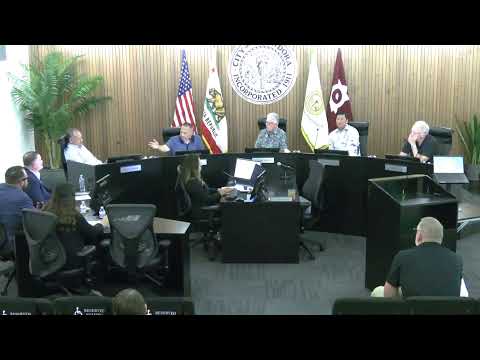
Water Division Manager Dale Wert presented the city’s fiscal-year 2025–26 first-quarter distribution update on Oct. 21, showing year-over-year reductions in reported main breaks, service leaks and hydrant incidents and highlighting emergency repairs and a recent transmission-line work effort on Glendora Avenue.
Wert said the three-year comparison shows a downward trend: in fiscal year 2022–23 the system logged 94 main breaks, 26 service leaks and six hydrant incidents; 2023–24 showed 88 main breaks, 24 service leaks and two hydrant incidents; and 2024–25 (through September) showed 66 main breaks, 21 service leaks and two hydrant incidents.
Wert described an 18-inch transmission-line repair on Glendora Avenue that required an overnight response, emergency welding, a temporary clamp and eventual installation of a new top plate and concrete restoration. He also showed photos of a broken 18-inch butterfly valve that required replacement to restore reservoir distribution.
Commissioners pressed staff on data and budget links. Commissioner David asked whether the bar chart of quarterly leaks will reflect emergency versus routine calls; Wert and staff said they are working with the GIS and work-order vendor to change reporting categories so future reports can separate after-hours calls, true emergencies, and routine repairs. Interim public works staff clarified that the current work-order and billing tracking lumped many after-hours and emergency calls together and that new system fields and photos will allow better classification.
Commissioners also requested fiscal transparency tying declines in contractor emergency responses and repairs to actual budget savings or cost avoidance. Wert and other staff said the division will provide year-over-year leak counts alongside associated operations-and-maintenance (O&M) and contractor costs and will report CIP budget status for active projects in the next update.
On response procedures and liability, staff said the city pursues subrogation claims against responsible parties for damage to city property and works with the police department and insurers on drive-off incidents; police video resources can be used even if there is not a camera at the exact intersection. The commission voted 5-0 to receive and file the distribution update.
Ending: Staff told commissioners they will adjust reporting to separate emergencies from routine calls, add annual totals and cost associations, and provide a CIP budget-status update at the next substantive reporting cycle.