Glendora water officials: deliveries halted after golden mussel found upstream; statewide supplies mixed
Loading...
Summary
Water staff told the Glendora Water Commission that several regional untreated water deliveries were halted Sept. 24 after the invasive golden mussel was detected upstream, though local basin storage and groundwater wells show mixed trends. Commissioners voted 5-0 to receive the report.
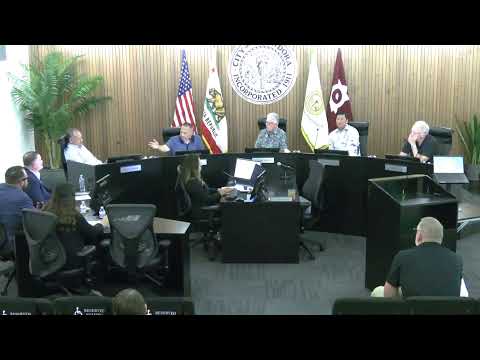
Glendora Water Division Manager Dale Wert told the Water Commission on Oct. 21 that regional untreated water deliveries to local spreading grounds and conveyance facilities were halted Sept. 24 after the invasive golden mussel was detected upstream in the distribution system.
The interruption affects planned deliveries from multiple agencies, Wert said. He reported that Upper San Gabriel Valley Municipal Water District had been delivering roughly 300 cubic feet per second through USG-3 and had planned to deliver a total of 160,000 acre-feet for the water year; as of July and August the district had delivered 12,544 and 18,185.7 acre-feet respectively, but operations stopped Sept. 24 when the mussel was found. Wert said 3 Valleys Municipal Water District— which had planned 35,000 acre-feet—also halted deliveries after the detection. San Gabriel Valley Water District deliveries in August included about 268 acre-feet to a spreading ground and 1,560 acre-feet to a canal; estimates for September included about 535 acre-feet to San Dimas Wash and about 160 acre-feet to a spreading ground.
“All operations have been stopped as of September 24 due to the golden mussel being found upstream in the distribution system,” Wert said.
Why it matters: the stoppage removes one source of untreated imported water used for groundwater recharge and spreading, and agencies are coordinating mitigation. Wert said agencies including Upper District, 3 Valleys, San Gabriel Valley, the Main Basin Watermaster and Los Angeles County are developing regional control and mitigation plans. Metropolitan Water District (MWD) was seeking board approval in October to amend its CIP to add funds for mussel mitigation and to increase operating-equipment budgets by roughly $500,000 for control equipment, Wert said.
State and system context: Wert reported statewide snowpack and reservoir figures as background. He said the Sierra snowpack peaked in early April and Colorado River Basin snowpack peaked April 9; Lake Powell storage was about 29–30 percent and Lake Mead about 31 percent. He noted that the State Water Project allocation was set at 50 percent on April 29 and had not changed.
Commission response and next steps: Commissioners asked how long the shutdown would last and how mitigation would proceed. Wert said no firm timeline was available: “I haven’t heard of anything about it time wise, but they are definitely working on through the mitigation process at the moment, both, with the agencies and with LA County, especially.” Commissioners requested updates before the next commission meeting. The commission voted 5-0 to receive and file the water supply outlook update.
Ending: Wert said agencies are coordinating regional control plans and that Metropolitan planned additional funding for mitigation; he asked the commission to receive and file the report and remained available for follow-up questions.