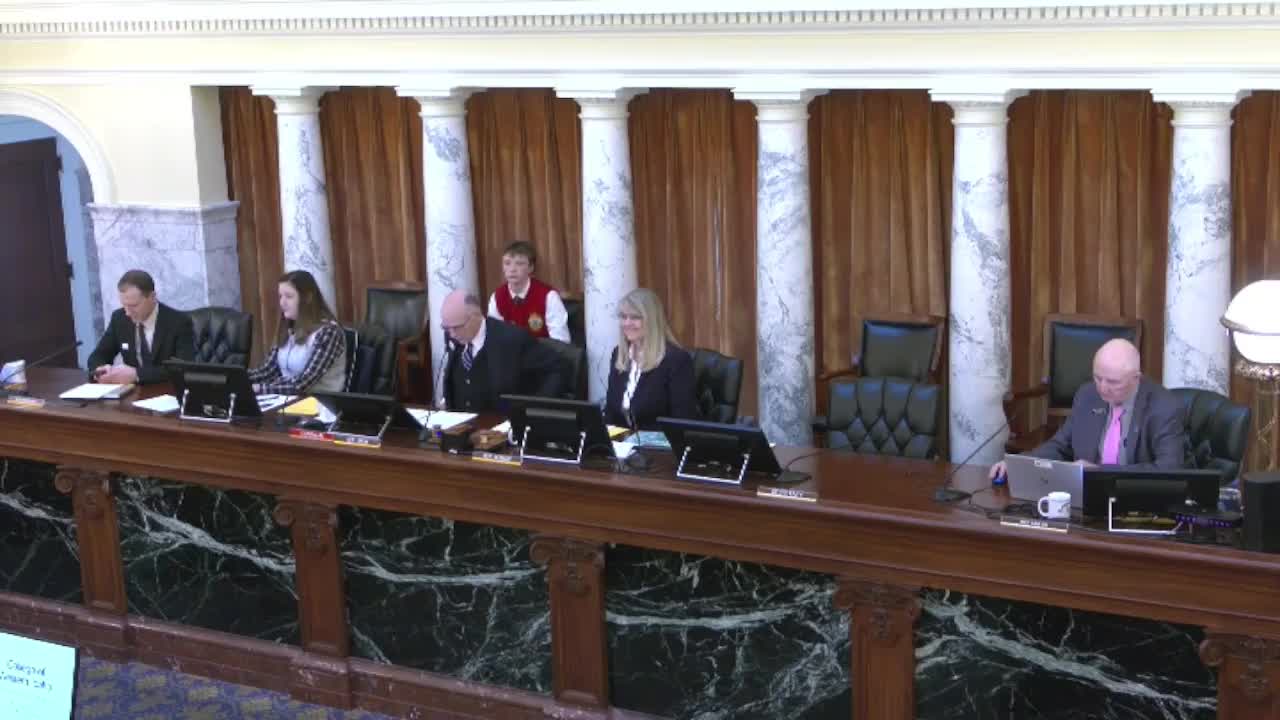
College of Western Idaho tells JFAC enrollment up 13%; nursing and CTE programs face wait lists as EWA cap limits funding
Loading...
Summary
The College of Western Idaho (CWI) told the Joint Finance‑Appropriations Committee (JFAC) that academic enrollment rose about 13% this year, producing wait lists in high‑demand programs and constraining facilities, faculty and student support services.
The College of Western Idaho (CWI) told the Joint Finance‑Appropriations Committee (JFAC) that academic enrollment rose about 13% this year, producing wait lists in high‑demand programs and constraining facilities, faculty and student support services.
CWI President Gordon Jones said on the record that the college reported roughly 13% growth in academic enrollment this year and that the institution serves nearly 31,000 students across credit and noncredit programs. "We have capacity issues," Jones said, citing nursing, automotive technology, welding, cybersecurity and agricultural sciences as the main areas with waiting lists and limits imposed by accreditation or program requirements.
The enrollment workload adjustment (EWA), which is applied under State Board policy, produced a smaller ongoing increase for CWI than the formula would have allowed because the college hit a 3% cap on allowed annual growth, Jones and Legislative Services Office analyst Kevin Campbell told the committee. Jones said the EWA amount shown in the college request—$265,000 for FY 2026—reflects that cap; without it, he said, the formula would have produced about $493,000 for CWI.
Why it matters: The college said the constrained funding and the EWA cap come as demand for short‑term, workforce and career‑technical education (CTE) accelerates. Jones told JFAC that CWI had about 1,000 students on wait lists across programs and “almost a hundred people” on the nursing waiting list alone. He described three categories of bottlenecks: physical facilities, faculty (including accreditation‑driven student‑teacher ratios in programs such as nursing), and student support services such as academic advising.
Details from the hearing • Enrollment and scale: Kevin Campbell, a budget and policy analyst with the Legislative Services Office, said CWI reports nearly 22,000 credit students and more than 30,000 students served in the 2023–24 academic year; Jones later summarized the institution as serving roughly 31,000 individuals "who come to us and entrust their goals for life to CWI."
• Areas of highest demand: Jones identified nursing, automotive technology, welding, cybersecurity and agricultural sciences as programs with the largest waiting lists. He explained that accreditation and clinical placement rules limit class size in medical programs—"we're told…no more than 10 students in the classroom per instructor"—which creates an inflexible cap on seats.
• EWA and the 3% cap: Jones and Campbell described how the EWA formula’s output for CWI exceeded the college’s allowed 3% increase in that year. "For us, it would have been $493,000 but, because of a 3 percent cap, you're seeing the amount that we were able to put in," Jones said. Co‑chair comment to the committee noted that EWA is a State Board policy rather than statute and that the committee can consider changes to how the adjustment is applied.
• How additional funds are used: Jones and the college’s materials presented by Campbell said recent enhancements have funded increased nursing capacity, expanded STEM capacity, student outreach and recruitment, and compensation (CEC). CWI requested an ongoing $265,000 enrollment workload adjustment for FY 2026.
• Workforce alignment: Committee members highlighted CWI’s work training students on electric vehicle (EV) technology and other industry partnerships; Jones said those investments enable graduates to get higher wages quickly. He cited EV technician training and mining technician programs as examples of rapidly evolving CTE areas where the college is pivoting to match employer demand.
Quotes from the hearing • "We do have capacity issues…we have a 1,000 students total on wait lists across all of our programs," Gordon Jones, president, College of Western Idaho. • "For us, it would have been $493,000 but, because of a 3 percent cap, you're seeing the amount that we were able to put in…" Gordon Jones, president, College of Western Idaho.
What was not decided No formal committee action or vote on the CWI request occurred at this hearing. Committee members asked staff to provide a breakdown on capacity constraints (facilities, faculty, support services) to help evaluate potential adjustments.
Looking ahead Committee members asked CWI to provide more detailed splits of the capacity constraints and to work with the Legislative Services Office on data the committee can use in deliberations. Jones emphasized CWI’s role as an affordable, high‑volume provider of postsecondary education and urged thoughtful structural funding choices to sustain growth and capacity.