Get Full Government Meeting Transcripts, Videos, & Alerts Forever!
Get email alerts on the Aging Services topic
No spam. Unsubscribe anytime.
Idaho Commission on Aging seeks limited ongoing funding, plans one-time ARPA drawdowns for senior services
Summary
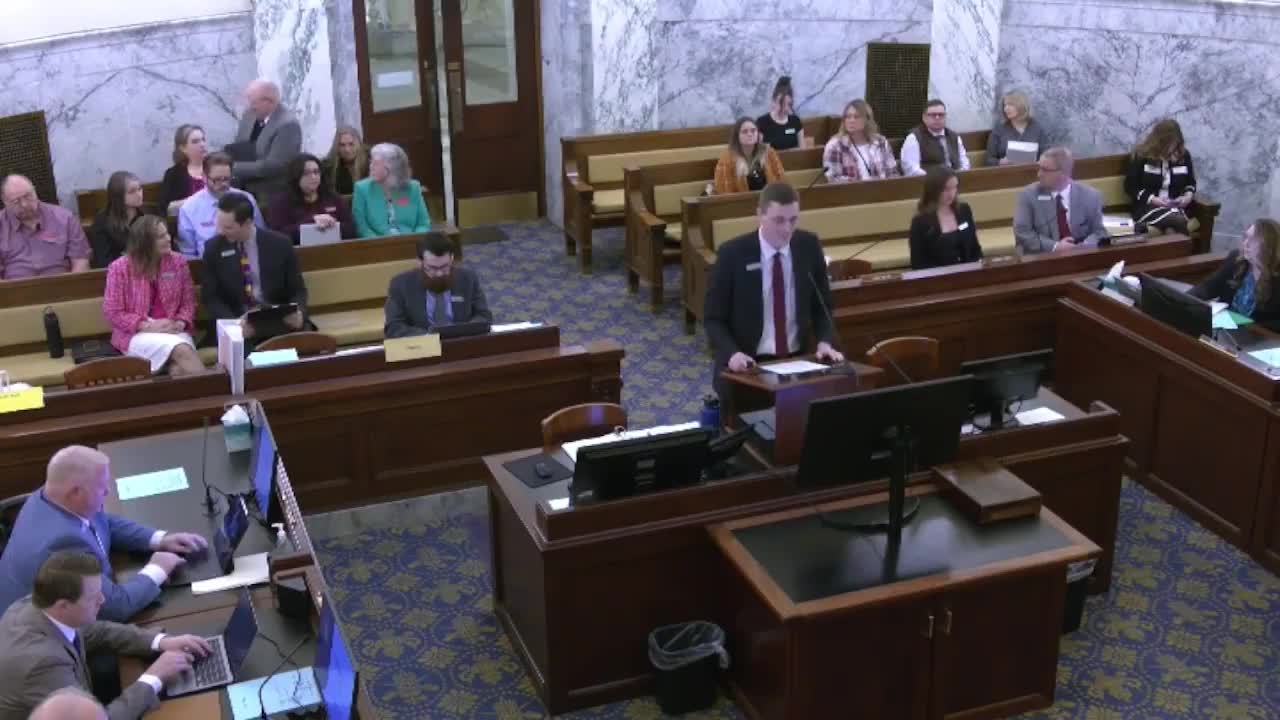
The Idaho Commission on Aging presented its FY2026 budget request to the Joint Finance‑Appropriations Committee on Feb. 24, asking for a modest ongoing general‑fund increase to cover inflation and several one‑time federal ARPA drawdowns to finish modernization and meal‑program work before federal deadlines.
The Idaho Commission on Aging told the Joint Finance‑Appropriations Committee on Feb. 24 that it will seek a small ongoing general‑fund increase for FY2026 and several one‑time federal drawdowns to finish projects funded by American Rescue Plan Act (ARPA) awards.
Colin McGurkin, budget and policy analyst with the Legislative Services Office, said the commission’s base budget implements the federal Older Americans Act and the Idaho Senior Services Act and that FY2024 expenditures totaled about $16.7 million. “The vast majority — just under 88% of expenditures — fall under trustee and benefit payments,” he said, describing payments made to Local Area Agencies on Aging (AAAs) that provide meals, transportation and caregiver services around the state.
The commission requested an ongoing general‑fund increase of $162,600 for FY2026 to cover inflationary costs, including a roughly $155,000 adjustment in trustee and benefit payments to AAAs and $7,600 to cover a 2% operating cost increase within the commission itself. McGurkin and Director Judy Taylor said the commission and governor’s recommendation align on that modest ongoing request.
Nut graf: The commission emphasized that most recent increases in spending were one‑time federal awards used to expand meal delivery, caregiver supports and adult protective services, and that remaining ARPA balances must be spent before the federal deadline. The committee pressed staff for details about how one‑time funds were used and which services will continue once grants expire.
McGurkin outlined a multi‑year pattern of one‑time federal appropriations: between FY2022 and FY2024 the agency drew down ARPA funds for modernization and service enhancements totaling several million dollars, and it requested an additional $500,000 one‑time federal appropriation in FY2026 to pay final invoices before the ARPA access deadline of Sept. 30, 2025. He said about $450,000 of that would go to AAAs to cover outstanding invoices for supportive services, meal programs, modernization projects, caregiver assistance and adult protective services; $50,000 was proposed for staff time and operating expenses tied to processing those final payments.
Director Judy Taylor described how ARPA and CARES Act one‑time awards funded staffing or services that the commission did not intend to put into the base budget. “I have heard from this body and the governor’s office that one‑time money should be spent on one‑time needs,” Taylor said. She told senators and representatives that some enhanced services — for example, professional association memberships for adult protective services staff and additional respite hours — will be reduced once the one‑time funds expire, but the commission intends to prioritize salaries if tradeoffs are necessary.
Committee members asked for more detail about Alzheimer's‑related spending, the $25,000 allocated for personnel costs tied to processing contracts and invoices, and how meal programs were supported. McGurkin said he did not have a specific figure for Alzheimer’s‑related expenditures and would follow up; Vicki Janzick, project manager for the commission, explained that the $25,000 was meant to let staff direct‑bill federal grants for time spent administering and monitoring subrecipients so costs would be allocated to the appropriate federal source rather than to other funding streams.
Taylor said nutrition remains a top priority for the commission. She told the committee that funding appropriated last session increased meal rates by 25¢ and that, as of the hearing, the agency reported no home‑delivered meal wait lists in Idaho — an outcome she credited to the prior appropriation.
The commission also described a pilot that used ARPA funding to embed community health workers with AAAs to support high‑risk caregivers, particularly those caring for people with dementia. Taylor said those community health workers performed in‑home assessments and care planning and that the commission expects to sustain the positions for the pilot period using remaining one‑time funds, while acknowledging respite hours funded by one‑time dollars may decline when grants end.
Ending: Committee members requested written follow‑up on line‑item details, including what portion of the budget supports Meals on Wheels and what Alzheimer’s‑specific services have been funded. The commission said it would provide additional documentation by email to the committee staff.