Get Full Government Meeting Transcripts, Videos, & Alerts Forever!
Get email alerts on the Program Maintenance Budgets topic
No spam. Unsubscribe anytime.
JFAC approves FY2026 program‑maintenance budgets and standard language for agencies statewide
Summary
The Joint Finance and Appropriations Committee set FY2026 maintenance appropriations and approved standard statutory and reappropriation language for multiple state agencies, including legislative and judicial branches, public safety, education, and health and human services.
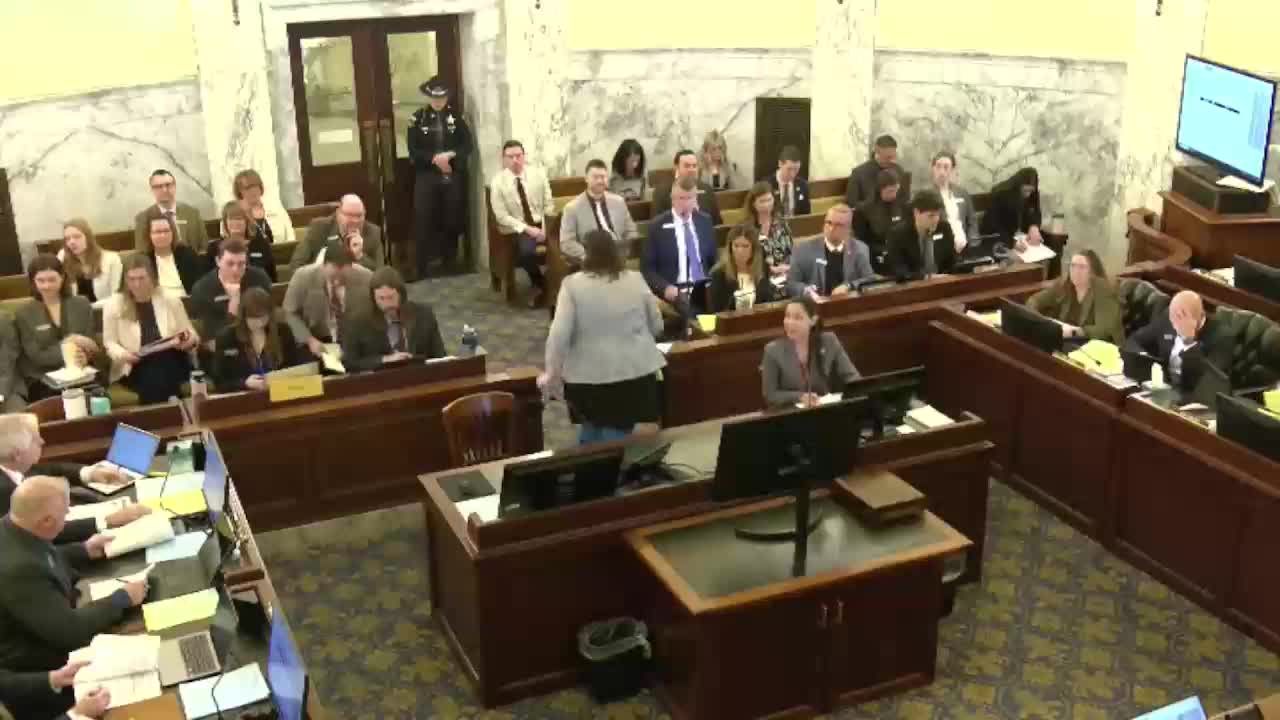
The Joint Finance and Appropriations Committee on Jan. 17 approved program-maintenance budgets and accompanying statutory language for multiple functional areas and agencies across state government.
Committee staff described program maintenance as the legislature’s continuation of ongoing operations (the base budget), with limited additions for contract inflation and statewide cost allocations. Committee action both set dollar appropriations and, where applicable, approved accompanying "clear language" — statutory buckets, transfer exemptions, reappropriation authority, and reporting requirements — that govern how agencies may use or carry over funds.
Most motions were uncontested and carried on roll-call votes. The committee’s actions and vote tallies are listed below ("Votes at a glance"). Staff said these decisions preserve the agency bases set by prior legislatures while allowing limited flexibility through identified exemptions and reappropriation authority.
Votes at a glance - Legislative Branch (Legislative Services Office and Office of Performance Evaluations): Motion to set FY2026 base and include $41,700 for statewide cost allocation passed (20 ayes, 0 nays). Motion also authorized clear language and reappropriation authority; roll call unanimous. - Judicial Branch (Court operations, Guardian ad Litem, Judicial Council): Motion to set FY2026 base and include $116,400 for statewide cost allocation passed (20 ayes, 0 nays). Reappropriation authority for court technology (ARPA) and other clear language also approved. - Constitutional officers (Governor's office, Lieutenant Governor, Attorney General, State Controller, Secretary of State, State Treasurer): Motion to set FY2026 base, include contract inflation and cost allocation, and cap FTPs passed (20 ayes, 0 nays); several reappropriation and continuous-appropriation provisions were adopted. - Public Safety (Corrections, Juvenile Corrections, Idaho State Police, brand inspection, racing commission): Motion to set FY2026 base and include $2,215,000 for statewide cost allocation, cap FTPs at 3,322.61 passed (20 ayes, 0 nays). Committee added standard transfer limits and transfer exceptions for specified correction programs. - General Government (Department of Administration, Governor’s Office agencies, State Tax Commission): Motion to set FY2026 base and include contract inflation and cost allocation passed (20 ayes, 0 nays). Committee approved 13 sections of standard language including ARPA reappropriations, workforce training and childcare infrastructure reappropriation authority, and reporting requirements. - Economic Development functional area (multiple agencies including Commerce, Agriculture, Labor, Public Utilities, Lottery): Motion to set FY2026 base, include contract inflation and cost allocation and cap FTPs at 4,165.28 passed (20 ayes, 0 nays). Committee approved broadband reappropriation and other standing language for grants and continuous appropriation where required. - Natural Resources (DEQ, Fish and Game, Lands, Endowment Fund Investment Board, Parks and Recreation, Water Resources): Motion to set FY2026 base, include contract inflation and cost allocation and cap FTPs passed (20 ayes, 0 nays). Committee adopted language addressing Bunker Hill remediation reporting and transfers, Ag BMP usage, and capital project reappropriations for parks. - State Board of Education and higher education-related budgets (universities, colleges, community colleges, public TV, technical colleges, special programs): Motion to set FY2026 base, include contract inflation and cost allocation and cap certain FTPs at 534.97 (with no FTP cap for universities, extension, and certain programs) passed (20 ayes, 0 nays). The committee approved reappropriation authority for tuition/dedicated funds and other customary exceptions for higher education funds. - Public Schools Support (K–12 funding, student support division, IDLA, assessments, discretionary and health benefit allocations): Motion to set FY2026 base (including a reduction of $21,400 related to a statewide cost allocation change) and pass the maintenance appropriation passed (20 ayes, 0 nays). The committee also approved 24 sections of statutory language clarifying distribution and expenditure rules for discretionary funds, health benefits, classroom technology, digital content, English-proficiency grants, and reporting requirements; staff provided a crosswalk handout for consolidated student support divisions. - Health and Human Services (Department of Health and Welfare reorganization, Department of Health and Welfare and State Independent Living Council): Motion to realign appropriation unit names, realign the base to reflect departmental reorganization, and add a new budget appropriation unit for the Idaho Child Care Program passed (total recorded vote 18 ayes, 1 nay, 1 absent; Senate 10–1–0, House 8–0–1 due to a member voting no and one absent). The committee later set the program-maintenance appropriations and approved extensive clear language (reported monthly Medicaid tracking, managed-care implementation reporting, limitations on intra-division transfers absent legislative approval, targeted set-asides and reporting for opioid-response and child-focused programs, and other program-specific provisions).
Committee staff emphasized that program maintenance bills preserve the base appropriations established by prior legislatures and that some statutory adjustments — notably employee compensation (CEC), revenues, and health insurance numbers — were not resolved and will be addressed at a later date.
Members indicated they will reconvene to review final drafted bills next week and handle any technical corrections to the language before introduction to the full Legislature.