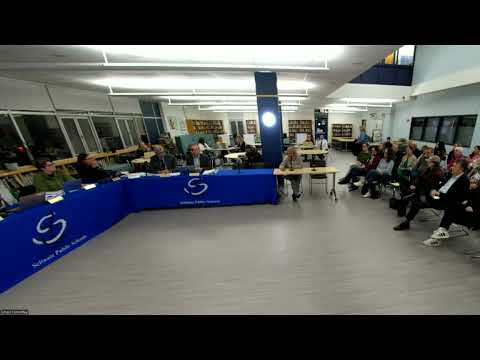
Scituate schools present MCAS results, district-level goals and plans to monitor progress
Loading...
Summary
Scituate principals and district leaders reviewed MCAS and DESE accountability results on Oct. 20 and proposed a triennial improvement plan, quarterly progress checks and program-level reporting to guide FY27 budget decisions.
Scituate administrators and school principals presented statewide MCAS accountability results and a set of proposed district goals on Oct. 20, reviewing strengths, weaknesses and next steps across grades K–12.
Overview of results: District officials said the district overall is in the ‘‘substantial progress toward targets’’ category used by the Massachusetts Department of Elementary and Secondary Education (DESE). Principals reported the following patterns across elementary and secondary schools: - ELA: Several elementary grades showed gains from 2024 to 2025, but districtwide writing and extended-response (essay) items remain the weakest strands. - Math: Performance varied by grade; several schools reported improvements in number operations and fractions, while geometry and some algebra strands lagged in middle and high school results. - Science: Fifth-grade and middle-school performance improved at multiple schools, in part linked to departmental models and piloted curriculum (OpenSciEd) in some grades. - Civics: The new grade-8 civics MCAS administered statewide completed its first year; results were described as consistent with reading performance on the test’s primary-source reading demands. - Chronic absenteeism: Multiple principals noted improvements in some schools but acknowledged the metric remains a target for further work; principals said a small number of chronically absent students can materially affect school accountability measures in small elementary populations.
Administration proposals and next steps: Assistant Superintendent Ryan Lynch and principals outlined three district-level goals for the coming year: (1) adopt a focused triennial district plan (academic and instructional improvement) with measurable proficiency targets; (2) implement more frequent, quarterly progress monitoring to make the superintendent’s annual evaluation evidence-based; and (3) collect programmatic outputs and outcomes to inform FY27 budget priorities. The administration said a districtwide November professional-development day will give teachers time to work with assessment tools and use OpenArchitect data dashboards.
Why it matters: MCAS results and DESE accountability classifications guide school improvement planning and influence budget priorities. Veterans and parents attending the meeting repeatedly asked the committee for clearer, measurable targets for chronic absenteeism, writing instruction and math pacing.
Quotes (selected): "We want to make that feel less of a big thing and have it be something that we're more checking in with frequently," Assistant Superintendent Ryan Lynch on quarterly progress monitoring. "If we're above the 50 (student-growth percentile), but still could be stronger there," Jenkins Principal Mary Aldac on year-to-year student growth interpretations.
Ending: Principals and district staff said they will return with more detailed plans and will use newly available tools (OpenArchitect and STAR benchmarks) to provide teachers and the committee with more timely progress information. The administration recommended continued focus on writing instruction, curricular pacing for geometry, and targeted intervention resources for math.