Evanston council narrows Envision Evanston 2045 after hours of public comment, approves package of wording changes
Loading...
Summary
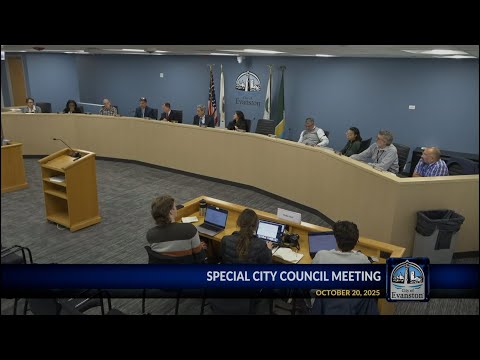
The Evanston City Council continued a lengthy public hearing on the draft Envision Evanston 2045 comprehensive plan on Oct. 20, 2025, hearing more than two dozen public commenters before approving a number of targeted wording changes and sending a near‑final draft back to council for a special meeting at least two weeks after staff circulates a final packet.
The Evanston City Council continued a lengthy public hearing on the draft Envision Evanston 2045 comprehensive plan on Oct. 20, 2025, hearing more than two dozen public commenters before approving a number of targeted wording changes and sending a near‑final draft back to council for a special meeting at least two weeks after staff circulates a final packet.
The public comment period centered on housing policy, neighborhood character and student housing. Residents and community groups pressed the council to either pause or refine the plan’s zoning changes, to prioritize long‑term affordability over incentives for market‑rate development, and to protect neighborhood assets including schools and parkland. Council members spent the evening moving specific amendments to the draft and voting on consent items and edits rather than adopting the plan itself.
Most contentious were comments about proposed changes to single‑family zoning and whether allowing small multifamily buildings “by right” would produce meaningful affordability or accelerate displacement. Paul Breslin, speaking for the Evanston Action Coalition, said, “We need and want to create more affordable housing” while arguing for a different approach to achieve that goal. Opponents repeatedly urged the council to pause the plan and complete further analyses and neighborhood outreach.
Council action, votes and amendments - Virtual participation: Council approved adding Councilmember Burns as a virtual participant for the meeting by roll call (motion carried). - Consent agenda: After discussion and multiple requests to remove subitems for separate consideration, the council approved the consent agenda with multiple subitems pulled for debate (roll call carried). - Wording and policy edits: Council members proposed and passed a series of specific wording changes throughout the draft, including changes to transportation and economic development language, additions to arts and culture language, and changes to several housing policy action lines to emphasize collaboration (“collaborate with developers…to support the development of housing that meets community needs”) and to add follow‑up analyses before major zoning changes. Many of these amendments were approved by roll call. - Parks language: Council adopted revised language taken from the city’s parks strategic plan describing park acreage and types, and an amendment (supported by the council) that notes Evanston’s “park accessibility is high” (100% of residents within a 10‑minute walk of a park) while also stating that the overall supply of green space does not fully meet community needs and that the city must prioritize maintenance of existing parkland. - Next steps: The council approved a motion creating a special order of business scheduled not less than two weeks after staff circulates what it believes is a final draft; that special meeting will give council members time to review a consolidated final text before the council considers formal adoption. The council also closed the public hearing on the draft at the end of the evening and subsequently moved into executive session for unrelated matters.
What the votes do — and do not do The motions and votes Tuesday did not adopt the comprehensive plan. Instead, the council accepted a set of staff‑ and council‑proposed edits and directed staff to produce a polished, consolidated draft for review. Several members emphasized that independent analysis should accompany any future citywide zoning rewrite so the council can assess likely impacts on housing supply, affordability, displacement and fiscal outcomes before taking final action.
Public testimony and recurring themes - Many in‑person speakers urged the council to prioritize direct investments in permanently affordable housing over incentives that reduce developer costs (tax breaks, IHO incentives), citing cost and durability concerns. - Community groups (including the Evanston Action Coalition and Open Communities) advocated for clearer data, stronger anti‑displacement language and measurable targets tied to the Strategic Housing Plan ("Housing for All"). - Several speakers raised concerns about developer influence and requested greater transparency about city‑developer communications; one speaker alleged a mayoral endorsement of private developer interests in connection with a downtown parcel sale (public comment only; no formal council action on the allegation).
Why it matters Envision Evanston 2045 is the city’s overarching land‑use and policy framework for the next two decades. The final content and the council’s decisions on how to translate that policy into zoning code changes will affect housing production, neighborhood form, transportation investments and city finances. Council members repeatedly framed their edits as attempts to preserve neighborhood character while also moving toward stated equity and housing goals.
What’s next Staff will publish a consolidated draft that reflects the edits the council approved. The council voted to schedule a special meeting not less than two weeks after staff releases that near‑final draft so members can review the entire package before a formal adoption vote is scheduled. No adoption vote was taken Oct. 20.