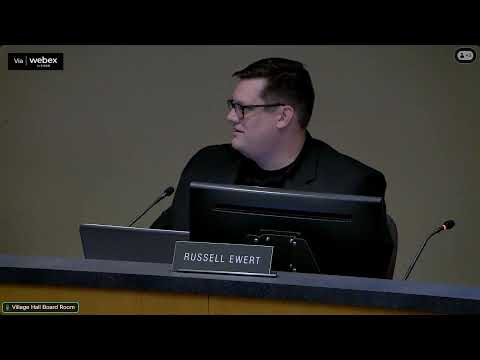
Plan commission deadlocks on 35-acre Lime Kiln solar farm after public safety and screening debate
Loading...
Summary
The Germantown Plan Commission failed to approve a conditional use permit and site plan for a 35-acre, 6-megawatt solar farm proposed by 1 Energy Development LLC, after hours of presentations, technical questions and a large public turnout that raised safety, environmental and visual-screening concerns.
The Village of Germantown Plan Commission voted on Oct. 13 on a conditional use permit and site plan for a proposed 35-acre solar energy conversion facility — the Lime Kiln project — proposed by 1 Energy Development LLC to be located at N144 W12531 Pioneer Road.
The applicant told the commission the project would be a roughly 6-megawatt, bifacial-panel solar array on about 35 acres of a 54-acre parcel and deliver power to the local We Energies distribution system. 1 Energy representatives described a facility surrounded by an 8-foot agricultural fence, on-site inverters and two transformers, native-pollinator seed mixes beneath the panels, a gravel access drive off Pioneer Road and vegetative screening along the north property line. The company said the array would produce the annual generation equivalent of roughly 1,400 average Wisconsin households.
The plan commission vote was the culmination of a two-hour presentation and public hearing in which planning staff, the developer and multiple residents debated construction timing, fire risk, decommissioning, visual screening and impacts to wells and groundwater. Planning staff briefed commissioners on state statute 66.0401, which limits municipal authority over solar siting and requires local review to be narrowly tailored to public-health-and-safety exceptions. The staff report noted the village engineer and forester had provided technical comments and recommended approval subject to multiple conditions. 1 Energy also provided a glare analysis, endangered-species checks and a vegetation-management plan.
Why it mattered
The project divided residents in the neighborhood of Cedar Lane and Pioneer Road. Dozens of people spoke, largely during the public-hearing period: some urged rejection on the grounds of local fire risk, noise from pile-driving, possible groundwater effects, visual impacts and property-value loss; others said solar projects bring local jobs and modest payments to the village and county. The commission’s inability to approve the CUP or site plan means the developer must either revise plans and return or pursue the next procedural steps if so directed by any further administrative advice.
What the applicant proposed
Peter Murphy and Julie Garrett, project representatives for 1 Energy, described equipment and land-management plans: bifacial, single-axis trackers mounted on steel pile racking driven roughly 8–12 feet into the ground; about 24 inverters aggregated at the access drive; two transformers mounted on skids; and a planned native-pollinator prairie seed mix for permanent vegetation. The applicant said panels are glass, aluminum and silicon (monocrystalline modules) and that the design avoids thin-film technologies that use cadmium telluride. Murphy said We Energies had performed a distribution study and that in other recent local projects WE territory had purchased assets; developers said ownership and long‑term decommissioning responsibility would be determined as projects mature.
What residents told the commission
Public commenters raised a wide range of concerns. Engineer and neighborhood resident Marty Peck said he was worried about solar-farm fires and cited national incidents when lithium-ion batteries were involved; the developer and staff said the Lime Kiln proposal did not include onsite battery storage and emphasized differences between battery fires and photovoltaic-panel incidents. Other neighbors asked about glare, noise, pile-driving vibration, bedrock depth and the adequacy of the proposed 8-foot fence and screening. Several residents asked whether the village would receive a meaningful tax or utility-rate benefit; 1 Energy cited Wisconsin Department of Revenue utility-aid formulas and estimated about $30,000 per year split between the village and county (the developer said the village would get roughly $17,000 and the county $13,000 under the stated formula), and noted construction jobs during build-out.
Commission discussion and votes
Commissioners queried the applicant on fire risk, herbicide use for establishing the pollinator seed mix, decommissioning commitments, ownership models and the effects of adding another nearby solar project in a short distance. Commissioners also asked for additional landscaping and screening and proposed strict limits on herbicide use.
The commission debated and voted on a motion to approve the conditional use permit and site plan as submitted with staff conditions. The meeting record shows the commission first approved several amendments — including one requiring a landscaping plan that ensures year-round (evergreen) screening along the visible perimeter, a limitation to spot herbicide application rather than broadcast spraying, and a requirement that the village be named as an additional insured on pollution liability — but the final motion to approve the CUP and the companion site plan failed on the floor of the commission. Because the explicit roll-call tallies were not printed in the transcript, the record states the motions did not carry.
What happens next
The commission’s failure to approve the CUP and the site plan leaves the application unresolved. Staff told the commission that, under state law, municipalities are limited in what they may deny for solar projects and that any denial should be grounded in public-health-and-safety criteria. The developer may revise the application and return; if they do so, staff recommended providing clearer screening plans, refined roofline and equipment placement details and stronger decommissioning guarantees. The applicant said it would work with village staff on revised renderings and technical details.
Local context
The discussion came amid a regional uptick in smaller, distribution‑level solar projects sited near existing distribution infrastructure. The debate at Germantown focused on local impacts — noise and vibration during construction, pile-driving, short‑ and long‑term fire risk, screening, property values, and how decommissioning and panel recycling would be enforced — rather than on the larger questions of statewide energy policy. Commissioners and staff repeatedly referenced the village planning code, the 2050 comprehensive plan and Wisconsin statute 66.0401 during deliberations.
Ending
The commission’s split vote leaves the Lime Kiln proposal unresolved. The applicant and staff said they would continue to work on the technical items requested by commissioners and neighbors — especially landscaping and decommissioning language — and may return with revised materials. Several residents said they would continue to monitor future filings and, if needed, press their concerns at subsequent hearings.