Get Full Government Meeting Transcripts, Videos, & Alerts Forever!
Get email alerts on the Solid Waste Fees topic
No spam. Unsubscribe anytime.
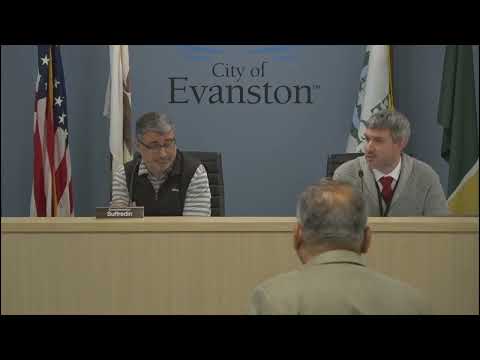
Evanston committee backs recommendation to raise solid-waste fees, advance food-and-yard-waste program
Summary
The Finance and Budget Committee voted to recommend that City Council adopt a package of changes to solid-waste fees intended to reduce the enterprise fund's structural deficit and expand year-round food/yard waste collection. The recommendation passed despite objections about using fee increases while the fund holds excess reserves.
The Finance and Budget Committee on Thursday recommended that City Council adopt a set of changes to solid-waste fees designed to shore up the enterprise fund and expand food- and yard-waste collection.
The committee voted to forward the proposal by a 6-1 roll call (Council member Kelly opposed). The motion recommends adopting a $7-per-month charge for year‑round food-and-yard-waste cart service, raising sticker fees to $2.50, instituting a $1-per-unit monthly charge for special bulk/unscheduled pickup services, offering 35‑ and 95‑gallon compost-cart options, and modestly increasing some cart rates (including moving the 65‑gallon garbage cart from $11.93 to $14). The committee also asked staff to pursue implementation details and resident outreach before the change is introduced to the full council.
Why it matters: Public Works staff say the solid-waste enterprise fund operates at a structural deficit and receives a property-tax subsidy; the fee changes are intended to reduce reliance on that subsidy and to help the fund reach self‑sufficiency over time while increasing diversion of organic waste from landfill.
Brian Zimmerman, Solid Waste Coordinator in the Public Works Department, told the committee the fund "is a fund that is currently in a structural deficit" and described several drivers: new contract haul rates that take effect Nov. 1, pending labor-contract increases, multi-year delays on vehicle purchases, and unfilled staff positions. Zimmerman said the city currently subsidizes the fund with property-tax revenue that accounts for roughly 18% of the fund's estimated revenue and that staff aim to reduce that levy contribution over time.
Key proposed changes and staff estimates
- Food-and-yard-waste carts: move from seasonal service to year‑round collection and place a $7-per-month charge on bills; households may opt out during the program rollout. Zimmerman said the city plans to offer 35‑ and 95‑gallon cart sizes and initially set the same monthly charge for either capacity.
- Sticker fee and special pickups: raise sticker revenue to $2.50 per sticker. Convert the current twice‑a‑year bulk collection model to an on‑demand special pickup program funded by a $1-per-unit monthly charge for residential and condominium accounts; individual scheduled pickups would still be subject to a per‑call or per‑volume limit (the presentation described a 3‑cubic‑yard guideline for scheduled calls).
- Cart-size pricing: introduce a 35‑gallon garbage-cart option and increase the 65‑gallon rate from $11.93 to $14. The current default 95‑gallon rate remains $26.95 under the proposal; staff said the city will continue to encourage customers to downsize through education and program incentives.
Financial context and reserves
Staff presented multi‑year projections showing the fund's operating income has been negative since the fund's creation in 2011 and that, without changes, the fund balance would decline toward the city's policy target. The presentation said: the fund balance includes an operating reserve set at 16.6% of expenses (roughly two months) and that the city currently has several million dollars in excess reserves (presentation referenced roughly $3 million in excess reserves at midyear). Staff said some of that balance reflects unspent capital purchases (older vehicle orders still undelivered) and one‑time payments to partner entities.
Council member Kelly objected to the timing and scale of fee increases, noting the committee had a sizable excess fund balance and saying, "I think we should lower the taxes in this line item and I think we shouldn't raise the fees." Others, including Council member Newsom, argued staff should phase changes and use reserves to soften the impact, calling for incremental increases rather than a single large jump.
Public comment and resident concerns
Tricia (last name not specified in the record) urged the committee to be "extra sensitive" about raising fees while the city holds what she described as a "healthy excess fund balance," adding, "It is obnoxious to me that we're going from a $40 fee in the solid waste to $96." That specific dollar comparison was raised by a public commenter; staff identified the program elements and per‑unit charges described above.
Implementation, outreach and next steps
Staff told the committee they plan to accompany the transition with education (cart tagging, a recycling information tool the city calls Recycle Coach and vendor‑provided outreach) and to negotiate program details with the contracted hauler. The presentation projected the new pricing and program changes would be introduced to the City Council in November as part of the budget and levy package and that some items would take effect in 2026; staff noted a target effective date for rate changes in early April 2026.
Votes at a glance
- FB 1 (Acceptance and placing on file of the single audit for fiscal year 2024): recommended to City Council, roll-call recommendation recorded as 6 Aye, 0 No (details below). (See the single-audit note in this meeting record.)
- FB 2 (Recommendation on increases to yard-waste rates in the solid-waste fund): committee recommended the fee changes to City Council, roll call: Council member Nussmann Aye; Council member Suffredin Aye; Committee member Chao Aye; Council member Rogers Aye; Council member Kelly No; Committee member McGuire Aye; Council member Davis Aye (6 Aye, 1 No).
The Finance and Budget Committee's recommendation is nonbinding; City Council will consider ordinances and levy-related items at the November introduction and public‑hearing schedule described by staff.
Ending: Committee members asked staff for further detail on how excess reserves were being assigned to pending vehicle purchases and for a budget memo outlining reserve accounting; staff said they will provide follow‑up material before final council action.