Get Full Government Meeting Transcripts, Videos, & Alerts Forever!
Get email alerts on the Accessory Building Variance topic
No spam. Unsubscribe anytime.
Augusta BZA conditionally approves large accessory building at Horseshoe Road after owner agrees to restrictions
Summary
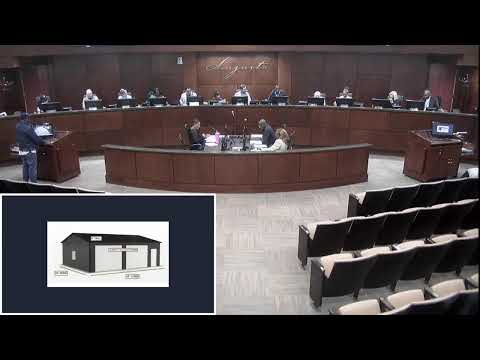
The Board approved a variance to allow an already-built 4,280-square-foot metal pole barn to be treated as an accessory structure if two parcels are combined and several conditions are met, including no separate electrical meter and prohibition on residential use.
The Augusta Board of Zoning Appeals approved on Oct. 20 a variance to increase the allowed total accessory-building area at 1101 and 1105 Horseshoe Road from the ordinance maximum (1,200 square feet) to 4,280 square feet, subject to conditions and consolidation of parcels.
Amanda Cruz, planning staff, told the board the properties total approximately 1.76 acres in the Horseshoe Farms neighborhood and that an unlawful structure complaint is active for a metal pole barn built without permits. By ordinance, accessory buildings must be incidental to the main building and located on the same lot; the applicant proposes to combine the two parcels so the barn would meet that definition.
Cruz said the combined accessory area of 4,280 square feet exceeds the ordinance limit by roughly 357%. Staff recommended denial because the request did not meet all variance criteria, but offered conditions should the board approve: the two parcels must be combined following approval and before any building permit is issued; accessory buildings may not be used for residential purposes, may not contain sleeping or cooking facilities or a home occupation, and may not have a separate electrical service without additional variance.
The applicant (who identified himself in the record as Rodrigo Rodriguez) said the barn is for storage of equipment for his electrical business and that the structure currently has only temporary power lines rather than a separate meter. The applicant told the board he would accept staff conditions, including not having a separate meter unless a later variance is obtained.
Board member Truelock moved to approve the variance subject to staff conditions; the motion passed following a roll-call vote. The board recorded a mix of approvals and denials from members during the roll call but declared the application approved and advised the applicant to remove any existing residential-type features and to secure required building permits and inspections.
Staff also reminded the applicant that if a separate electrical service is later installed, the owner must seek a variance for that service.