Get Full Government Meeting Transcripts, Videos, & Alerts Forever!
Get email alerts on the State Budget Education Policy topic
No spam. Unsubscribe anytime.
State lawmakers brief Prior Lake-Savage board on tight budget, propose more local control and flexibility
Summary
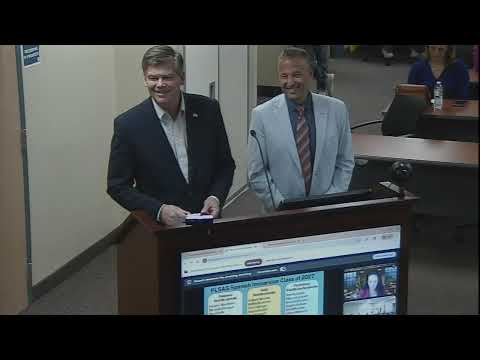
State Sen. Eric Pratt and Rep. Ben Bakeberg told the Prior Lake-Savage Area Schools board that a recent run of one-time spending and rising mandates has left the state facing a tight budget outlook and new costs for districts, and urged more local control and flexible funding options.
State Sen. Eric Pratt and state Rep. Ben Bakeberg told the Prior Lake-Savage Area Schools board on Oct. 14 that Minnesota faces a constrained budget outlook and several new policies that will increase costs for school districts.
Pratt, who said he served 12 years on the district board, said the state used one-time surplus dollars to cover ongoing expenses and is now confronting a tighter two‑year forecast. "We had just come off of an $18,000,000,000 surplus. And we, spent most of that," Pratt said. "We also increased taxes over $10,000,000,000 in the 2 previous years." He warned the board that a string of policy changes and benefit expansions are creating new recurring costs that school districts will have to absorb.
The senator listed specific state policy changes he said are increasing district costs: a paid family medical leave premium that he said will cost school districts, cities and counties about $300,000,000 a year; expanded "earned sick and safe time" requirements; and higher unemployment insurance costs tied to seasonal employees and a depleted state trust fund. "We're still spending almost $3,000,000,000 more than we're bringing in in tax receipts," he said.
Rep. Ben Bakeberg, who said he serves as a middle school principal in addition to his legislative duties, pressed the case for more local flexibility. He described three legislative priorities for the coming session: reaffirming local control, providing mandate relief, and preserving funding flexibility. "We should give you the funding and the flexibility, and then we should get out of the way so that you can determine what is best for your district," Bakeberg said, referring to a local option revenue proposal that would allocate roughly $100 million statewide to be distributed as about $100 per student into flexible local accounts.
Bakeberg also warned the board about a state blue‑ribbon commission tasked with finding $250,000,000 in special‑education reductions; if the commission does not identify those cuts, the shortfall would come out of general education funds, he said. "In essence, that is a general education cut," he said, and noted the district could receive less money as a result.
Superintendent Michael Thomas thanked the lawmakers for appearing and noted the remarks were intended to give the board context ahead of the legislative session. Board members asked a few clarifying questions and thanked the legislators for their time.
Why it matters: The fiscal pressures and policy changes lawmakers described — new benefit premiums, possible special‑education reductions and limits on district authority — would affect local budget planning, levy decisions and school operations. The district is already updating enrollment and budget projections and considering adjustments in response to state guidance.
Meeting evidence: Pratt and Bakeberg delivered their remarks during the superintendent's report segment of the Oct. 14 meeting; the discussion included numeric estimates and specific policy names provided by the legislators.