Get Full Government Meeting Transcripts, Videos, & Alerts Forever!
Get email alerts on the Appropriations topic
No spam. Unsubscribe anytime.
Wyoming Department of Health outlines $14 million in supplemental exception requests; many items carry statutory or federal ties
Summary
Department of Health officials told a Joint Appropriations subcommittee that a failed supplemental budget left the agency reverting to its standard 2025–26 biennium budget and outlined roughly $14 million in state general‑fund exception requests and related contingency steps.
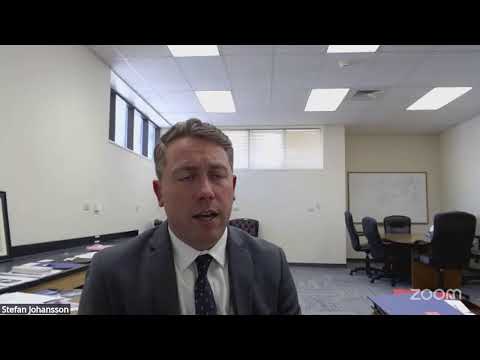
Director Stefan Johansen told the Joint Appropriations subcommittee on the Wyoming Department of Health and Budget that the agency submitted roughly $14,100,000 in state general‑fund supplemental requests this year, with about $4,400,000 in federal funds and roughly $100,000 in other funds attached.
"We made supplemental requests, totaling approximately $14,100,000 in state general funds, 4,400,000.0 in federal funds, and about 100,000 in other funds," Johansen said. He added that because the House and Senate versions of the supplemental budget were not reconciled, "there was no supplemental budget bill that passed this year, which essentially reverted us back to the standard 2526 budget."
The department described its requests in several categories. Johansen said about $11.8 million of the general‑fund request consisted of "required requests," statutory or mandatory items the department said it was obliged to bring to the legislature. He listed these and other priority items identified in the supplemental submission:
- Medicaid reimbursement increase for maternity care: roughly $2.4 million (about half state funds, half federal) intended to raise some Medicaid payments to approximately 105% of Medicare to sustain hospital‑based OB/maternity services in rural communities.
- Behavioral health Medicaid rate rebasing: roughly $1.6 million (half state, half federal) to rebase behavioral health reimbursement after a study indicating rates had slipped behind cost.
- Additional eligibility staff for long‑term care: the department requested at least one additional position to address a surge in complex long‑term care eligibility cases. Johansen said eligibility workers in the unit had, at peak, worked up to about 700 cases and that the department hopes to reduce that to roughly 500 cases per worker to avoid delays and errors for elderly applicants.
- Developmental preschools external cost adjustment (ECA) and child count: Johansen said roughly $11.7 million of the general‑fund request was tied to the annual statutory ECA and child‑count adjustments for developmental preschools and noted the department is statutorily obligated to bring those figures to JAC.
- Home health reimbursement for high‑needs children: a request of about $672,000 (split state/federal) to increase home‑health pay for medically complex children; department staff said temporary internal adjustments raised payments to about 70% of Medicare to avoid immediate loss of services.
- County public‑health nursing salary adjustment: a small request to reflect state employee compensation changes for five county independent public‑health departments the agency said are covered by a previously passed law requiring parity requests to the legislature.
- Administrative and technical staffing: requests to convert five AWAC (contract) Medicaid technology positions to permanent state positions, and to convert 12 part‑time WIC positions to full time using federal funds; both items had received committee interest but were not enacted when the overall supplemental failed.
- Other funds adjustments and cleanups: a $100,000 other‑fund request described as a canteen fund cleanup for the Wyoming Life Resource Center was included as an administrative housekeeping item that the department said could be handled by alternate mechanisms.
Johansen and Medicaid manager Jesse Springer discussed interim contingency steps taken after the supplemental failure. Springer said the department had made short‑term internal adjustments to preserve services for children needing home health care, including a rule change to allow licensed practical nurses to provide certain home‑health services under registered‑nurse supervision and internal reductions of some historically high‑paid services to reallocate funds to home health.
On long‑term care eligibility, Johansen and staff told the committee they aim to keep case processing under 45 days and ideally near 15–20 days, but staffing shortages have required weekend and extended‑hour work by current staff. Johansen noted the long‑standing Medicaid asset limit for long‑term care remains $2,000.
The department also summarized federal grant spending authority items (Older Americans Act programs) and noted the agency will seek clarification and transparency in its B‑11 spending‑authority adjustments.
Why it matters: The supplemental requests cover services legislators described as high public‑impact priorities—maternity care in rural hospitals, behavioral‑health access, home care for medically complex children and timely long‑term‑care eligibility decisions. With the supplemental bill not enacted, the department said it reverted to the standing biennial budget and will carry many unresolved items into the next budget cycle. Johansen told the committee he will brief the governor ahead of the governor’s internal review and will return items as appropriate in the December hearings and the 2026 session.
Committee reaction and follow‑ups: Representatives asked for details on processes used to monitor rates and eligibility error exposure. Johansen and Springer described actuarial benchmarking the department uses to trigger rate rebasing requests and said the department runs annual rate benchmarking reports against neighboring states, Medicare and private‑pay sources. The committee also asked for documentation of the department's HealthStat performance reviews and the most recent HealthStat report; Johansen agreed to provide the materials.
Public comment: Richard Garrett of Healthy Wyoming and Dr. Kathy Emmons, director of Cheyenne‑Laramie County Public Health, both praised the department's stewardship and urged attention to workforce and to honoring the county public‑health salary parity law the department had included in its supplemental request.
Ending: The department said it will bring revised or carried‑over items to JAC for the December budget hearing and to the 2026 legislative session, noting potential interaction with pending federal awards under the rural health transformation program (HR 1) that could change funding options for several priorities.