Get Full Government Meeting Transcripts, Videos, & Alerts Forever!
Get email alerts on the Dark Skies topic
No spam. Unsubscribe anytime.
Tri‑county workshop advances dark‑sky tourism, lighting retrofits and branding push
Summary
County and city leaders, business owners and residents at a Sept. 30 workshop discussed dark‑sky protections, vendor-supported fixture retrofits, stadium‑lighting shielding and a marketing push to brand the region as a dark‑sky destination.
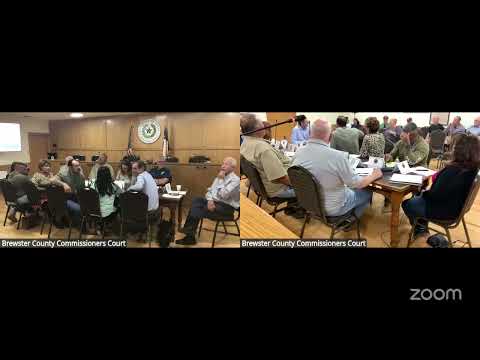
At a joint workshop Sept. 30, 2025, Mercer County commissioners, city officials and residents focused on promoting the area’s “dark skies” as a tourism draw while balancing safety and the cost of retrofitting outdoor lighting.
Participants emphasized that dark‑sky branding and practical steps — fixture lists in permitting, vendor outreach and stadium‑light shielding pilots — are needed to turn interest into overnight stays and business revenue. County and city officials and civic partners described technical fixes such as shielding and lower‑temperature bulbs and urged incentives and education so businesses and residents adopt darker, more compliant fixtures.
The discussion included several examples of ongoing local work and potential next steps. Randall Kinsey, a Fort Davis business owner who said he has promoted dark‑sky tourism for years, told attendees that “dark skies is… a cow you can milk” and urged officials to treat the designation as an economic asset. Officials said McDonald Observatory has been a local partner, helping businesses and residents become “dark sky compliant.”
City and county staff identified two technical priorities discussed by multiple speakers: use of 2,700 Kelvin fixtures rather than 6,000 Kelvin, and improved shielding to prevent light spill. Staff reported that some stadium and sports lights can be redesigned and dimmed without compromising safety; speakers asked staff to gather cost information on retrofitting one local football field as a pilot to estimate broader costs.
Workshop participants proposed several action items rather than a single mandate. City staff said permitting could include an approved‑fixture list to simplify conversions for businesses. Officials and residents suggested outreach tools such as a vendor list, a “dark‑sky property of the month” public recognition program and before‑and‑after features for businesses that retrofit lights. The county judge (name not specified) declared the region’s intent to pursue a formal brand, saying, “As of tonight, I’m officially saying that we are the dark‑sky capital” of the tri‑county area, a civic statement the group said they would follow with outreach to state representatives and possible trademark or legislative recognition efforts.
Officials discussed enforcement and timing only in general terms. Speakers referenced city and county ordinances that were previously codified and said some enforcement dates had been discussed but were not specified at the workshop. Multiple participants urged a carrot‑first approach — incentives, easy permitting and vendor support — paired with targeted enforcement for persistent, demonstrable violations that affect neighbors.
Next steps recorded during the workshop included: inventorying public and commercial lighting; assembling a list of approved, dark‑sky fixtures for permitting; piloting a stadium retrofit to estimate costs; coordinating vendor outreach and public recognition programs; and continuing coordination with McDonald Observatory and regional partners. Several speakers suggested reconvening periodically to track progress and measure whether retrofits and branding increase overnight stays and business revenue.