Get Full Government Meeting Transcripts, Videos, & Alerts Forever!
Get email alerts on the Special Education Services topic
No spam. Unsubscribe anytime.
Parents press board for 1‑on‑1 nursing policy and bilingual paraprofessionals for special‑needs students
Summary
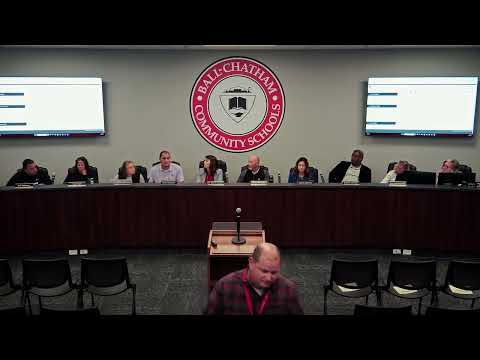
Multiple parents used public comment at the Oct. 22 board meeting to request a formal district policy on one‑on‑one nursing for medically fragile students and to press for assignment of a bilingual paraprofessional for a student with limited English proficiency; speakers described past injuries, due‑process actions and ongoing access problems.
Several parents addressed the Ball Chatham CUSD 5 Board of Education during public comment on Oct. 22 asking the district to adopt a written one‑on‑one nursing policy for students with intensive medical needs and to ensure access to bilingual paraprofessionals for children with limited English proficiency.
Oakland Piper, who identified herself as a parent, said she drafted a proposed one‑on‑one nursing policy and asked the district to adopt a formal approach after reporting prior incidents in which district nurses injured a medically fragile child in an earlier case. “The district needs a 1 on 1 policy,” Oakland Piper said, and described a history of injuries to another child that led to due process and litigation. She told the board she had not yet met or approved the nurse the district assigned to her daughter and urged a contract and training arrangement that would allow an agency nurse to accompany a student between home and school so families do not lose privately contracted nursing hours when a district nurse is assigned.
Troy Piper, who identified himself as a parent and caregiver, described on‑school incidents in which a district nurse removed or damaged his child’s feeding tube and said those events led to emergency-room visits and previous due process. He requested that the district work with families and outside agency nurses so medically fragile students may attend school without losing agency nursing coverage at home. “We will not ever accept that situation where we have to give up our summer nurse, our Christmas break nurse, our parent‑teacher conference nurse,” Troy Piper said, adding that a short, informal training immediately before school is not sufficient for a child with complex care needs.
A separate commenter who identified herself as a parent of a student named Gianna raised a related but distinct concern: assignment of a bilingual paraprofessional. The parent said Gianna, adopted from Colombia, has Down syndrome and multiple communication needs and had been working with a bilingual paraprofessional who provided continuity and Spanish‑language support. The parent said a request to keep that same paraprofessional was denied and that the district told her Gianna would receive instruction in English through the district’s transitional program of instruction (TPI) and ESL supports. She said those services were not an adequate substitute for a bilingual paraprofessional who could communicate directly with Gianna.
The speakers asked the board to (1) adopt a district policy that clarifies hiring, contracting, training and deployment of one‑on‑one nurses for students on Medicaid waivers and (2) reassign or provide a bilingual paraprofessional for Gianna so the student can access instruction and participate with peers. Several speakers offered to assist with training and to work collaboratively with the district on written policy language.
Board members did not take immediate action at the meeting; staff and board representatives acknowledged the comments and the need for follow‑up. The public comments included requests for written response and for the district to provide consistent contacts and timelines for resolution.